
Automatic Gate Motors: A Complete UK Buyer's Guide
Explore every type of automatic gate motor, UK safety requirements, costs, and smart features. Expert advice from a specialist installer in East Sussex.
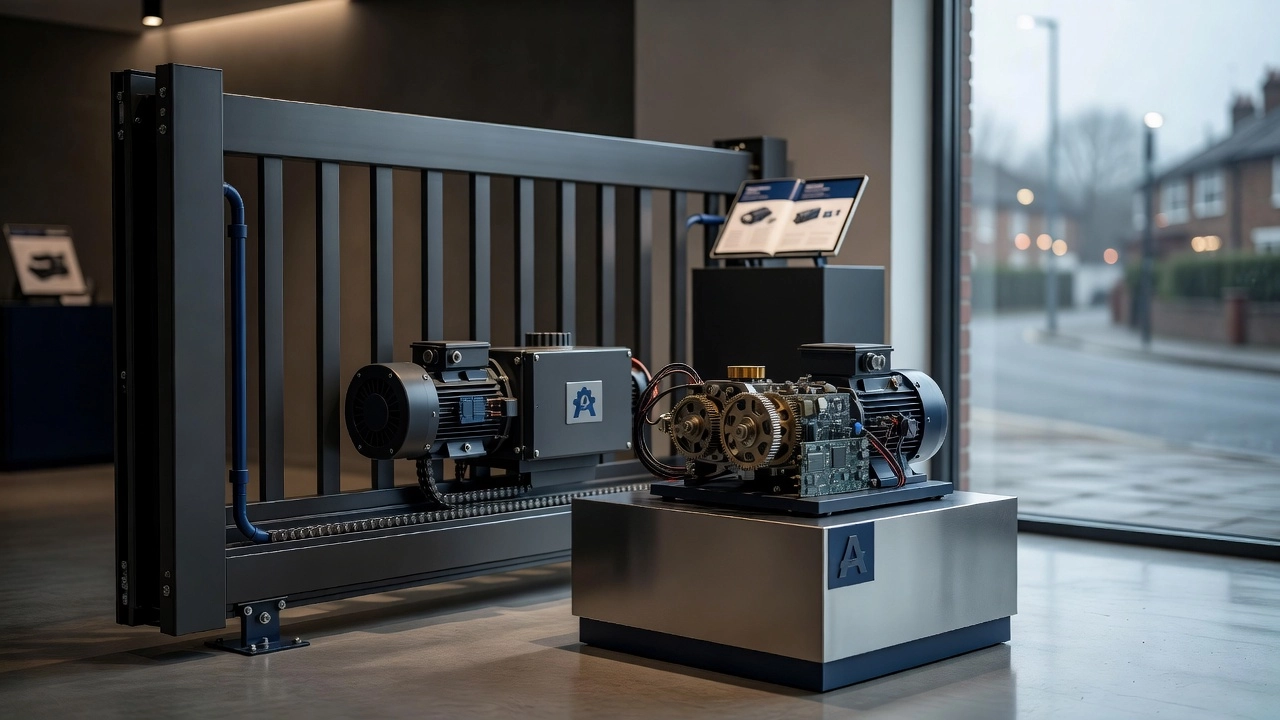
Imagine pulling up to your home after a long day and watching your gates swing open automatically, without you ever leaving your seat. That convenience is no longer reserved for luxury properties. Thanks to advances in technology, an automatic gate motor is now an accessible and practical upgrade for homes and businesses across the UK.
But with so many options on the market, knowing where to start can feel overwhelming. Which motor suits your gate type? What power source should you choose? How much should you realistically budget? These are questions every buyer faces, and getting the answers right from the beginning will save you time, money, and frustration.
This guide is designed specifically for those who are new to automatic gate systems. We have broken everything down into clear, easy-to-follow sections covering the key types of automatic gate motors, the features that matter most, and the practical considerations unique to UK buyers. By the time you finish reading, you will have the confidence and knowledge to make a smart, informed purchase that suits your property perfectly.
What Is an Automatic Gate Motor and How Does It Work?
An automatic gate motor is an electromechanical drive unit that converts electrical energy into the mechanical force needed to open and close a gate. In plain terms, it works by using an electric motor to drive a mechanical mechanism, either pushing and pulling a gate on a pivot (swing gate) or propelling it along a track (sliding gate). The result is smooth, controlled gate movement triggered by a remote signal, access device, or sensor, with no manual effort required.
Every complete automatic gate motor system is built around four core components. First, the motor unit itself provides the physical drive force. Second, the control board acts as the electronic brain, receiving signals and coordinating every aspect of the gate cycle. Third, safety devices including photocells, pressure-sensitive edges, and obstacle detection sensors protect people and vehicles from being struck or trapped. Fourth, an access control interface, whether a remote handset, keypad, RFID reader, or intercom, tells the system when to operate.
What makes a properly installed system genuinely impressive is how intelligently the control board manages each cycle. It applies soft start and soft stop functions, ramping motor speed gradually to prevent mechanical shock and extend component life. If the gate encounters an obstruction mid-travel, the board triggers an immediate halt or reversal before injury can occur. Safety cut-outs handle power loss scenarios, ensuring the gate fails safely rather than trapping a vehicle or person. This is far more sophisticated than a simple remote-controlled hinge.
Modern automatic gate motor systems have also evolved into connected access-control platforms. Today's units routinely integrate with IoT controllers, mobile apps, intercoms, video surveillance, and RFID readers, forming a unified security ecosystem for a property. According to 360iResearch, the global automatic gate opening system market was valued at approximately $6.95 billion in 2025 and is forecast to reach $11.20 billion by 2032 at a 7.05% CAGR, confirming this is firmly mainstream technology. Further data from Fact.MR shows residential security accounts for around 56% of market demand, while Dataintelo projects the electric gate openers segment alone reaching $6.9 billion by 2034. For first-time buyers, these figures carry a clear message: investing in gate automation means choosing a mature, well-supported technology with a growing global ecosystem behind it.
The Main Types of Automatic Gate Motor Explained
Not all automatic gate motors are the same, and choosing the wrong type for your property can mean costly modifications down the line. Understanding the five main motor types before you speak to an installer gives you a practical foundation for making the right decision. Here is a clear breakdown of each type, how it works, what it suits, and where its limitations lie.
1. Swing Gate Motors (Articulated Arm)
Swing gate motors are the most widely installed type of automatic gate motor in the residential sector globally, holding approximately 42.3% of the automatic gate opener product market. The articulated arm mechanism attaches to the gate leaf at one end and anchors to the gate post or pillar at the other. When activated, the electromechanical arm extends or retracts to push or pull the gate leaf through its opening arc. Systems can be configured for single-leaf or double-leaf gates and can accommodate both inward-opening and outward-opening configurations, depending on the post geometry and available clearance.
For the majority of residential driveways across East Sussex and West Sussex, swing arm motors represent the most straightforward and cost-effective solution. A typical installation might involve a pair of motors fitted to a double-leaf timber or metal driveway gate on a level plot, with sufficient clearance behind the gate for the leaves to swing inward.
Pros: Familiar technology with wide installer support; relatively straightforward to fit on most standard gate posts; compatible with timber, steel, and aluminium gates; widely available parts and servicing.
Cons: Requires a clear swing arc either in front of or behind the gate line; unsuitable where the driveway rises steeply immediately beyond the gate; the arm mechanism is visible above ground and exposed to weather over time.
Best suited to: Standard residential driveways with level ground, adequate swing clearance, and single or double leaf gates up to approximately five metres total width.
2. Underground (In-Ground) Swing Gate Motors
Underground gate motors deliver the same swing-gate function as an articulated arm system but with the entire drive mechanism concealed within a sealed housing installed beneath the gate post or threshold. No hardware is visible above ground once installation is complete. This makes them the preferred choice for period properties, listed buildings, and properties within conservation areas where surface-mounted equipment would be architecturally intrusive or where planning conditions restrict visible alterations to historic gateposts.
Across rural Sussex estates and Kent village properties, in-ground motors are frequently specified precisely because they preserve the original character of stone or brick gate piers. The absence of exposed mechanical components also makes them aesthetically appealing on higher-end new-build properties where clean lines are a design priority.
Pros: Completely concealed mechanism; preserves the visual integrity of heritage gates and piers; no weather-exposed hardware above ground.
Cons: Installation requires groundworks and careful waterproofing; properties with a high water table need additional drainage measures; maintenance access requires excavating the housing, which adds to service costs compared to above-ground alternatives.
Best suited to: Listed buildings, conservation area properties, rural estates with original stone or brick gate piers, and premium new-build properties where aesthetics are a primary concern.
3. Sliding Gate Motors (Rack-and-Pinion)
Sliding gate motors account for 51% of the automatic gate product segment globally, making them the single largest category in the market. That dominance reflects a straightforward advantage: sliding gates require no swing arc at all. The rack-and-pinion mechanism works by fixing a toothed rack, essentially a flat gear strip, along the bottom rail of the gate. The motor drives a pinion gear that engages the rack and propels the gate leaf laterally along a track parallel to the boundary line.
This design makes sliding motors the logical choice wherever swing clearance is unavailable. Common scenarios include driveways that slope upward immediately behind the gate, plots where a wall or obstacle sits close to the gate line, and high-traffic commercial entrances where the gate must cycle reliably many times per day. For commercial yard entrances in East Sussex handling regular HGV access, a sliding gate motor paired with a robust steel cantilever gate is frequently the most practical specification.
Pros: No swing clearance required; highly reliable under sustained heavy use; capable of handling large and heavy gate leaves; well suited to sloped approaches and commercial traffic volumes.
Cons: Requires a clear run of ground alongside the gate for the leaf to slide into; the track must be kept clear of debris and gravel build-up; trackless cantilever systems, which suit softer or uneven ground, carry a higher initial cost.
Best suited to: Plots with limited swing space, steeply sloped driveways, commercial yards, industrial estates, and any entrance handling significant daily vehicle movements. You can explore current automatic gate opening system market data to understand the scale of adoption globally.
4. Folding and Bi-Folding Gate Motors
Bi-folding gate motors drive gates that are split into two sections per leaf, folding back on themselves as they open rather than swinging through a full arc or sliding along a run. The result is a dramatically reduced opening footprint. Where a standard swing gate might need 2.5 metres or more of clear swing space, a bi-folding gate of the same width folds into roughly half that depth.
For agricultural and commercial customers across East Sussex, this configuration solves a specific and common problem: entrances that sit close to a road junction or boundary, where neither a full swing arc nor a lateral slide run is available. Farm yard entrances, small commercial courtyards, and access points in tight urban locations all represent realistic use cases. Motors for bi-folding systems typically drive through a central hinge mechanism, and because more moving parts are involved, alignment and hinge maintenance are more critical than on simpler swing systems.
Pros: Compact opening footprint; fast operation suited to frequent use; resolves access configurations where swing and slide are both impractical.
Cons: Greater mechanical complexity with additional hinges and pivot points; higher initial cost; precise ongoing alignment is important to maintain smooth operation.
Best suited to: Agricultural yards, commercial courtyards, urban properties with restricted approach depth, and any entrance where space constraints rule out conventional swing or sliding solutions.
5. Barrier Arm Motors
Barrier arm motors operate on an entirely different principle from gate motors. Rather than moving a gate leaf, they raise and lower a horizontal boom across a vehicle lane. They are purpose-built for high duty-cycle environments: car parks, hospital drop-off zones, petrol forecourts, logistics parks, and managed commercial sites where the access point must cycle rapidly and repeatedly throughout the day.
The duty cycle distinction matters significantly when specifying a system. A residential swing gate motor may be rated for a modest number of cycles per hour, while a barrier arm unit is engineered to handle hundreds of cycles without overheating or premature wear. Barrier arms also integrate readily with loop detectors, ANPR cameras, intercom systems, and payment terminals, making them the standard choice for access management applications rather than perimeter security. It is important to note that a barrier arm does not physically prevent a determined vehicle from forcing entry; its function is traffic management and access authorisation, not intrusion resistance.
Pros: Extremely fast cycle times; very high duty cycle capacity; compact installation footprint; straightforward integration with access control and vehicle detection systems.
Cons: Provides no physical security against deliberate vehicle intrusion; aesthetically functional rather than attractive; unsuitable for residential settings.
Best suited to: Car park entrances, business parks, hospital sites, retail developments, and any commercial location requiring ANPR-linked or ticketed automated vehicle access. The global gate opener buyer's guide from Nimbio offers additional context on how different motor categories serve different access needs.
A Practical Decision Framework
Before requesting a site survey, run through these four questions to identify which motor type is likely to suit your property:
Is there clear swing space? If yes, a swing arm or underground motor may be appropriate. If no, consider sliding or bi-folding.
Is the property listed or in a conservation area? If yes, underground motors or carefully specified above-ground systems should be discussed with your installer.
Is the application residential or high-traffic commercial? High-frequency commercial use points toward sliding motors or barrier arms depending on whether perimeter security or traffic management is the priority.
Is space severely restricted on all sides? Bi-folding motors resolve configurations where neither swing clearance nor a lateral slide run is available.
Each property presents a unique combination of these constraints, which is why a professional site survey remains the essential step before any motor is specified or ordered.
Key Specification Factors to Consider Before Choosing a Motor
Selecting the right automatic gate motor requires careful analysis of five core specification factors. Getting even one of these wrong can result in premature equipment failure, unnecessary expense, or a system that simply cannot cope with the demands placed on it. Here is what you need to evaluate before committing to any motor or installation.
1. Gate Weight and Leaf Width
Gate weight is the single most critical specification variable, and it is the first number any professional surveyor will want to establish. A motor undersized for its gate will overheat, strain under load, and fail well before its expected service life. Oversizing wastes capital and energy without delivering any practical benefit. As a general guide, motors are typically rated for gates up to 300 kg for small residential applications, 300 to 600 kg for standard family homes, 600 to 1,000 kg for larger residential and commercial entrances, and over 1,000 kg for industrial gates. For swing gates, both leaf width and weight determine the torque required; for sliding gates, weight is the dominant factor. A surveyor will also need to know your gate material (solid timber, steel infill, or hollow aluminium), hinge condition, ground slope, and wind exposure, since solid panels on an exposed coastal or rural site can dramatically increase the mechanical load the motor must overcome on every cycle. You can find further detail on how to choose the right automatic gate motor in this comprehensive buying guide.
2. Duty Cycle
Duty cycle describes how frequently a motor is designed to operate within a given period, and mismatching it to your actual usage pattern is one of the most common and costly mistakes in gate motor specification. Residential-grade motors are engineered for low-frequency use, typically a private driveway with 10 to 20 open and close cycles per day for a single household. Commercial-grade motors are built for high-frequency or near-continuous operation, as required by offices, car parks, managed apartment blocks, or any entrance processing multiple vehicles per hour. Installing a residential-rated motor on a gate serving a business with delivery traffic or multiple occupants will likely cause it to fail within its warranty period. Always be honest about anticipated usage when speaking to an installer, because underestimating cycle frequency to reduce upfront cost will cost significantly more in repair and replacement.
3. Power Supply Options
Most UK residential and commercial gate motors run on a 240V mains connection, which is reliable and capable of powering any duty cycle without the constraints of stored energy. Solar-powered systems are a genuine alternative where running mains cabling to a remote gate location is impractical or prohibitively expensive. Solar works well for low-to-medium duty residential applications with reasonable sun exposure, but reliability can decrease during extended overcast periods unless adequate battery storage is included. Battery backup is increasingly treated as a standard requirement rather than an optional extra, particularly for security-critical entrances, as it ensures the gate continues to operate and safety devices remain active during mains power cuts. Many modern control boards also feature low-power standby modes that reduce energy draw when the system is idle, delivering meaningful running cost savings over time.
4. Weather Resistance and IP Ratings
Ingress Protection ratings, known as IP ratings, describe how well an enclosure resists solid particles and water. The first digit covers solids (dust, debris), and the second covers liquids. For outdoor motor housings, IP44 offers basic splash protection and is an absolute minimum; IP54 provides enhanced dust and water resistance suitable for most UK outdoor installations; IP65 is fully dust-tight and protected against water jets, making it appropriate for exposed or high-rainfall environments. For properties across coastal East Sussex, including areas around Eastbourne, Hastings, and Bexhill, this matters considerably more than inland locations. Salt-laden air and high ambient humidity accelerate corrosion in unprotected motor housings, attacking electrical terminals and internal components far faster than a standard urban environment. Specify at minimum IP54-rated enclosures for coastal sites, and insist on stainless steel or marine-grade fixings throughout.
5. Essential Safety Features
A properly specified automatic gate motor system should include photocells (beam sensors that detect obstructions in the gate's path and halt or reverse movement), pressure-sensitive edges on the leading face of the gate leaf, and obstacle detection via motor current monitoring that triggers automatic reversal when unexpected resistance is encountered. Soft start and stop cycles reduce mechanical stress on hinges and drive components with every operation, extending the lifespan of the entire installation. A key-operated manual override allows the gate to be operated by hand during power failures or emergencies. Battery backup ensures that photocells and obstacle detection remain active even when mains power is lost. These features are no longer optional upgrades; under UK safety obligations governing powered gates, entrapment protection and emergency release provisions are requirements that any competent installer will incorporate as standard.
UK Safety Standards and Legal Compliance for Powered Gates
Installing an automatic gate motor is not simply a mechanical task. In the UK, powered gates are governed by a clear legal and safety framework that every property owner needs to understand before commissioning any work.
BS EN 12453: The Core Safety Standard
BS EN 12453:2017 is the principal standard governing power-operated gates and doors in the UK. It covers all powered access systems, including sliding gates, swing gates, and rising barriers, across residential, commercial, and agricultural properties. The 2017 revision consolidated the former BS EN 12445 test methods directly into BS EN 12453, meaning both the safety requirements and the force-measurement testing methodology now sit within a single document. In practical terms, the standard requires a site-specific risk assessment, calibrated force-limitation testing to control crushing and impact hazards, correct placement of safety devices such as photocells and safety edges, and a reliable, documented control system. As the HSE confirms, the 2017 update specifically strengthened requirements for the safety-related parts of the control systems that powered gates depend upon for safe operation.
Entrapment Protection: A Life-Safety Obligation
The risk assessment required under BS EN 12453 is not a paperwork exercise. It exists because powered gates have caused serious injuries and fatalities, and the regulatory framework was built in direct response to those incidents. Every installation must identify and either eliminate or actively control entrapment zones, including crushing, shearing, drawing-in, and trapping hazards. Common protective measures include photocells, pressure-sensitive safety edges, and minimum safety distances defined under referenced ISO standards. The completed risk assessment must be retained as part of the installation record, forming evidence that the duty of care has been properly discharged.
Machinery Regulations, Declaration of Conformity, and Emergency Release
Powered gates are legally classified as machinery under UK law. Following Brexit, the Machinery Directive 2006/42/EC was retained in domestic legislation, and installers remain obliged to provide a Declaration of Conformity alongside a technical file and user documentation. Compliance with BS EN 12453 supports this but does not automatically satisfy all Essential Health and Safety Requirements on its own; the full documentation package must accompany every installation. Additionally, every compliant installation must include a manual emergency release mechanism, enabling the gate to be operated safely during a power failure or fault condition. Buyers should confirm this is explicitly itemised in any quotation they receive; its absence is a direct compliance warning.
Why Professional Installation Protects You
A non-compliant or unqualified installation does not simply void a warranty. It transfers significant legal and insurance liability directly to the property owner or business operator. If an incident occurs at a gate that lacks a proper risk assessment, Declaration of Conformity, or functioning safety devices, the homeowner or company may be held responsible. Portara's installations are carried out by qualified specialists who understand both the technical and legal requirements of powered gate systems, ensuring every project meets the applicable standards from the outset and that clients receive the complete documentation they are entitled to.
Automating an Existing Manual Gate: What the Retrofit Process Involves
Retrofitting an existing manual gate with an automatic gate motor has become one of the most popular upgrades among UK homeowners and commercial property owners alike. Rather than replacing a perfectly sound gate structure, many properties simply need a motor, control board, and safety devices added to transform a manual entrance into a fully automated system. This approach is typically quicker, more cost-effective, and considerably less disruptive than a full gate replacement, which explains why manual-to-automated upgrades are now a significant growth driver across the UK market.
The Pre-Installation Survey: What a Specialist Checks First
Before any motor is selected or ordered, a thorough site survey is essential. A qualified installer will assess several critical factors to determine what system is appropriate and whether any remedial work is needed first.
Gate condition and structural integrity come first. A gate that is sound and well-balanced can accept automation reliably; one that is warped, sagging, or structurally compromised cannot. Hinge and post suitability follows closely; the posts must be capable of accepting motor fixings securely, and any posts that are poorly set, cracked at the base, or inadequately founded will need attention before installation proceeds. Leaf weight and dimensions are measured precisely because swing gate operators are rated for specific weight ranges per leaf, commonly from 150 kg up to 750 kg depending on the product family, and selecting a motor outside its rated envelope leads to premature failure. Where an underground operator is being considered for aesthetic reasons, the installer will check ground clearance and access for future maintenance, since underground systems carry greater installation complexity. Finally, proximity to a suitable power supply is assessed, as routing mains power to a gate motor can represent a significant portion of project cost if cable trenching is required across a long driveway.
What Can and Cannot Be Retrofitted
The honest answer is that most solid metal or timber gates in reasonable condition can be automated successfully. However, gates that are warped, rotten, too heavy for their supporting posts, or sitting on inadequate foundations are not candidates for direct automation. Attempting to motorise a structurally unsuitable gate creates safety risks and accelerated wear on the drive components. Under Gate Safe guidance, the gap beneath a gate should be no greater than 100 mm to prevent entrapment hazards; if this clearance cannot be achieved, additional safety devices are required. You can read more about retrofitting existing gates with smart automation and the kit specifications involved, and what costs and considerations apply to automating existing gates for a broader picture of suitability criteria.
Timeline and Post-Installation Handover
For a straightforward residential retrofit, a competent installer can typically complete the physical fit and commissioning within a single working day. More complex projects involving underground operators, cable trenching, or civil groundworks will extend across two to three days. Disruption to the property is generally minimal once the survey and equipment procurement stages are complete.
At handover, the installer's obligations go well beyond simply handing over a remote control. A compliant installation requires a risk assessment documenting crush, shear, and entrapment hazards, a Declaration of Conformity confirming the system meets UK machinery safety requirements, and written operating instructions. The client must be given a clear demonstration of the manual override, which allows the gate to be operated by hand during a power cut or emergency. Remote controls, keypads, or GSM access devices are programmed and tested as part of the commissioning process, and any integration with intercoms or access control systems is confirmed functional before sign-off.
Automatic Gate Motor Costs: What to Budget and What You Get
Understanding what you are likely to invest before requesting a quote puts you in a far stronger position to evaluate proposals and make confident decisions. Costs vary significantly depending on gate type, site conditions, and the level of access control you require, so the figures below are indicative ranges to guide budgeting rather than fixed prices.
1. Entry-Level Residential Swing Gate Motor Installation
A basic residential swing gate automation package typically covers the motor unit itself, a control board, a photocell safety kit (the beam-break sensors that prevent entrapment), and standard installation labour. It is important to note that photocells are not optional extras at this level; they are a safety-compliance requirement under UK powered-gate standards, including BS EN 12453. What this tier generally does not include is access control credentials such as keypads, RFID readers, or video intercoms, nor battery backup, solar charging panels, or smart-app connectivity. Gate leaf weight and span are the two variables that most directly influence where within the entry-level range your project lands, as heavier or wider gates demand more capable motor units.
2. Mid-Range Sliding Gate Automation with Access Control Integration
Sliding gate systems account for 51% of the global automatic gate opening system product segment, reflecting their dominance across residential and commercial applications. At this tier, the project cost is shaped as much by integration requirements as by the motor itself. Adding a keypad, RFID reader, or video intercom represents a relatively modest incremental investment against the overall project value, yet the security and daily convenience uplift is considerable. A video intercom, for example, allows you to screen visitors remotely and grant access from a smartphone, eliminating the need to approach the gate physically. Specifying a modular, upgrade-ready control board at the outset is strongly advisable; retrofitting access control credentials to a basic board is not always straightforward and can cost more than selecting the right board from the start.
3. Premium Underground Motor Installation with Intercom and Smart App Integration
Underground or in-ground motors sit at the premium end of residential swing gate automation. The motor is fully concealed within the gate pillar, making it the preferred choice where kerb appeal and aesthetics are a primary consideration. Additional groundworks, including excavation, waterproof housing, drainage provision, and ducted cabling, add to the project budget but are integral to a compliant, concealed installation. At this tier, smart-app integration and IP-enabled controllers are standard, enabling remote operation, live diagnostics, and full integration with alarm and surveillance systems. The added investment is best understood in the context of measurable property value uplift; automated gated entrances are a recognised premium feature in the East Sussex and Kent residential property markets, consistently commanding a higher asking price and stronger buyer interest.
4. Retrofit Versus New Installation
Retrofitting an existing gate with an automatic gate motor is almost always more cost-effective than a full gate replacement, provided the existing gate leaf is structurally sound and within the weight and span tolerances of modern operators. If existing posts are correctly positioned and cabling routes are accessible, the structural groundwork cost is minimal. A full replacement becomes the better long-term investment when the gate is damaged or non-compliant, when posts are incorrectly set for your chosen automation type, or when you are switching from a swing to a sliding configuration entirely. Modern modular motor systems are specifically designed to simplify retrofitting, which means the technology side of the upgrade is now more accessible than ever; the deciding variable is almost always the condition of the existing physical infrastructure.
5. The Return on Investment Case
The value of an automatic gate motor extends well beyond the upfront installation cost. Enhanced perimeter security and active deterrence are the most immediately understood benefits, particularly as modern systems integrate with CCTV, video analytics, and visitor management platforms. Property value uplift is a tangible financial return; gated automated entrances are a well-established premium marker in residential sales across East Sussex and Kent. Accessibility is a further dimension that is often underweighted: according to the World Health Organisation, over 1 billion people worldwide live with some form of disability, and barrier-free gate automation provides genuine independence and ease of access for residents, visitors, and care professionals alike. Finally, the convenience value of hands-free, app-controlled entry resolves everyday friction points that manual gates create.
Because accurate pricing depends entirely on site-specific factors including gate leaf weight, span, ground conditions, power supply proximity, and access control requirements, the most reliable next step is to request a no-obligation survey. Automated gate operator market analysis projects the sector growing from USD 1.2 billion in 2024 to USD 2.5 billion by 2033, confirming this is a mainstream investment with strong long-term relevance. Contact Portara Automation to arrange a site survey and receive accurate, itemised pricing tailored to your property.
Smart Features and Future-Proofing Your Gate Automation
The automatic gate motor has evolved far beyond a simple mechanical opener. Modern systems are converging into fully connected access-control platforms, where a single control board can manage intercoms, RFID keypads, video cameras, alarm panels, and smartphone apps simultaneously. Rather than treating each component as a separate installation, today's gate automation infrastructure treats the motor as the foundation of a broader security ecosystem. For homeowners and business operators investing in gate automation now, understanding this shift is essential to making a purchase that remains relevant for years ahead.
Practical Smart Features Worth Specifying
Several capabilities once reserved for commercial-grade systems are now accessible at residential price points. Remote open/close via smartphone allows you to grant access from anywhere with a mobile signal, eliminating missed deliveries and the need to physically attend the gate. Visitor video intercom with gate release lets you see, speak to, and admit visitors through a single app interface. Licence plate recognition provides keyless, automatic entry for regular vehicles such as family cars or regular contractors, without any fob or PIN required. Audit logs record every access event with a timestamp, giving you a clear record of who entered and when. These features address genuine day-to-day operational problems rather than simply adding technical complexity.
AI-Assisted Management and Predictive Maintenance
Higher-specification systems are beginning to incorporate artificial intelligence at the operational level. Tailgating detection flags when a second person or vehicle follows an authorised entry without independent authentication. Loitering alerts notify you when a person or vehicle remains near the gate for an unusual length of time. Critically, AI-driven predictive maintenance analyses motor current data across opening cycles to identify wear patterns before a failure occurs, reducing the likelihood of unexpected breakdowns and costly emergency call-outs.
A Well-Timed Investment
Market data strongly supports investing in a smart-ready system now. The European automatic gate and door opening system market was valued at $4.0 billion in 2024 and is forecast to reach $9.0 billion by 2035, growing at a CAGR of 7.65%. The UK is identified as the fastest-growing regional market within Europe, driven by rising security demand and rapid technology adoption. This trajectory confirms that the infrastructure you specify today sits at the beginning of a significant growth curve, not the end of one.
Specifying Smart-Ready Without Over-Spending
The most practical approach is to choose a control board with genuine expansion capability: auxiliary relay outputs, bus connections for keypads, and open-protocol communication ports. This means RFID access, video intercom, and alarm integration can be added incrementally as your needs evolve, without requiring a full motor replacement. Electromechanical drive systems lead the market precisely because of their compatibility with layered access-control integration alongside their reliability and low maintenance requirements. Specifying for expandability today is the most cost-effective way to future-proof your gate automation without paying upfront for features you may not yet need.
Solar-Powered Gate Motors: Are They Right for Your Property?
Solar-powered gate motors make genuine practical sense in a specific and well-defined set of circumstances. If your property sits on a remote rural driveway, runs agricultural land, or has field gates positioned hundreds of metres from the nearest building, running a mains cable to the gate post is rarely straightforward. In East Sussex and Kent, trenching across farmland, hard standings, or ground that crosses drainage systems or public rights of way is a significant civil engineering undertaking. The cost of groundworks alone can easily outweigh the gate automation equipment itself. For these situations, solar removes the need for cable runs entirely, making the installation faster, less disruptive, and frequently more cost-effective overall.
How a solar gate motor system works is straightforward in principle. A photovoltaic panel captures daylight and feeds charge into a sealed lead-acid or lithium battery. The battery then powers the motor control board and drive mechanism each time the gate is activated. Because energy is stored rather than drawn on demand from the mains, the gate continues to operate at night and during cloudy periods. The critical design variable is matching panel wattage and battery capacity to the number of daily gate cycles and the minimum sunlight available during winter months in your location.
This is where undersized, cheaply bought solar kits consistently fail in UK conditions. Southeast England receives significantly fewer peak sun hours in December and January than in summer, and a panel and battery combination that performs adequately through spring and summer may leave the battery insufficiently charged after several consecutive overcast days. Correctly specified professional systems use larger panels, typically 20W or above, paired with appropriately rated batteries and intelligent charge controllers that manage discharge cycles to protect battery life year-round.
Even if solar is not the right solution for your property, battery backup remains worth specifying on any mains-powered gate motor. A backup module keeps the system operational during power cuts and, critically, ensures the gate can be safely released or manually operated without the risk of someone being trapped or the gate becoming an obstruction. In rural areas served by overhead power lines, outages during storms are not uncommon, making this a practical rather than precautionary addition.
Solar systems also carry ongoing maintenance responsibilities that mains installations do not. Panels accumulate dirt, moss, and debris that reduce output, particularly in shaded rural settings. Battery health degrades over time and requires periodic testing. A proper servicing agreement will include panel output checks, battery condition assessment, charge controller verification, and seasonal performance review, ensuring the system remains reliable throughout the year rather than failing quietly during the months when it is under greatest strain.
Maintaining Your Automatic Gate Motor: What Routine Servicing Involves
Despite being marketed as low-maintenance, every automatic gate motor is a combination of mechanical, electronic, and electromechanical components that each degrade at their own rate. Rack-and-pinion drives, hinges, rollers, and chains experience constant friction-induced wear. Motor housings face year-round exposure to rain, humidity, and temperature extremes, which is particularly significant in coastal areas like East Sussex and Kent where salt air accelerates corrosion on both housings and internal electrical connections. Backup batteries lose capacity gradually without any visible sign of failure until the moment they are needed. Modern control boards, which manage obstacle detection, programmable speeds, and remote access, depend on firmware remaining functional and current. None of these degradation pathways announce themselves until the system fails, which is precisely why periodic professional servicing is not optional.
What a Professional Annual Service Covers
A thorough annual inspection addresses every layer of the system. The motor housing is examined for corrosion, rust, and any evidence of water ingress that could compromise electrical connections. All moving parts, including hinges, rollers, wheels, and bearings, receive lubrication with an appropriate grease or silicone-based product; using incorrect lubricants such as standard engine oil causes rapid drying and accelerated wear. The control board is checked diagnostically to confirm all commands, sensors, and safety integrations are responding correctly. Safety devices receive particular attention: photocell alignment is verified and gate closing force is measured to confirm compliance with BS EN 12445, the UK and European standard that sets maximum force limits for powered gates to prevent entrapment injury. Battery backup performance is tested independently of mains power, and the manual override release is operated and confirmed functional.
Warning Signs to Act On Between Services
Five indicators suggest a motor needs attention before its next scheduled visit. Slower-than-normal operation points to increased load caused by friction or mechanical misalignment. Grinding or unusual noise on start or stop suggests hinge sag or wheel wear. Intermittent remote control response may indicate a receiver, battery, or control board fault. A gate stopping partway through its travel is a direct sign of mechanical or electronic stress. Visible rust on the motor housing should be treated as a warning that internal components may already be affected.
Servicing as a Financial and Safety Decision
Emergency motor replacement, including call-out fees, replacement parts, and potential damage to connected gate hardware, will almost always cost significantly more than several years of annual service visits. A well-maintained system also retains its reliability and contributes positively to property value. Framing routine servicing purely as a maintenance task underestimates its role as financial protection.
Portara serves homeowners, businesses, and developers across East Sussex, West Sussex, and Kent, and carries specialist knowledge of the motor brands and control board configurations it installs. A local specialist familiar with the original installation can diagnose faults faster and more accurately than a generalist engineer who must first identify the system before any meaningful assessment can begin, reducing both cost and downtime for the property owner.
Choosing the Right Automatic Gate Motor: Key Takeaways
Selecting the right automatic gate motor comes down to five non-negotiable factors. First, match the motor type precisely to your gate configuration, whether swing, sliding, underground, or barrier. Second, size the motor correctly for the gate's weight and your expected duty cycle. Third, ensure full compliance with BS EN 12453 and BS EN 12445, covering safety in use and force limitation. Fourth, specify a smart-ready system from the outset so future integrations, including intercoms, keypads, and mobile access, require no costly rework. Fifth, insist on professional installation with a documented risk assessment carried out by a qualified installer.
No online guide, however detailed, replaces a proper site survey. A qualified specialist assesses your exact gate, available power supply, access constraints, and security priorities before recommending any equipment.
Portara Automation provides bespoke gate automation design, supply, installation, and aftercare across East Sussex, West Sussex, and Kent. Services cover new automated gates, retrofit upgrades, access control integration, and ongoing servicing.
Contact Portara Automation today to request your free survey and quotation. You can also explore related services including access control systems, intercom installation, and professional gate repairs.
Conclusion
Choosing the right automatic gate motor does not have to be complicated. By understanding your gate type, you can match it to the correct motor, whether swing or sliding. Factoring in your power source, budget, and the specific demands of UK weather will ensure your system performs reliably for years to come. And selecting a reputable installer with proper certification protects both your investment and your safety.
Now that you have the knowledge to make a confident, informed decision, it is time to take the next step. Start by measuring your gate and assessing your property, then reach out to a trusted UK supplier or installer for a personalised quote.
The right gate motor transforms your daily routine, adds security, and boosts your property's kerb appeal. Your perfect setup is closer than you think.