
Automatic Gate Openers: What Every UK Property Owner Should Know
Discover types, safety rules, costs, and smart features of automatic gate openers. Expert guidance for UK homeowners, farms, and commercial properties.
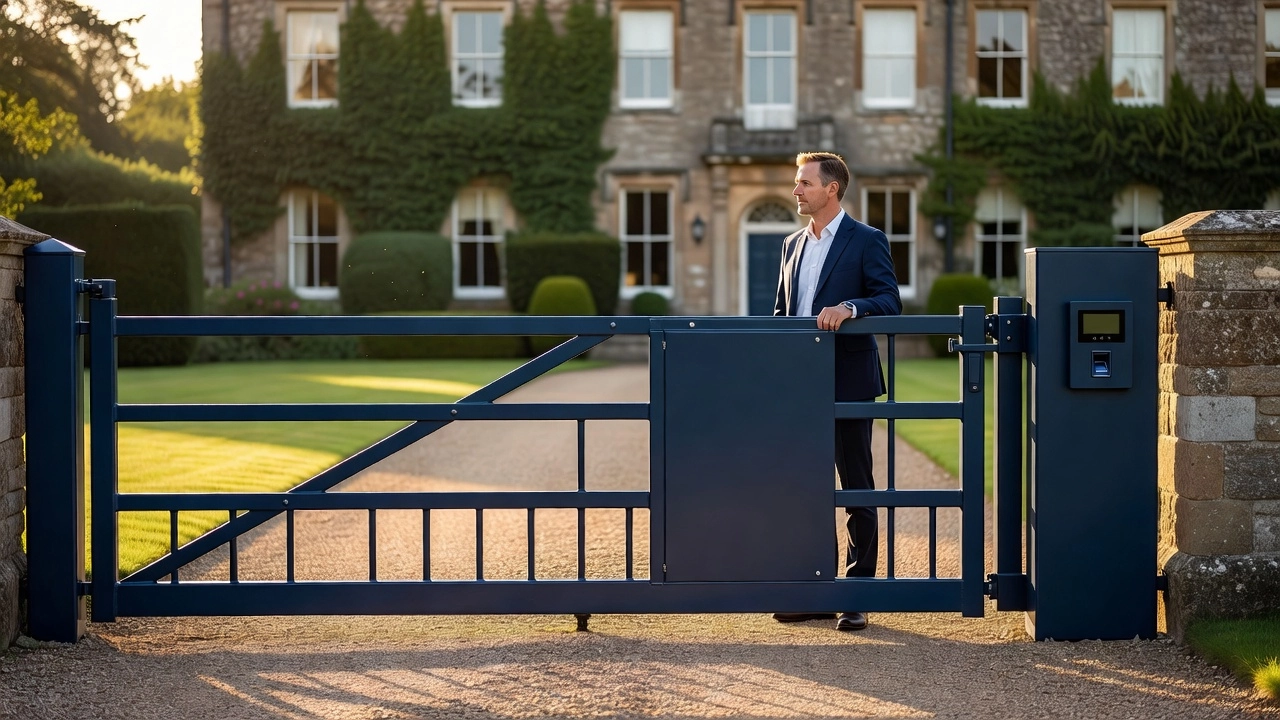
Imagine pulling up to your property on a rainy evening, bags in hand, and your gate swings open automatically without you having to step outside. That convenience is exactly why automatic gate openers have become one of the most popular home improvement investments across the UK in recent years.
Whether you own a detached home with a driveway, a rural property, or a commercial premises, an automatic gate opener can transform the way you manage access, security, and kerb appeal. But with so many options, technical specifications, and installation considerations to navigate, it can feel overwhelming if you are new to the topic.
That is where this guide comes in. We have put together a straightforward list of everything UK property owners need to know before buying or installing an automatic gate opener. From understanding the different types of systems available to knowing what regulations apply in the UK, you will come away with the confidence to make the right decision for your property. Let us get started.
Types of Automatic Gate Openers Explained
Choosing the right automatic gate opener starts with understanding which system suits your property, your gate type, and your access requirements. There are five main categories to know before making any decisions.
1. Swing Gate Openers
Swing gate openers are among the most popular choices for residential driveways and are available in single-leaf and double-leaf configurations. A single-leaf opener operates one gate panel on a hinge, while a double-leaf system drives two panels that meet at the centre. The critical requirement for swing automation is adequate clearance behind each leaf; the gate must complete its full arc without obstruction from a wall, slope, or parked vehicle. Motor configurations fall into two categories: above-ground articulated arm motors, which are mounted visibly alongside the post, and underground motors, which are buried beneath the post for a concealed finish.
2. Sliding Gate Openers
Sliding gates move horizontally along the fence line rather than swinging outward, making them the dominant product type worldwide. According to Fact.MR, sliding gate systems account for 51% of the global automatic gate opening system product market in 2026. This makes them the go-to solution for sloped driveways, narrow entrances, and high-traffic commercial or agricultural access points where a swing arc simply is not viable.
3. Underground Gate Motors
Underground motors are installed beneath the gate post rather than alongside it, keeping all mechanical hardware completely out of sight. This produces a clean, uncluttered aesthetic that is particularly valued on heritage properties, period homes, and premium residential developments. Across East Sussex and West Sussex, where conservation area restrictions and traditional architecture are common considerations, underground automation is frequently the preferred and most appropriate choice.
4. Electromechanical vs. Hydraulic Drive Systems
Electromechanical systems lead the market for reliability, low maintenance requirements, and compatibility with smart access control technology, including app-controlled operation and intercom integration. For most residential and light commercial installations, electromechanical is the practical default. Hydraulic drive systems are better suited to heavy-duty or high-cycle commercial applications, such as busy industrial sites or vehicle barriers that open and close hundreds of times daily.
5. Overhead and Cantilever Sliding Systems
Where a level ground track or ground channel is not practical, overhead-hung and cantilever sliding systems provide the solution. Cantilever gates require no track on the ground at all; the gate is supported and guided entirely from one side. For farm entrances, rural estates, and industrial sites across Kent and East Sussex, where uneven terrain and heavy agricultural traffic are everyday realities, these systems offer the most durable and low-maintenance path to reliable automated access. Consulting a specialist installer ensures the correct system is matched to your site conditions from the outset. You can explore buyer guidance for gate openers to build a clearer picture before speaking to a professional.
Key Features to Look for in a Gate Opener
Once you have identified the right gate type for your property, the next step is evaluating what the opener itself needs to deliver. Not all systems are built to the same standard, and the features below separate a well-specified installation from one that will cost you more in repairs, liability, and frustration over time.
1. Safety Hardware: Photocells, Pressure Edges, and Obstacle Detection
Safety devices are a non-negotiable baseline, not an upgrade option. Under UK safety standards, automated gates must include entrapment protection, and photocell sensors, pressure-sensitive edges, and obstacle detection systems each address a different collision or entrapment scenario. No single device covers all risks. Insurers are increasingly scrutinising safety hardware at claim stage, so a system that lacks any of these components creates both a compliance gap and a financial exposure. Verify that every device is present before installation proceeds.
2. Soft Start and Soft Stop Functionality
A gate that slams open or shut at full speed places enormous cumulative stress on motors, gearboxes, and mounting hardware. Soft start and soft stop functionality gradually ramps movement up to speed and decelerates before the gate reaches its end position. On a residential entrance used dozens of times daily, or a commercial entrance used hundreds of times, this reduces wear significantly and extends motor lifespan. The long-term cost saving on component replacements alone justifies specifying this as a requirement rather than a preference.
3. Battery Backup and Manual Override
Power outages are an unavoidable reality. A system without battery backup can trap vehicles inside a property or deny access entirely during a cut, creating serious safety and operational problems. Manual release mechanisms are separately required for emergency access and regulatory compliance; they are not a convenience addition. Confirm that any system you consider includes both provisions before committing.
4. Smart Integration Capabilities
App-controlled operation, remote monitoring, RFID reader compatibility, intercom pairing, and integration with alarm panels and CCTV are now standard buyer expectations at both residential and commercial level. Reviewing 5 features in top rated automatic gate openers confirms that connectivity and access control integration are central selection criteria today. A system that cannot grow with your security requirements will need replacing sooner than one built for integration from the outset.
5. Solar Power Compatibility
For agricultural properties, long rural driveways, and off-grid installations, solar compatibility removes the need to trench mains cabling across large plots, which can be a significant installation cost on its own. Solar-powered automatic gate openers use photovoltaic panels to charge onboard batteries, operating the motor independently from the grid. Beyond the practical savings, solar systems align with sustainability requirements that are increasingly relevant to agricultural and rural buyers across East Sussex, West Sussex, and Kent.
UK Safety Regulations and Compliance Requirements
Understanding the legal framework around automatic gate openers is not optional — it is a core part of any responsible installation. The UK has a well-established set of regulations governing powered gates, and property owners who overlook compliance expose themselves to significant legal, financial, and safety risks.
1. BS EN 12453: The Core Technical Standard
BS EN 12453 is the primary safety standard for powered pedestrian and vehicular gates in the UK. The 2017 revision sets strict requirements around force limitation, meaning a gate must be tested with calibrated equipment to ensure impact forces remain within defined safe thresholds. It also specifies which safety devices must be present depending on gate type, usage context, and the likely users. Photocells, pressure-sensitive safety edges, and presence detection systems are not optional extras under this standard; they are prescribed safeguards. The HSE has explicitly noted that even full compliance with BS EN 12453:2017 does not eliminate all risk, and that additional risk assessment covering the specific environment and user types remains essential.
2. The Supply of Machinery (Safety) Regulations 2008
Every powered gate installed in the UK is classified legally as machinery. This means the Supply of Machinery (Safety) Regulations 2008, which retained the EU Machinery Directive in UK law post-Brexit, applies directly. A compliant installation requires a full risk assessment, a technical file retained for at least ten years, and a Declaration of Conformity. The technical file must include drawings, schematics, force testing results, component declarations, and installation instructions. Current UK standards guidance confirms that final compliance responsibility rests with the installer, not solely with the component manufacturers.
3. Entrapment Zone Identification
A compliant installation requires the identification and safeguarding of all entrapment zones around a powered gate. These include primary zones such as the gate leading edge and secondary zones around hinges, posts, and adjacent structures. Professional installers map every zone individually and specify appropriate protective measures for each. This is not a single calculation; it is a detailed risk-by-risk engineering assessment.
4. The Real Cost of Non-Compliance
Non-compliant installations create serious exposure. Legal liability under the Health and Safety at Work etc. Act 1974 applies to anyone who allows unsafe powered equipment to be used on their property. Property insurance policies may be invalidated where a gate system lacks the required documentation. Buyers who purchase online kits and self-install without conducting a risk assessment or producing a Declaration of Conformity are operating outside UK law, regardless of how straightforward the installation appears.
5. How Professional Installation Removes Your Risk
Working with a specialist installer like Portara Automation means compliance documentation is handled as a standard part of the process. Risk assessments, entrapment zone mapping, force testing, technical file preparation, and Declaration of Conformity are all completed before handover. Property owners receive a fully documented, legally compliant installation rather than carrying unresolved legal and insurance risk themselves. For any property in East Sussex, West Sussex, or Kent, this professional approach is the clearest way to protect both occupants and investment.
How to Automate an Existing Manual Gate
Converting a manual gate to an automated system is one of the fastest-growing segments in the UK gate market, and the reason is straightforward: most property owners assume automation means starting from scratch. In reality, a large proportion of existing timber, steel, and aluminium gates can accept a drive system without any replacement of the gate itself. Whether you have a single swing gate at a residential driveway or double gates at a farm entrance, the likelihood is that what you already have can be made to work automatically with the right approach.
Step 1: The Pre-Installation Assessment
Before any equipment is selected, a qualified specialist will carry out a thorough site survey. This assessment covers gate weight, leaf dimensions, hinge condition, post integrity, and the available space for motor housing. Each of these factors directly determines which drive system is appropriate. A lightweight aluminium swing gate and a heavy steel double gate require entirely different operators, and no responsible installer will specify equipment without first inspecting the physical site. Understanding what that assessment involves helps you prepare the right questions before anyone visits your property.
Step 2: Addressing Gate Condition Before Automation
Structural integrity is non-negotiable. A gate that sags on its hinges, binds against the ground, or has corroded fixings will cause serious problems if automation is applied without remediation. The motor will work against those structural faults on every single cycle, accelerating wear and shortening the system's lifespan considerably. Safety risks also increase when a gate does not move freely and predictably. Any reputable installer will insist on remedial work before proceeding.
Step 3: In-House Fabrication as a Practical Advantage
This is where Portara Automation's capability makes a genuine difference. Because Portara holds full in-house metal fabrication, post reinforcement, and bespoke bracket production within the same business, any structural repairs identified at survey can be designed, manufactured, and installed as part of a single coordinated project. Property owners avoid the frustrating and time-consuming process of engaging a separate fabricator before the automation contractor can return to complete their work.
Step 4: Planning Power Supply and Wiring
Wiring routes, the location of the nearest power supply, and whether a solar-powered option is preferable all need to be confirmed before specification is finalised. Solar is a particularly practical solution for agricultural or rural properties where routing mains cable to the gate would be disruptive or expensive. None of these decisions can be made reliably from photographs or dimensions alone. A site visit is the only accurate way to spec a retrofit for your specific property, which is why Portara begins every conversion project with a dedicated survey rather than an off-the-shelf recommendation.
Intercom and Access Control Integration
An automatic gate opener becomes significantly more capable when paired with the right access control and intercom technology. Modern integration options transform a simple motorised gate into a fully managed entrance system, and understanding the available components will help you specify exactly what your property needs.
Video Intercoms for Remote Visitor Management
Video intercom systems allow property owners to see and speak with visitors in real time via a dedicated smartphone app, before deciding whether to grant access. There is no need to walk to the gate or be physically present on site at all. This is particularly valuable for rural properties, larger estates, and commercial premises where the entrance may be a considerable distance from the main building. Video intercoms also reduce dependence on physical remote fobs, which are easily lost, damaged, or passed on to unauthorised users. With a smartphone as the primary access method, credentials are tied to a specific user and can be managed instantly.
RFID Readers and Coded Keypads
For regular users such as residents, staff members, or delivery drivers, RFID proximity readers and coded keypads offer a practical and reliable entry method. RFID systems work by assigning each user a unique credential stored on a card or fob, while keypads allow PIN-based entry without any physical token at all. The key operational advantage is that individual credentials can be added or revoked remotely without any changes to the physical hardware. A contractor can be granted access for a specific week and removed immediately once the job is complete, which is a level of control that traditional key or remote fob systems simply cannot match. Gate remote access solutions covering keypads, apps, intercoms and RFID confirm that layering multiple access methods is standard practice across professional installations.
Mobile App Connectivity and Cloud-Based Management
From 2025 onwards, mobile app integration is the defining trend in gate access technology. Platforms such as Came Connect and BFT Botticelli allow property owners to operate their gate, check its status, and review a full event log from anywhere in the world. Every entry and exit is timestamped and attributed to a specific credential, which is something a traditional remote control cannot provide. Time-limited access sharing, for holiday let guests or delivery windows, becomes straightforward to manage. For commercial properties and agricultural sites specifically, this audit trail of entries and exits supports security management, contractor oversight, and incident investigation without requiring additional monitoring infrastructure. Reviewing the best gate entry systems confirms that access logging and event history are now considered baseline commercial requirements rather than premium features.
Smart Home and CCTV Integration
Integration with CCTV systems, alarm panels, and smart home platforms including Google Home and Amazon Alexa compatible systems is achievable, but it requires deliberate planning at the specification stage. Compatibility is not guaranteed across all hardware combinations, and retrofitting integrations after installation is significantly more complex and costly than building them in from the outset. Before any equipment is ordered or installed, the full integration requirements should be discussed with your installer so that every component is selected with compatibility confirmed. At Portara Automation, this conversation happens at the consultation stage as a standard part of the design process, ensuring that your entrance system works as a cohesive whole rather than a collection of disconnected components.
Agricultural and Rural Gate Automation
Agricultural and rural properties present a category of gate automation challenge that sits in a completely different technical bracket from standard residential installations. Farm entrances routinely handle far heavier gate structures, significantly higher daily opening and closing cycles, and constant exposure to mud, moisture, and field debris. Add to this the requirement to accommodate wide agricultural machinery such as combine harvesters, large trailers, and slurry tankers, and it becomes clear that a domestic-grade automatic gate opener is simply the wrong tool for the job. Systems designed for a lightweight suburban driveway gate will deteriorate rapidly under these conditions, leading to premature motor failure and costly downtime during critical farming periods.
Solar Power for Remote Farm Gates
One of the most practical challenges on agricultural properties is getting power to a remote gate in the first place. Field gates and outlying farm entrances are often situated far from the nearest mains supply, meaning conventional electrification would require costly cable trenching across farm tracks, fields, or metalled access roads. Solar-powered gate automation removes that problem entirely. Modern solar systems designed for UK conditions use optimised panel mountings and MPPT solar charging technology to deliver reliable power throughout the year, including during British winters when solar irradiance is at its lowest. For rural properties across East Sussex and Kent, solar-powered gate openers for farm and commercial use represent a genuinely practical and cost-effective solution that avoids disruptive groundworks altogether.
Specifying the Right Operator for Agricultural Loads
Heavy-duty electromechanical or hydraulic operators, rated for high-cycle and high-load applications, are the correct specification for a working farm entrance. These systems are built to handle the repeated demands of a busy agricultural operation without the motor strain that causes domestic-grade units to fail. Voltage rating, drive type, and duty-cycle rating all matter considerably when selecting an operator for this environment. A system rated for modest residential use is not a cost-saving measure on a farm; it is a liability.
Loop Detectors for Hands-Free Access
Loop detectors, embedded in the driveway or entrance surface, allow an approaching vehicle to trigger gate opening automatically without the driver stopping, dismounting, or reaching for a remote. On a working farm, this is a significant practical advantage. Asking a driver to exit a tractor or stop a loaded trailer to operate a keypad is inefficient and, in some situations, unsafe. Inductive loop detection resolves this by making vehicle approach the trigger itself, keeping traffic moving without any manual intervention.
Portara Automation brings direct, hands-on experience to agricultural gate projects across East Sussex and Kent. From selecting operators that handle the physical demands of a working farm entrance to integrating solar power for remote field gates, every specification decision is made with the realities of rural use in mind. If your property has outgrown a standard residential solution, a system built specifically for agricultural conditions is the right starting point.
What Does an Automatic Gate Opener Cost in the UK?
Budget is one of the first questions any property owner asks, and it deserves a clear, structured answer. Costs vary considerably depending on gate type, site conditions, access control specification, and whether fabrication is required. The figures below reflect fully installed costs in the UK market for 2025 and 2026.
Entry-Level Residential Swing Gate Automation
For a straightforward single-leaf swing gate with mains power nearby and no complex groundwork, professionally installed automation with a basic remote control system typically starts from around £1,500 to £2,500. This bracket applies only to the most favourable site conditions: a manageable opening width, accessible power supply, and no intercom or keypad requirements. Once you introduce additional access control hardware, extended cable runs, or more demanding groundwork, costs will move upward quickly. According to Checkatrade's 2026 electric gate installation cost guide, verified by CIOB and RICS-member estimators, labour alone typically represents £2,000 to £3,000 or more of the total project investment.
Double Swing and Sliding Gate Systems with Access Control
Installations involving double swing gates or sliding gates, combined with intercom, keypad, or video access control, generally fall within the £3,000 to £7,000 range. Gate size, motor specification, access control complexity, and site-specific conditions all influence where your project lands within that bracket. Sliding gate systems carry additional costs associated with track installation, drainage requirements, and groundwork. Properties requiring video intercom integration or RFID access push budgets toward the upper end of this range or beyond it.
Agricultural and Heavy-Duty Commercial Installations
Agricultural and commercial installations sit in a different cost category entirely. Projects involving long cable runs, solar power supply, loop detectors, or bespoke gate fabrication typically start from £5,000 and rise depending on scope. High-traffic commercial duty ratings, multiple access points, or vehicle detection systems all contribute additional cost. This aligns with the considerations covered in the agricultural automation section earlier in this guide.
The True Cost of Non-Compliance
A self-install kit may appear to offer a lower entry price, but that comparison does not hold up under scrutiny. Without a professional risk assessment, compliant installation documentation, and adherence to standards such as BS EN 12453, a system may void your property insurance, expose you to legal liability in the event of an entrapment incident, and ultimately require full remedial professional installation at additional cost. The apparent saving disappears quickly when those downstream risks are factored in.
Long-Term Return on Investment
A professionally installed automatic gate opener is not purely a security expenditure. Automated entrances contribute to kerb appeal and property value, with electric gates associated with a meaningful resale premium for residential properties. Improved perimeter security may also benefit some home insurance premiums, though individual policy terms should always be confirmed directly with your insurer. For household members with mobility limitations, automated access removes a genuine daily barrier. Across security, convenience, accessibility, and long-term property value, the investment case for a compliant, professionally specified system is considerably stronger than the upfront cost figure alone suggests.
Maintenance, Servicing, and Warranties
Every automatic gate opener requires a structured maintenance programme to perform safely and reliably over its full service life. Annual servicing is the minimum recommended interval for residential systems, covering motor lubrication, force and torque testing, safety device function checks, battery condition assessment, and software or firmware updates where the control board supports them. High-traffic commercial entrances and farm gates operating multiple times daily warrant servicing every six months. Skipping routine maintenance does not simply increase wear; it creates a compliance risk, because a system that met its initial safety standard at installation can drift out of specification without any visible sign of failure.
Safety device drift is among the most common findings at service. Photocell alignment shifts gradually as a result of ground movement, seasonal soil expansion, vibration from passing vehicles, or minor structural settling in gate posts. A photocell that has rotated by a few degrees may still appear functional but no longer covers the full detection zone required under BS EN 12453. The gate passed its commissioning check; it may not pass the same check eighteen months later. A professional service visit will realign, retest, and document each safety device, giving you a defensible record of compliance rather than an assumption.
Warranty structures deserve careful attention before you sign anything. A manufacturer's hardware warranty covers the motor unit and components, typically for two to five years depending on the product grade. An installer's workmanship guarantee covers the quality of the installation itself and is a separate instrument with its own duration and terms. Both can be invalidated by DIY adjustment of force settings, use of non-approved lubricants, or failure to service at the manufacturer's recommended intervals. Ask for both documents at the point of purchase, confirm precisely what each covers, and clarify which party you contact for which category of fault.
Response time is a practical consideration that buyers often overlook until something goes wrong. A gate stuck open overnight is a security failure; a gate stuck closed on a commercial site stops operations. Portara Automation serves East Sussex, West Sussex, and Kent, which means a realistic response window rather than a multi-day wait for an engineer travelling from outside the region. An online-only supplier or national brand without local engineers cannot offer that, regardless of how competitive the initial price appears.
For commercial sites, high-security residential properties, and agricultural operations, a planned maintenance agreement is worth budgeting for from the outset. Structured agreements typically include priority emergency response, documented inspection reports, and parts discounts, providing cost predictability alongside ongoing compliance assurance. You can review a professional maintenance checklist for automatic gate systems to understand the full scope of what a service visit should cover, and explore how structured maintenance plans are structured to see the range of benefits a formalised programme delivers. Gate downtime has direct operational consequences; a planned agreement is the most reliable way to prevent it.
Smart Gate Openers and the Role of AI
Artificial intelligence is no longer a distant prospect for gate automation. It is beginning to appear in advanced platforms available today, and understanding what these capabilities offer helps you make smarter decisions at the specification stage.
Predictive maintenance is one of the most immediately practical AI applications in this space. Algorithms monitor motor current draw, cycle frequency, and operational performance data in real time, identifying patterns that indicate wear or imminent failure before any breakdown occurs. For commercial sites running high duty cycles, this capability dramatically reduces unplanned downtime and allows servicing to be scheduled at a convenient time rather than in response to a failure.
Licence plate recognition (LPR) takes hands-free access to its logical conclusion. Rather than requiring a driver to present a fob, enter a PIN, or use a mobile app, an LPR-equipped system reads the vehicle's number plate as it approaches and opens the gate automatically for any registered plate. Every entry and exit is logged with a timestamp, creating a complete audit trail without any manual record-keeping. According to AI licence plate recognition trends for 2026, LPR deployment is gaining significant momentum across multi-residential developments, commercial parking facilities, office campuses, and gated communities.
Tailgating detection addresses a vulnerability that conventional gate automation cannot resolve on its own. Camera analytics or dedicated sensors identify when a second vehicle attempts to follow an authorised vehicle through a gate before it closes, triggering an alert or activating a response protocol. This is a growing concern on commercial sites and multi-tenancy residential developments where perimeter integrity is a priority.
Vehicle classification adds another layer of intelligence by distinguishing between pedestrians, cyclists, cars, vans, and large commercial vehicles. This enables different gate behaviours for different user categories; a delivery lorry might trigger a wider opening dwell time, while an unrecognised vehicle type generates an alert.
These features are currently most prevalent in commercial and high-security residential installations, but the technology is becoming more accessible year on year. When specifying a new automatic gate opener today, it is worth raising AI-readiness and upgrade pathways with your installer. A modular, IP-enabled system chosen now can accommodate future software and hardware upgrades without requiring full replacement, protecting the value of your investment as the technology continues to develop.
Why Choose a Local Specialist Over a National Brand
When investing in an automatic gate opener, the supplier you choose matters as much as the product itself. Global hardware brands compete on distribution scale and product range breadth, but that model has a fundamental limitation: it cannot account for your specific property, your site conditions, or what happens when something needs attention six months after installation.
Hardware Volume Versus Bespoke Fit
Large-scale manufacturers engineer products for the widest possible market. The result is a catalogue of standard dimensions, standard post spacings, and standard weight ratings. If your entrance does not conform to those parameters, the system is adapted to fit the product rather than the other way around. Portara Automation approaches this differently. With in-house CNC plasma cutting and bespoke metal fabrication capability, gate leaves, frames, posts, and custom brackets are designed and manufactured to match the property precisely. That means no awkward compromises with kerb heights, pillar positions, or unusual opening widths. The system is engineered for your entrance, not a theoretical average one.
Regional Knowledge You Cannot Download
A specialist working across East Sussex, West Sussex, and Kent builds up a body of site-specific understanding that no national call centre can replicate. Coastal properties in Eastbourne face salt-laden air and accelerated corrosion risk. Rural entrances across the Weald contend with soft ground, uneven gradients, and remote power infrastructure. Properties in conservation areas, Areas of Outstanding Natural Beauty, or settings with listed buildings require careful navigation of planning sensitivities before any installation begins. Knowing these variables before arriving on site is what separates a regional specialist from a product-focused retailer.
Accountability and Long-Term Serviceability
A local installer has a reputation in the community to protect. That accountability shapes how every job is approached and how quickly any issue is resolved. Beyond that, the automatic gate market is increasingly software-defined, with system value tied to interoperability, cybersecurity, and long-term integration with access control platforms. A specialist who understands both the mechanical and digital dimensions of a system is positioned to future-proof an installation in a way that a hardware-only retailer simply cannot.
Making the Right Choice for Your Property
Selecting the right automatic gate opener involves several converging decisions: gate type and site conditions, safety compliance under BS EN 12453, access control requirements, your realistic budget, and the servicing support available after installation. Each factor influences the others, and getting the balance right requires a proper assessment of your specific property rather than a generic product recommendation.
The UK is the fastest-growing automatic gate market in Europe, with the sector forecast to nearly double in value by 2035. That growth means qualified, reputable installers are increasingly in demand. Acting now gives you greater choice of specialist, better scheduling availability, and more time to plan your specification without pressure.
For many homeowners, the key reassurance is this: if you already have a structurally sound manual gate, full replacement is rarely necessary. Most existing timber, steel, or iron gates can be converted to automated operation, significantly reducing upfront costs.
Portara Automation offers free site surveys across East Sussex, West Sussex, and Kent, giving you a precise system specification matched to your property, access needs, and budget.
Professional installation, full compliance documentation, and local after-sales support from a specialist who designs, manufactures, and installs entirely in-house remains the most reliable route to a system that operates correctly, safely, and for the long term.