Automatic Sliding Gates: A Complete Guide for Homeowners and Businesses
Everything you need to know about automatic sliding gates: costs, installation, UK regulations, smart features, and maintenance from a local East Sussex specialist.
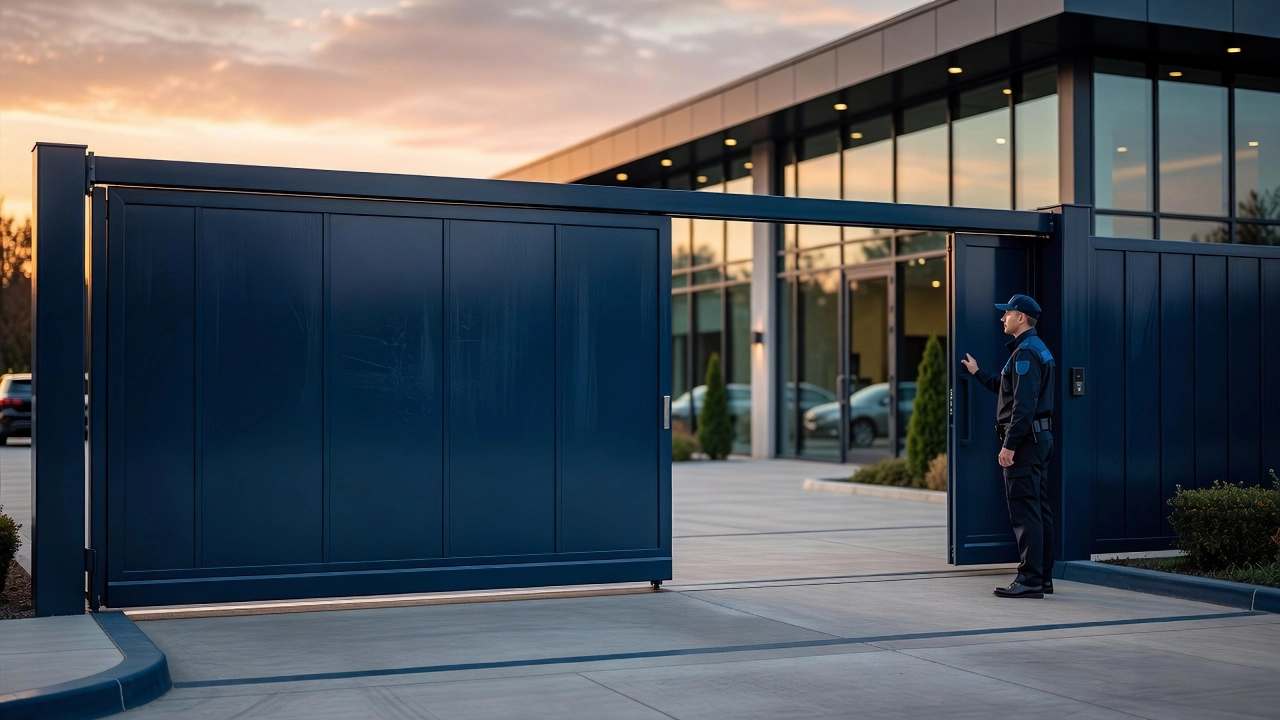
Picture this: you pull up to your property, and without stepping out of your car, your gate smoothly glides open to welcome you. No fumbling for keys, no getting out in the rain, just effortless access at the touch of a button. This is the everyday reality that an automatic sliding gate can bring to your home or business.
Whether you are a homeowner looking to boost security and curb appeal, or a business owner seeking a reliable access control solution, automatic sliding gates offer a powerful combination of convenience, safety, and style. But with so many options, features, and installation considerations to navigate, knowing where to start can feel overwhelming.
That is exactly why we created this complete guide. We have broken everything down into clear, easy-to-follow sections designed specifically for beginners. From understanding how these systems work to choosing the right motor, materials, and safety features, you will find everything you need to make a confident, informed decision. Let us walk you through it all, step by step.
What Is an Automatic Sliding Gate?
An automatic sliding gate is an electromechanical system that opens and closes horizontally along a fixed track, requiring no manual effort to operate. Rather than swinging outward like a traditional gate, it travels laterally, making it well suited to driveways with limited space or busy residential and commercial entrances. The system integrates three core components working in coordination: an electric motor that provides the driving force, a control board that processes every signal and manages operational logic, and sensors that monitor the gate's environment to ensure safe movement at all times.
Three Main Drive Mechanisms
The way a sliding gate moves depends on its drive configuration, and there are three principal types used in modern installations.
Rack-and-pinion is the most widely used system for residential and commercial properties. A toothed steel rack runs along the bottom of the gate leaf, and a pinion gear mounted on the motor unit meshes with it to drive the gate smoothly along its track.
Cantilever systems are trackless by design. The gate is suspended on rollers mounted to one side of the opening, meaning it travels without any ground-level rail. This makes cantilever automation the preferred choice for gravel driveways, uneven surfaces, or sites where debris could obstruct a floor track.
Underground motor systems conceal the entire drive mechanism beneath the gate line, leaving the entrance completely unobstructed visually. These systems are popular where aesthetics are a priority, particularly on high-end residential or heritage properties.
How the System Works in Practice
When a trigger signal reaches the control board, it authenticates the input and activates the motor, which engages the rack or drive mechanism to begin gate travel. Limit switches positioned at both ends of the travel path signal the control board when the gate has reached its fully open or fully closed position, cutting power to the motor precisely. The control board also manages all safety device inputs, including photoelectric beams and pressure-sensitive edges, stopping or reversing the gate instantly if an obstruction is detected mid-travel. According to Secure Access Solutions, well-maintained gate motors routinely deliver over ten years of reliable service due to their straightforward mechanical design.
Access Trigger Options
Property owners can choose from a broad range of methods to trigger gate movement. Options include remote fobs, keypad PIN entry, video intercom systems, proximity cards, smartphone apps, and biometric readers such as fingerprint or facial recognition scanners. This flexibility means the same gate can serve a family home using a key fob and a commercial site using app-based access logs simultaneously.
The scale of adoption reflects just how mainstream this technology has become. The automatic gate opening system market was valued at over $4 billion globally in 2025 and is forecast to reach nearly $8 billion by 2034, driven by rising security demand, smart home integration, and growing commercial access management requirements. Sliding gates alone account for 51% of all gate automation product sales, confirming their position as the dominant choice for property owners and businesses worldwide.
7 Reasons Sliding Gates Are the UK's Most Popular Automated Gate Type
Sliding gates now account for 51% of all automated gate product installations globally, making them the single most popular gate type by a considerable margin. That dominance is no accident. From cramped urban driveways to exposed rural plots across East Sussex, sliding gates solve practical problems that swing gates simply cannot. Here are seven reasons why they consistently come out on top.
1. Space Efficiency
A swing gate needs a clear arc in front of it to operate, which can measure several metres depending on gate width. On a tight driveway, a sloped approach, or any plot where the gate would sweep across a public pavement or road, that arc is simply unavailable. A sliding gate travels parallel to the boundary fence or wall, requiring no swing clearance whatsoever. This makes it the only workable automated option on a large proportion of UK residential and commercial plots.
2. Sloped Driveway Compatibility
Swing gates rely on a level arc to operate without binding, dragging, or stressing the hinges. On an inclined driveway, achieving that level arc often requires costly groundworks or becomes mechanically impossible. Sliding gates move horizontally along a track regardless of gradient changes, making them the reliable choice for hilly properties throughout rural East Sussex and the wider South East, where uneven terrain is a common feature rather than an exception.
3. High-Traffic Commercial Suitability
Industrial and commercial operators demand continuous cycling, sometimes hundreds of open-and-close operations per day. Sliding gate motors are engineered with duty cycles that meet this demand, whereas swing gate operators are typically rated for lighter residential use. For warehouses, business parks, and agricultural sites, the sliding gate is the professional-grade choice.
4. Security and Anti-Lift Properties
A correctly installed sliding gate, fitted with ground track, anti-lift rollers, and electric locking, presents a formidable physical barrier. There is no hinge side to lever or force. Cantilever sliding gates go further still, eliminating the ground track entirely and removing a common point of attack, while still maintaining rigid alignment through the roller carriage system.
5. Smart Home and IoT Integration
Modern sliding gate openers are routinely app-controlled and IoT-connected, with smartphone integration now standard across product lines. This aligns directly with the smart home ecosystem that residential buyers increasingly expect, allowing gate control to sit alongside lighting, heating, and security cameras in a single platform. The automatic sliding gate opener market reflects this shift, with smart connectivity identified as a primary driver of consumer upgrade demand through to 2035.
6. Solar Power Viability
Sliding gate motors benefit from mechanical advantage through the rack-and-pinion drive system, which typically results in lower sustained current draw compared to swing gate operators working against gravity and leverage. Lower current demand translates directly into compatibility with solar-powered battery backup systems, a growing priority for rural buyers and sustainability-conscious homeowners who want reliable gate automation without mains dependency.
7. Accessibility Benefits
Automated gate operation removes the physical effort of moving a heavy gate manually, which matters far more than it might initially appear. The WHO estimates that over 1 billion people worldwide live with some form of disability, and automatic operation directly supports barrier-free, inclusive property access for residents, visitors, and customers alike. For any property serving the public or housing individuals with limited mobility, an automatic sliding gate is not simply a convenience; it is a meaningful accessibility measure.
Automatic Sliding Gate vs. Swing Gate: Which Is Right for Your Property?
Choosing between an automatic sliding gate and a swing gate comes down to five practical criteria. Work through each one honestly for your site and the right answer usually becomes clear.
1. Available Space
Swing gates rotate on a hinge and sweep a full arc equal to the gate leaf length. On a 3-metre wide entrance, a single inward-opening swing gate claims roughly 3 metres of driveway depth every time it opens. Parked cars, steep drops, or a short driveway make that arc unworkable. A sliding gate moves parallel to the fence or wall line and only needs clearance equal to the gate width plus a small buffer alongside the boundary. For tight residential plots, that difference is decisive. You can read a detailed comparison of sliding and swing gate features to see how the space requirements stack up across different entrance widths.
2. Driveway Gradient
Sliding gates travel horizontally along a track or cantilever system, so gradient is largely irrelevant to their operation. Swing gates are far more sensitive to slope. On a gradient steeper than approximately 1:10, the bottom edge of a swing gate can catch, sag, or slam shut under its own weight. Correcting this requires custom hinge positioning or hydraulic operators, both of which add cost and complexity. If your driveway slopes at all, a sliding gate removes the problem entirely.
3. Traffic Volume and Duty Cycle
For commercial, agricultural, or busy residential properties handling 20-plus vehicle movements per day, operator duty cycle matters enormously. Sliding gate motors rated for high cycles per hour are compact, reliable, and competitively priced. Swing gates at equivalent commercial duty ratings require heavier, more complex operators that cost significantly more to supply and service.
4. Visual Preference
Swing gates suit formal, symmetrical, and heritage entrances where the opening motion adds a sense of occasion. Sliding gates complement modern builds, industrial premises, and longer boundary runs where the full panel displays cleanly along the fence line. Neither type is inherently more attractive; the right choice depends on your property's architectural character.
5. Installed Cost
Sliding gates typically carry a higher upfront fabrication cost, but swing gate operators at commercial duty ratings often close that gap quickly. Solar-powered operators can also remove the need for electrical trenching, saving considerable installation cost on larger plots regardless of gate type.
The bottom line: most residential driveways under 5 metres wide, and virtually any entrance with a slope, space constraint, or commercial traffic pattern, will be better served by a sliding gate. If you are still uncertain after working through these criteria, a free site assessment from Portara will give you a clear recommendation based on your specific property, without any obligation.
How Much Does an Automatic Sliding Gate Cost in the UK?
Budgeting accurately for an automatic sliding gate starts with understanding that supply-and-install costs vary significantly depending on gate size, material specification, access control requirements, and site conditions. The price ranges below reflect realistic UK figures for 2026, but treat them as indicative rather than fixed, because groundworks alone can move a project considerably in either direction.
Entry-Level Residential Installations
For a straightforward residential property, a steel or aluminium infill sliding gate up to 4 metres wide, fitted with a single operator, basic control board, and remote fob access, typically falls in the £2,500 to £5,000 supply-and-install range. Where within that range a project lands depends on gate material, surface finish, and how accessible the site is for groundworks. A galvanised steel gate with a standard finish sits toward the lower end; powder-coated aluminium with a bespoke colour sits higher. Labour costs alone for residential gate installation commonly run £2,000 or more, so the gate and operator represent only part of the total.
Mid-Range Residential Installations
A step up in specification brings you to bespoke fabricated sliding gates up to 5 metres wide, paired with a video intercom, keypad entry, and safety edges. This category typically costs £5,000 to £9,000. CNC plasma-cut infill panels, decorative metalwork, and multi-coat powder finishing push costs toward the upper end of that range. For homeowners wanting a gate that makes a strong visual statement while delivering reliable access control, this mid-range bracket represents the most popular choice among residential clients. According to the Electric Gates UK cost and installation guide for 2026, fabrication specification and access control complexity are the two biggest variables in this segment.
Commercial and Agricultural Installations
Heavy-duty applications, including gates over 5 metres wide or exceeding 500 kg in weight, with high duty-cycle motors, loop detectors, and full access control integration, typically start at £8,000 and can exceed £20,000 depending on specification. Groundworks at this scale, including concrete footings, track channel excavation, and dedicated electrical supply runs, are significant and highly variable cost items that cannot be estimated without a site visit.
The Retrofit Option
If you already have a manual sliding gate with a sound structure and serviceable track, automation is often considerably cheaper than a full new installation. Fitting a new operator kit, control board, and safety devices to an existing gate typically starts from around £1,200 to £2,500, subject to a site survey confirming suitability.
Key Cost Factors to Understand
Four variables drive the final figure more than any other:
Gate width and weight determine motor specification and the depth of concrete foundations required.
Access control complexity adds cost at every tier, from a basic fob through to smartphone app, video intercom, keypad, and ANPR camera.
Groundworks are consistently the most unpredictable line item; ground conditions, proximity to drainage, and cable routing distances all influence cost.
Bespoke fabrication always costs more than a standard imported gate, but delivers superior durability and aesthetics over the long term, making it the better investment for most permanent installations. You can explore the practical differences between gate types in this 2026 guide to fence gate types.
Generic online pricing guides rarely reflect actual UK labour rates, regional groundwork complexity, or the true cost of access control integration. A site survey from a qualified local installer like Portara Automation is the only reliable way to receive a fixed-price quotation that properly accounts for every site-specific variable.
Automatic Sliding Gate Installation: What to Expect from Survey to Switch-On
Understanding what happens between your first call and the moment your gate operates for the first time helps you plan confidently and avoid surprises. A professional automatic sliding gate installation follows five clearly defined stages, typically spanning two to four weeks from initial enquiry to handover depending on site complexity.
Stage 1: Site Survey
A competent installer will never quote from a photograph or a phone call. The surveyor visits your property to measure driveway width, assess surface type and gradient, inspect existing boundary walls or posts, and locate the nearest electrical supply point. This is also when gate weight, total travel distance, and the required motor duty cycle are calculated. Slope assessment matters more than most homeowners expect; on a sloped driveway, motor capacity calculations should be increased to account for gravitational load on the operator. Any planning constraints, including conservation area designations, are identified at this stage before any specification is produced.
Stage 2: Design and Fabrication
For bespoke installations, the gate is manufactured to the exact opening width and height confirmed during the survey. The client specifies infill style, whether vertical bar, flat panel, or a decorative pattern. Portara's CNC plasma cutting capability allows custom decorative infill designs to be cut precisely and efficiently as part of the in-house fabrication process, giving residential and commercial clients genuine design flexibility without extended lead times. Motor type is also finalised at this stage, with gate weight serving as the primary selection criterion; gates over 400 kg require heavy-duty support wheels, reinforced tracks, and a higher-capacity opener.
Stage 3: Groundworks and Post Installation
Groundworks consistently surprise homeowners because of the preparation involved before the gate itself arrives on site. Reinforced concrete motor bases, track channel cutting for rack-and-pinion systems, cable ducting for both mains power and low-voltage control wiring, and structural post installation or column reinforcement are all completed first. Research consistently shows that poorly installed posts are responsible for the overwhelming majority of long-term gate problems, making groundworks quality the single biggest determinant of system reliability. All electrical work must comply with Part P regulations, with dedicated weatherproof cabling run from the consumer unit to the gate location.
Stage 4: Gate and Operator Installation
With groundworks complete, the gate is delivered and hung on its rollers. The rack is fitted to the gate leaf, the motor is bolted to its prepared concrete base, and control wiring is run to each access control device, whether that is a keypad, intercom, card reader, or video entry panel. Limit switches are set to define the precise open and closed positions, preventing overrun. Safety devices including safety edges and photocells are positioned, wired, and tested to confirm correct detection and response before any powered cycling begins.
Stage 5: Commissioning and Handover
The complete system is run through multiple operational cycles to confirm consistent, safe performance. All access control devices are programmed to client requirements. The owner is walked through daily operation, the emergency manual release procedure, and the basic maintenance checks they should carry out routinely. A compliant installation requires force limitation testing to BS EN 12453 and must be documented with a Certificate of Compliance and Declaration of Conformity.
A Regional Note for East Sussex and Kent Properties
Properties in conservation areas or subject to listed building consent requirements across East Sussex and Kent may require planning permission before gate posts are installed or an existing manual gate is automated. This is not a minor administrative detail; starting work without the correct consent can require retrospective applications or physical removal of structures. Portara's experience working with local planning authorities across the South East means clients receive clear guidance on likely consent requirements before any work begins, not after. For a detailed overview of the installation process, this step-by-step sliding gate installation guide provides useful supporting context.
Access Control and Smart Features for Automatic Sliding Gates
Automation gives you the gate movement. Access control gives you the intelligence behind it. The two work together, and understanding your options helps you specify a system that genuinely fits your property rather than one you outgrow within a year.
Remote Fobs and Keypads
Remote fobs and keypads are the starting point for almost every residential automatic sliding gate installation. Radio frequency fobs allow authorised users to trigger the gate from inside a vehicle, typically operating across distances of 50 to 100 metres depending on the controller specification. Keypads mounted at the gate post serve a different purpose: they allow visitors, contractors, or delivery personnel to enter a PIN and request access without the homeowner needing to issue a physical credential. Both options are low-cost to add at installation and straightforward to reprogram or replace if fobs are lost or codes need to be changed.
Video Intercoms
A video intercom transforms your gate from a physical barrier into an interactive security checkpoint. A camera-equipped unit at the gate captures live video of any visitor, allowing you to see and speak with them before deciding whether to grant access. You can respond via a wall-mounted monitor, a paired smartphone app, or a connected device from anywhere with an internet connection. Industry practitioners consistently regard video intercoms as the single most impactful security upgrade available alongside the automation system itself. For residential buyers, next-generation video intercom systems now include built-in WiFi connectivity, two-way audio and video calling, and remote unlock capability, making them as practical as they are secure.
Smartphone and App Control
IoT-connected gate controllers allow you to open or close your gate remotely, review access event logs, and set automatic schedules, all from a smartphone app. Prioritising smartphone credentials and remote management is increasingly recommended for gate access buyers as cloud-based platforms become standard across residential and commercial product lines. This trend aligns directly with the broader smart home integration movement forecast to drive the UK automatic gate market from its 2024 value of $720 million toward a projected $1.41 billion by 2035.
Biometric Access Control
Fingerprint readers, facial recognition cameras, and proximity card readers are no longer exclusively commercial-grade products. Touchless face recognition access, where the gate responds simply to an authorised person approaching and looking at the reader unit, is now available as an off-the-shelf feature. Card and fingerprint systems have also become cost-competitive for premium domestic projects. For commercial sites, biometric systems offer audit-trail logging that records exactly who accessed the site and when, which is increasingly relevant for compliance and insurance documentation purposes.
CCTV Integration
Gate automation systems can be configured to trigger CCTV recording at the moment of gate activation, pairing the access event with timestamped video evidence. This integration is particularly valuable for commercial premises, rural properties, and any site where a clear vehicle movement record is required to satisfy insurance policy conditions or internal security protocols. Rather than running CCTV continuously at high storage cost, event-triggered recording focuses resource on the moments that actually matter.
ANPR (Automatic Number Plate Recognition)
For high-traffic commercial or industrial entrances, ANPR cameras read vehicle registration plates and trigger the gate automatically for pre-approved vehicles, removing the need for any driver interaction at the entrance. This eliminates queuing, reduces wear on intercom hardware, and speeds throughput significantly on busy sites. Integration with access control software means vehicle lists can be updated remotely in real time, so access can be granted or revoked without a site visit. For distribution centres, industrial estates, and multi-site commercial operators, ANPR represents the most efficient access layer available at the gate.
UK Regulations and Safety Standards Every Buyer Should Know
Buying an automatic sliding gate is not simply a purchasing decision; it is a legal and safety obligation. Understanding the regulatory framework before you commission any work protects you, your family, visitors, and anyone else who uses your entrance.
1. BS EN 12453: The Standard That Governs Every Automatic Gate
BS EN 12453 is the principal UK and European standard for power-operated pedestrian and vehicular gates. It defines the maximum allowable closing forces a gate may exert, requires that force limitation or presence detection technology be incorporated to prevent entrapment injuries, and sets measurable performance criteria for all safety devices fitted to the system. Every automatic sliding gate installed in the UK should be designed and built to meet this standard. It is not optional guidance; it is the benchmark against which compliance is assessed.
2. CE Marking and the Declaration of Conformity
All electric gate operators placed on the market must carry a CE mark confirming compliance with the Machinery Directive. Before any installation proceeds, ask your installer to confirm that the operator carries a valid CE mark and that they can provide a Declaration of Conformity for the complete installed system. This document confirms the entire assembly, not just individual components, meets the required safety standards. If an installer cannot produce this documentation at handover, that is a serious red flag.
3. Entrapment Risk and Required Safety Devices
BS EN 12453 requires that automatic gates incorporate safety edges (pressure-sensitive strips that stop and reverse gate travel on contact with an obstruction), photocells (infrared beams that halt movement if broken), or a combination of both. Gate Safe, the UK's dedicated gate safety organisation, advises that a minimum of two different types of safety device should be fitted on every automated gate. The specific combination required depends on the gate geometry and a formal risk assessment carried out at the design stage. Non-contact detection should always be prioritised alongside physical safety edges.
4. Installer Obligations Under UK Law
The Supply of Machinery (Safety) Regulations 2008 places clear legal responsibility on the installer. They must ensure the complete system functions as a safe machine; responsibility extends across the gate leaf, the operator, all safety devices, and the control system. Individual components being compliant in isolation is not sufficient. The HSE confirms that powered gates are machines that must be properly designed, manufactured, installed, and maintained to avoid serious or fatal injuries.
5. Why Compliance Matters Beyond the Legal Requirement
A non-compliant gate installation carries consequences that extend well beyond regulatory penalties. Gates without proper safety devices can cause crushing, entrapment, and fatal impact injuries. Insurance claims arising from gate-related injuries on non-compliant installations face significant risk of rejection. Compliance is also a live issue in property transactions; automated gate installations are increasingly scrutinised during conveyancing, and non-compliant systems can complicate or delay a sale.
At Portara Automation, every automatic sliding gate system we design and install is built to BS EN 12453 requirements. We provide clients with full compliance documentation at handover, so you have written confirmation that your system meets every applicable safety standard from day one.
Maintenance, Servicing, and Repairs: Keeping Your Gate Running Reliably
An automatic sliding gate is a long-term investment, and like any mechanical system, it performs reliably only when it receives structured, professional attention. The good news is that a well-maintained gate can deliver a motor lifespan of 10 years or more. Neglected systems tend to deteriorate faster, with small faults compounding into costly repairs.
The Annual Servicing Checklist
A professional annual service visit should work through six core areas. First, lubrication of the rack, rollers, and drive pinion prevents the metal-on-metal friction that causes wear and forces the motor to work harder than necessary. Second, limit switches must be inspected and adjusted; these components tell the gate where to stop at each end of its travel, and they drift over time. Third, all safety devices must be tested against the force limits defined in BS EN 12453, the UK standard governing automated gate safety. In plain terms, this means confirming that if the gate contacts a person or obstruction, it stops or reverses within an acceptable force threshold. Fourth, structural posts and the gate leaf itself should be checked for corrosion, movement, or ground settlement. Fifth, control board connections and battery backup condition should be verified. Sixth, every access control device, including remote fobs, keypads, and intercoms, should be confirmed operational. For a structured overview of what a thorough service covers, this maintenance checklist for automatic gate systems is a useful reference point.
Recognising Common Faults
Being able to describe a fault accurately helps engineers diagnose problems faster on the first visit. Five symptoms are particularly common. A gate slowing on the open cycle usually points to worn rack teeth or insufficient lubrication placing excess load on the motor. A gate failing to close fully is almost always limit switch drift. Unexpected reversal typically means a photocell lens is misaligned or contaminated, causing the obstruction detection circuit to trigger falsely. Reduced remote fob range suggests a battery failure or aerial fault at the control board. A gate whose motor runs but produces no movement indicates drive pinion slip or rack disengagement. For a broader overview of automatic gate types, motors, and maintenance, the underlying mechanics explain why each of these symptoms develops as it does.
Seasonal Maintenance in East Sussex and Kent
Sliding gate tracks accumulate debris throughout the year, but autumn and winter present the sharpest seasonal challenges. Fallen leaves compact into tracks and restrict roller travel. Gravel migrates from driveways into the gate channel. Frost can cause moisture in the track to freeze and lock rollers in place. In rural areas of East Sussex and Kent, these conditions arrive predictably every year. Owners can safely clear visible track debris and wipe photocell lenses between professional visits; anything involving the motor, control board, or electrical components should remain the responsibility of a trained engineer.
Why a Local Specialist Matters
A national helpline or manufacturer warranty centre cannot attend your property the same day. A local specialist such as Portara holds spare parts for commonly specified operators, understands the typical installation conditions across East Sussex and Kent, and can diagnose faults efficiently on first attendance because the site and system are often familiar.
Retrofit and Upgrade Servicing
If you have purchased a property with an existing automated gate and no record of previous servicing, a single visit from Portara can assess the operator condition, replace outdated control boards and access devices, and confirm current safety device compliance against BS EN 12453. This approach future-proofs an older system without requiring full replacement, often at a fraction of the cost of a new installation.
Automatic Sliding Gates for Agricultural and Rural Properties
Agricultural and rural properties place demands on gate automation that no standard residential system is designed to meet. Understanding these specific requirements helps farm owners and rural property managers specify the right solution from the outset.
1. Heavy-Duty Operators for Working Farm Entrances
Farm and field gate automation must account for multiple access points, heavy steel or timber gates often spanning four metres or more, and relentless daily vehicle movement from tractors, grain lorries, contractors, and feed deliveries. A standard residential operator is simply not built for this environment. Heavy-duty sliding gate operators rated for large gate weights and high duty cycles handle these conditions reliably, maintaining consistent performance across hundreds of daily cycles. The horizontal sliding action is particularly well suited to wide agricultural entrances where swing gates would require prohibitive clearance space.
2. Farm Security and Access Control
Rural properties across East Sussex and Kent face a disproportionate risk of vehicle theft, plant machinery theft, and opportunistic trespassing. Automated gates fitted with keypad or ANPR access control create a meaningful deterrent at the property boundary and generate a timestamped audit trail of every vehicle entry and exit. This access record is increasingly valued by farm insurers and is a practical tool when reporting incidents to local rural crime units. An automated gate does not guarantee security, but it removes the easy access that opportunistic thieves depend on.
3. Solar Power for Remote Field Gates
Many farm entrances and field access points sit far from any mains electrical supply, making cabled power installation impractical or prohibitively expensive. Solar-powered gate automation resolves this cleanly: a solar panel charges a battery, and the battery powers the operator continuously, including through overcast UK winters when modern high-capacity battery systems maintain reliable year-round operation. Rack-and-pinion sliding operators draw lower current than heavier swing gate operators, which makes achieving viable solar power budgets more straightforward for agricultural installations.
4. Long Driveway and Remote Access Management
Driveways of 100 metres or more introduce real challenges for intercom and access control wiring. Cable voltage drop over long runs requires careful sizing, and trenching costs can be significant across cultivated or hard-surfaced land. Video intercoms with integrated 4G SIM capability eliminate the cable run entirely, allowing a homeowner or farm manager to see, speak with, and admit visitors remotely from a smartphone, regardless of distance. Portara designs gate systems for large rural plots across East Sussex and Kent routinely, and this remote-access challenge is a standard part of the design conversation.
5. Bespoke Fabrication for Agricultural Requirements
Standard residential sliding gates are visually and functionally unsuited to a working farm entrance. Portara's in-house fabrication capability means agricultural clients can specify steel gates built precisely for their environment: custom widths to accommodate wide-load vehicles such as combine harvesters and low-loaders, bar spacing appropriate for areas adjacent to livestock containment zones, and robust industrial finishes suited to exposure to mud, machinery, and weather. Every gate is fabricated to the property's exact dimensions and operational requirements, ensuring the finished installation is as practical as it is secure.
Why Choose Portara Automation for Your Automatic Sliding Gate?
Every point covered in this guide, from installation day to access control choices, comes down to one underlying question: who is actually doing the work? The answer matters more than most buyers realise.
One Team, From Survey to Switch-On
Portara Automation designs, fabricates, and installs every gate system from its East Sussex base. That means the same team that surveys your site also builds your gate and commissions the automation. There are no supply chain middlemen, no subcontracted installation crews, and no handoff between a supplier and a separate fitter. When you have a question after handover, you are calling the people who built the gate, not a customer service department three steps removed from the installation.
Built to Your Specification, Not a Catalogue
National suppliers work from fixed product ranges in standard sizes. Portara manufactures gates to exact client specifications using CNC plasma cutting and precision metalwork. If your entrance requires a non-standard width, a custom infill pattern, or a finish that reflects the character of your property, those requirements are built in from the start rather than approximated from available stock. That fabrication capability produces results a catalogue simply cannot replicate.
A Complete Solution, Not a Collection of Products
Portara's service spans new residential driveway gates, commercial entrance upgrades, agricultural gate automation, and full access control integration including intercoms, CCTV, and app-based remote operation. Every installation is completed to BS EN 12453, the current UK safety standard for powered gates, with full compliance documentation provided at handover. That written confirmation matters to insurers and, for commercial clients, to health and safety obligations.
Local Knowledge Across the South East
Portara serves East Sussex, West Sussex, and Kent, bringing practical familiarity with regional planning authority expectations, clay-heavy soil conditions common across Weald locations, and the specific demands of rural and semi-rural properties throughout the South East.
To receive a fixed-price quotation tailored to your property, your access requirements, and your preferred gate specification, request a free no-obligation site survey with Portara Automation today.
Conclusion: Choosing the Right Automatic Sliding Gate for Your Property
Available space and driveway gradient are typically the deciding factors between a sliding gate and any alternative. Once sliding is confirmed as the right solution, access control requirements and budget determine how the system is specified. Keep those two decisions separate and the process becomes straightforward.
Whatever installer you choose, insist that the installation is carried out in full compliance with BS EN 12453 and that a Declaration of Conformity is provided at handover. This is not optional paperwork; it is your legal protection and evidence of a safe, compliant installation.
If you already have a manual sliding gate, do not assume full replacement is necessary. Retrofitting an automation kit to an existing structure is often possible, making the upgrade considerably more affordable than many owners expect.
To take the next step, contact Portara Automation for a free site survey across East Sussex, West Sussex, and Kent. You will receive a fixed-price quotation with no obligation to proceed.