What to Look for in Electric Gate Installers: A UK Buyer's Guide
Find out what separates the best electric gate installers from the rest. A practical UK buyer's guide covering safety, compliance, smart tech, and more.
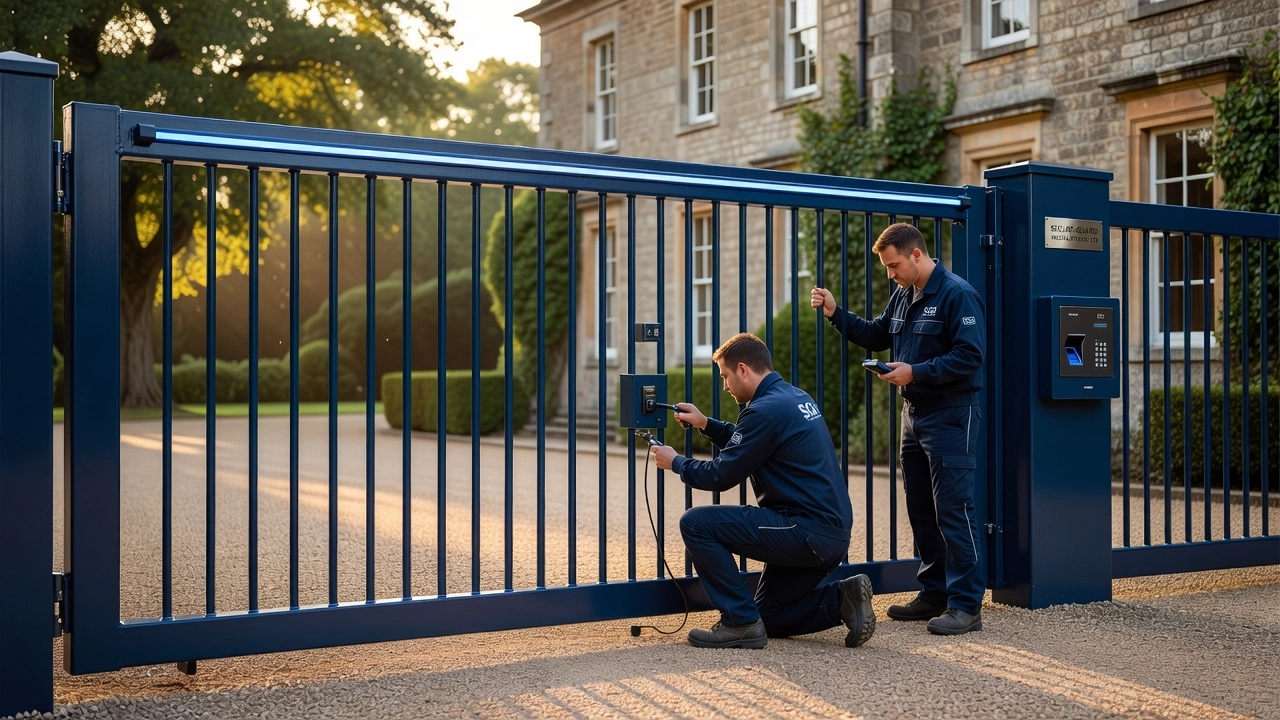
Your home's entrance makes a statement before anyone even knocks on the door, and an electric gate is one of the most effective ways to elevate both security and kerb appeal. But here's the reality: the quality of your installation matters just as much as the gate itself. Choosing the wrong company can leave you with a system that fails prematurely, voids your warranty, or worse, creates a safety hazard on your property.
With the UK market full of options ranging from reputable specialists to fly-by-night traders, knowing how to identify trustworthy electric gate installers is an essential skill for any homeowner considering this investment. The difference between a seamless, long-lasting installation and a costly headache often comes down to a handful of key factors that many buyers overlook.
In this guide, we walk you through exactly what to look for before signing any contracts. From accreditations and insurance to after-sales support and site assessments, you will leave with a clear checklist that puts you firmly in control of the decision-making process.
UK Safety Compliance: What a Qualified Installer Must Demonstrate
Choosing the right electric gate installer means more than comparing quotes. In the UK, automated gate installations are governed by a defined regulatory framework, and any installer who cannot demonstrate working knowledge of that framework represents a genuine liability risk for the property owner.
1. BS EN 12453 Fluency Is Non-Negotiable
BS EN 12453:2017 is the principal standard governing the safe use of power-operated pedestrian and vehicular gates in the UK. A qualified installer should reference this standard without prompting, explain which specific requirements apply to your installation type, and confirm how their specification meets those requirements. Critically, Gate Safe makes clear that BS EN 12453 alone does not satisfy all mandatory requirements under the Supply of Machinery (Safety) Regulations 2008, so competent installers must demonstrate familiarity with the broader regulatory landscape, not just a single document.
2. Entrapment Protection Is a Legal Requirement
Photocells, pressure-sensitive edges, and obstacle-detection mechanisms are not premium upgrades; they are legal obligations under UK law. Compliant installations must incorporate devices that bring the gate to a controlled stop on contact with a person or object. Gates operating automatically in public or semi-public areas carry additional obligations, including enhanced sensing on all leading edges. Ask your installer to specify which detection method they are fitting and why it suits your site conditions.
3. Demand Verifiable CE Marking Documentation
Every major component in a compliant installation must carry CE marking and be accompanied by a Declaration of Conformity. This overview of electric gate safety standards explains why accepting verbal assurances instead of physical documentation leaves property owners exposed to enforcement risk. Request paperwork before work begins, not after.
4. Emergency Release Must Be Demonstrated at Commissioning
Every automated gate must include a manual release mechanism allowing operation during a power failure or system fault. A professional installer will demonstrate this function in person during commissioning handover, alongside instruction on what to do if safety devices fail. This is recognised good practice under HSE guidance and is a procedural step no qualified installer should skip.
5. No Risk Assessment Equals a Hard Red Flag
A site-specific risk assessment conducted prior to installation is mandatory, not optional. It must account for the environment, the presence of vulnerable users including children, foreseeable misuse, and environmental factors such as wind loading. Installers who cannot produce a written risk assessment, or who present a generic template rather than a site-specific document, should be disqualified from consideration regardless of how attractive their pricing appears.
Bespoke Fabrication vs Off-the-Shelf Gates: Why It Matters for Your Property
Not every property fits a catalogue. Off-the-shelf automated gate kits are engineered around volume production assumptions: standard opening widths typically between 3 and 5 metres, level driveways with minimal gradient, and uniform post spacing. The moment your property deviates from those parameters, whether through an unusually wide plot, a sloped or curved entrance, or constraints imposed by a listed building designation or conservation area, catalogue products stop being a practical solution. Planning constraints in particular can require gates that match specific period styles or existing ironwork, requirements no pre-assembled kit can reliably satisfy.
Installers who operate their own metal fabrication workshop occupy a fundamentally different position. They can manufacture gate leaves to exact site measurements rather than selecting the nearest available size and adapting around it. This matters most where architectural consistency is at stake. A Victorian terrace, a Grade II listed farmhouse, or a contemporary steel-and-glass development each demands metalwork that belongs to the property rather than visibly compromising it. Matching existing wall finishes, replicating period design features, or complementing bespoke architectural metalwork requires made-to-measure fabrication as a baseline capability, not an optional upgrade.
CNC plasma cutting extends that precision further. This technology produces decorative infill panels, geometric patterns, and custom ironwork details with engineering-grade accuracy that hand-cutting cannot replicate. It is a capability most general tradespeople and many installation-only contractors simply do not possess. For buyers seeking distinctive entrances, the difference between precision-cut decorative steelwork and an approximation is immediately visible.
Agricultural and rural properties introduce a different set of requirements entirely. Standard residential gate kits are not rated for livestock pressure, contact from farm vehicles, or the sustained exposure to harsh weather that a working farm entrance experiences. These environments typically demand thicker-gauge steel construction, heavy-duty hinges, and robust locking mechanisms built to withstand daily operational stress over years.
When reviewing quotes from electric gate installers, ask one direct question: are the gate leaves manufactured in-house, sourced from a wholesaler, or supplied as a pre-assembled kit? The answer reveals exactly how much genuine customisation is available. A consultative, made-to-measure approach and a catalogue fulfilment model are not equivalent, and the distinction is worth understanding before any contract is signed.
Residential, Commercial, and Agricultural Gates Are Not the Same Job
Residential gate automation dominates the global market, accounting for roughly 56% of the automatic gate opening system market in 2026. But volume dominance does not mean technical complexity. A home driveway gate and a commercial site entrance are fundamentally different engineering briefs, and agricultural gate automation presents a third set of challenges that neither residential nor commercial experience fully addresses.
Residential, Commercial, and Agricultural: Three Different Engineering Problems
For a domestic property, the design priorities are straightforward: low daily cycle volume, a consistent and familiar set of users, aesthetic integration with the driveway, and reliable operation with minimal maintenance. Motors are specified accordingly, and access control typically involves a remote fob, a keypad, or an intercom linked to a smartphone. The safety requirements are real, governed by BS EN 12453 and BS EN 12445, but the operational environment is relatively controlled.
Commercial installations raise every parameter significantly. Duty cycle is the critical differentiator; a gate serving a logistics yard or business park may open and close dozens of times per day, and a motor undersized for that load will fail prematurely regardless of brand. Access control architecture also becomes substantially more complex, incorporating vehicle loop detectors, RFID readers, video intercoms, and increasingly AI-enabled licence plate recognition. Pedestrian safety liability on commercial sites is categorically higher, making entrapment protection, pressure-sensitive edges, and fail-safe modes non-negotiable rather than optional upgrades.
Agricultural gate automation introduces a separate engineering problem entirely. Field gates are frequently heavier than residential or commercial equivalents, mains power is often unavailable, making solar-powered systems the practical solution, and the gate may be operated by contractors, hauliers, or visitors who have no familiarity with the system. Environmental exposure to mud, dust, and temperature extremes demands higher ingress protection ratings and more robust mechanical specification.
What a Cross-Sector Installer Asks Before Quoting
A genuinely experienced installer will work through the same scoping questions regardless of sector: expected daily cycle volume, power supply availability, the full range of people who will need access, and whether the entrance also functions as a pedestrian route. These questions carry different weight in different contexts, but an installer who has never had to answer them for a busy commercial entrance or a remote farm gate will routinely underspecify on both motor and control hardware.
Portara Automation works across residential, commercial, and agricultural projects in East Sussex, West Sussex, and Kent. The engineering rigour applied to a country farmstead is the same applied to a commercial business park. That consistency of approach is not universal among local gate companies, and it is worth verifying before any installer is appointed.
Smart Integration Capability: Future-Proofing Your Installation
The automated gate sector is undergoing a fundamental architectural shift. Systems that once consisted of a motor, a remote handset, and a basic control board are being replaced by connected, software-defined platforms where access control is the central component. Access control systems already represent the largest component segment of the broader automated gate and door market, accounting for 34.6% of global market share in 2025. Installers who have not kept pace with this transition are not simply behind the curve; they are offering systems that will age poorly against properties where smart home infrastructure is expanding.
A future-ready installation should be capable of supporting intercom systems, video entry panels, mobile app control, RFID fobs, and PIN keypads as standard options, not afterthoughts. Beyond the gate itself, the best installations integrate cleanly with broader smart home ecosystems or building management systems. Major gate hardware manufacturers are actively investing in this direction. Nice's smart home trends content for 2026 demonstrates that leading European automation brands are treating ecosystem compatibility as a core product priority rather than an optional extra. When evaluating electric gate installers, ask directly which of these capabilities they can commission, not merely supply.
IoT-enabled gate controllers add significant long-term value by allowing remote diagnostics, fault notifications, and in many cases over-the-air firmware updates to be completed without an engineer visit. This capability directly reduces both maintenance costs and downtime compared with older closed-system controllers that required physical attendance for even minor configuration changes.
Sliding gate systems command 51% of the product segment market in 2026 and remain the preferred configuration for smart-integrated installations on larger or sloped properties where swing gate clearance is simply not viable. Their mechanical simplicity and single-axis movement also make them well suited to sensor integration and automated obstacle detection.
Finally, treat an installer's hardware range as a direct indicator of their future-readiness. A product portfolio that stops at a basic remote and a single keypad signals that the installer is not positioned to deliver a system that will remain relevant as smart home ecosystems mature. Verify that the brands they specify maintain active firmware development programmes and supported app ecosystems before committing to any installation.
Retrofitting an Existing Manual Gate: What a Good Installer Will Assess
Retrofitting an existing manual gate is a technically distinct service, and demand for it is growing. Many property owners have already invested in well-built timber, wrought iron, or steel gates and have no reason to replace them; they simply want the convenience and security of automated operation added to what they already have. A competent electric gate installer treats this as a structured assessment process, not a straightforward motor-fitting exercise.
The foundation of any retrofit assessment is gate weight and balance. A gate that does not swing or slide freely under its own weight will place continuous strain on an automation motor, leading to premature failure, erratic movement, and potential safety hazards. A thorough site visit will record the gate's mass, confirm it moves without binding, and evaluate hinge or roller condition. Worn hinges that are adequate for manual use will frequently fail under the repeated mechanical loading of an automated operator. Where hinge replacement or post reinforcement is required, that work should be scoped and priced as part of the installation, not left as a future problem for the owner to discover.
Ground conditions and site geometry determine which type of automation system is appropriate. Underground linear actuators are the preferred solution for swing gates where soil conditions allow burial without water ingress or service conflicts. Where ground conditions preclude underground installation, above-ground ram or articulated arm systems are the correct alternative. For sliding gates on level runs, rack-and-pinion drives are the standard solution; the installer must also confirm that sufficient back space exists for the gate leaf to travel fully clear of the opening. Power supply proximity is a further practical constraint; a mains connection that requires a long cable run adds cost and, in some cases, makes a solar-charged system a more practical answer.
Not every existing gate is suitable for automation without prior structural work. An honest installer will identify this clearly at assessment stage. According to professional gate automation retrofit guidance, many retrofits fail specifically because motor selection does not account for gate mass or because existing hinges cannot handle automation stress. The principle is straightforward: as confirmed by DASMA's technical guidance for vehicular gate operators, automation cannot correct underlying gate problems. If the structure is deficient, remediation must come first.
Portara's gate upgrade service is built around this principle. Full suitability assessments are carried out before any motor selection takes place, and in-house fabrication capability means that structural modifications, hinge upgrades, and gate leaf strengthening can be completed by the same team fitting the automation. This avoids the common scenario where an installer fits a motor to a gate that was never properly prepared, leaving the owner to source a separate contractor when problems emerge.
Local Knowledge and Aftercare: Why Proximity to Your Property Counts
An automated gate that fails at the wrong moment is not a minor inconvenience. A motor fault after sustained rainfall, a controller board wiped by a power surge, or a broken spring that leaves the gate stuck closed can block vehicle access entirely or leave a property unsecured. That kind of failure demands a response measured in hours, not the two or three days a national contractor dispatching from a distant depot will typically take to reach you. A local specialist with a well-stocked service van and engineers already operating in your area can realistically attend within two hours, and industry data suggests that well-prepared local operators achieve a first-visit fix rate of around eight in ten callouts, precisely because they carry parts and programmers for the systems they install.
The market context matters here. The European automated gate and door opening system market is forecast to grow at a CAGR of 7.65% through 2035, and the UK is identified as the fastest-growing regional market within that figure. That growth is commercially attractive, and it is drawing in new entrants. Not every company entering the sector will still be trading in three years when your system needs a scheduled service or a warranty repair. With an estimated 270,000 automated gates and barriers currently in use across the UK, and only around 30% believed to be fully compliant with current HSE regulations, the evidence suggests a significant portion of the installed base is already under-maintained or was poorly installed from the outset.
Before signing any contract, ask three direct questions. How does the installer handle emergency callouts, and what is their realistic response time for your specific location? Do they hold spare parts for the exact motor brand and model they are proposing? And do they intend to service the system they fit, or will aftercare involve a third-party maintenance company? The answers will quickly separate committed local specialists from volume fitters who move on after installation.
Warranty terms deserve equal scrutiny. Coverage varies substantially across the industry: some warranties cover parts only, others include labour, and some contain clauses that effectively void cover if any maintenance is carried out by a company other than the original installer. Reading those terms before signing is essential, not something to review after a fault develops.
Automatic gate aftercare delivered by a specialist who already knows your site, your system, and the specific environmental conditions of your property is a materially different proposition from a one-off visit by an engineer working from a job sheet. Portara Automation is based in East Sussex and serves East Sussex, West Sussex, and Kent. That geographic focus means local customers receive faster emergency response, engineers with direct familiarity with coastal exposure and rural access conditions common across the region, and a genuine ongoing service relationship built over multiple visits rather than a single installation appointment.
Pricing Transparency: What a Professional Quote Should Include
A professional quote from any credible electric gate installer should never arrive as a single lump sum. A properly structured quotation breaks down each element individually: the gate structure (bespoke fabrication or catalogue product, with material and finish specified), the automation system with motor brand and model named explicitly, access control hardware including intercoms and entry keypads, installation labour, groundworks where required, electrical supply runs, commissioning, safety testing, and separate warranty terms for both the gate and the automation components. If any of these line items are missing, you are not comparing a real quote; you are comparing an incomplete promise.
Hidden costs are the most reliable source of post-contract disputes in gate installation. Groundworks, electrical supply connections, and intercom cabling are frequently omitted from headline prices, only to appear as additions once work has begun. According to detailed cost breakdowns for 2026 installations, groundworks and electrical connections can represent a significant share of total project cost. Always request a fully inclusive price, and ask each installer in writing what happens if site conditions on the day require additional work, whether that means unexpected ground obstructions, harder substrate for post-setting, or a longer electrical run than anticipated.
Resist the instinct to treat the lowest figure as the best starting point. Motors specified at the minimum rating for a gate's weight will wear faster, particularly on commercial or higher-traffic residential properties. The short-term hardware saving is reliably eroded by earlier replacement cycles and call-out costs. Understanding the full cost picture before committing means accounting for duty cycle, motor longevity, and ongoing maintenance alongside the day-one installation figure.
Several red flags should prompt immediate caution. Any installer quoting without a physical site visit is offering guesswork; satellite imagery cannot assess ground conditions, post positions, or electrical routing accurately enough for a bespoke installation. A quote that refers vaguely to "an automation system" without naming the motor manufacturer and model number makes it impossible to verify duty cycle ratings, warranty coverage, or future parts availability. The absence of any reference to safety testing or compliance documentation at handover is equally serious, given the legal obligations outlined in the Supply of Machinery (Safety) Regulations 2008.
Comparing multiple quotes meaningfully requires consistent information from each installer. Ask every one to confirm the motor manufacturer and model number, the gate material and finish specification, whether access control hardware is included or separately priced, the duty cycle relative to anticipated daily usage, and the warranty duration for fabrication versus automation components separately. Without this information standardised across all submissions, you are not comparing equivalent proposals.
Solar Compatibility and Energy Efficiency: Questions Worth Asking in 2026
Energy efficiency has moved from a secondary consideration to a primary specification point for anyone evaluating electric gate installers in 2026. For rural and agricultural properties in particular, the case for solar-compatible systems is increasingly practical rather than ideological. Running mains power to a remote gate location typically requires trenching, ducting, and a dedicated circuit run that can add significant cost and disruption to an installation. A solar-ready system with integrated battery backup can eliminate that requirement entirely, making it the financially sound default for many sites across East Sussex and the wider region.
Low-power standby modes and energy-efficient motor technology are no longer premium additions reserved for high-specification projects. Leading automation hardware now incorporates these features as standard, and an installer who cannot tell you the standby power draw of the control panel they are proposing is working with an outdated frame of reference. Before committing to any installer, it is worth reviewing resources on exploring energy efficiency in gate automation systems to understand what current-generation hardware should deliver as a baseline.
European market data reinforces this direction. Sustainability and energy efficiency are identified as one of three primary product trends shaping buyer decisions through 2035, alongside smart integration and aesthetic customisation. This is a structural shift, not a short-term preference.
Battery backup deserves particular attention. As detailed analysis of the trade-offs between solar and underground electric power confirms, resilience during outages is as important as energy saving. A system with battery backup continues operating when mains power fails, which is critical for commercial sites and properties with a single access point.
Ask every prospective installer three direct questions: does the control panel support solar input; what is the system's standby power draw; and does the motor qualify for any low-energy product classification. A knowledgeable installer should answer all three without hesitation.
Choosing an Electric Gate Installer: Key Takeaways
Three questions should guide every decision you make when evaluating electric gate installers.
First, prioritise safety compliance above all other criteria. Demonstrable adherence to BS EN 12453 and verified entrapment protection measures are non-negotiable. An installer who cannot evidence their safety methodology in writing is a liability risk, not a cost saving.
Second, confirm whether bespoke fabrication happens in-house. Properties with non-standard dimensions, sloped driveways, restricted access, or agricultural settings cannot be reliably served by catalogue products. In-house fabrication capability is the only reliable indicator that your specific constraints will be properly resolved rather than approximated.
Third, ask the right questions before committing. Smart integration capability, retrofit assessment methodology, aftercare response times, and precise quote inclusions should all be confirmed in writing before any decision is made. The electric gate openers market is growing steadily, and so is the variation in installer quality.
Portara Automation designs, fabricates, and installs bespoke electric gate systems across East Sussex, West Sussex, and Kent. Contact us to discuss your requirements and arrange a site visit.
Conclusion
Choosing the right electric gate installer is just as important as choosing the gate itself. To protect your investment, prioritise companies with recognised accreditations, comprehensive insurance, and a proven track record of completed installations. Always insist on a thorough site assessment before any work begins, and confirm that robust after-sales support is included as standard.
The difference between a gate that performs flawlessly for decades and one that fails within months often comes down to the installer you choose today. Do not let price alone guide your decision.
Use this guide as your checklist when gathering quotes, ask the tough questions, and trust your instincts when something feels off. Your home deserves an entrance that combines security, style, and reliability. Take the time to choose wisely, and your electric gate will be an investment you never regret.