
Electric Sliding Gates: The Complete Guide for UK Homeowners
Everything UK homeowners need to know about electric sliding gates — costs, motor types, planning rules, BS EN safety standards, and smart access control.
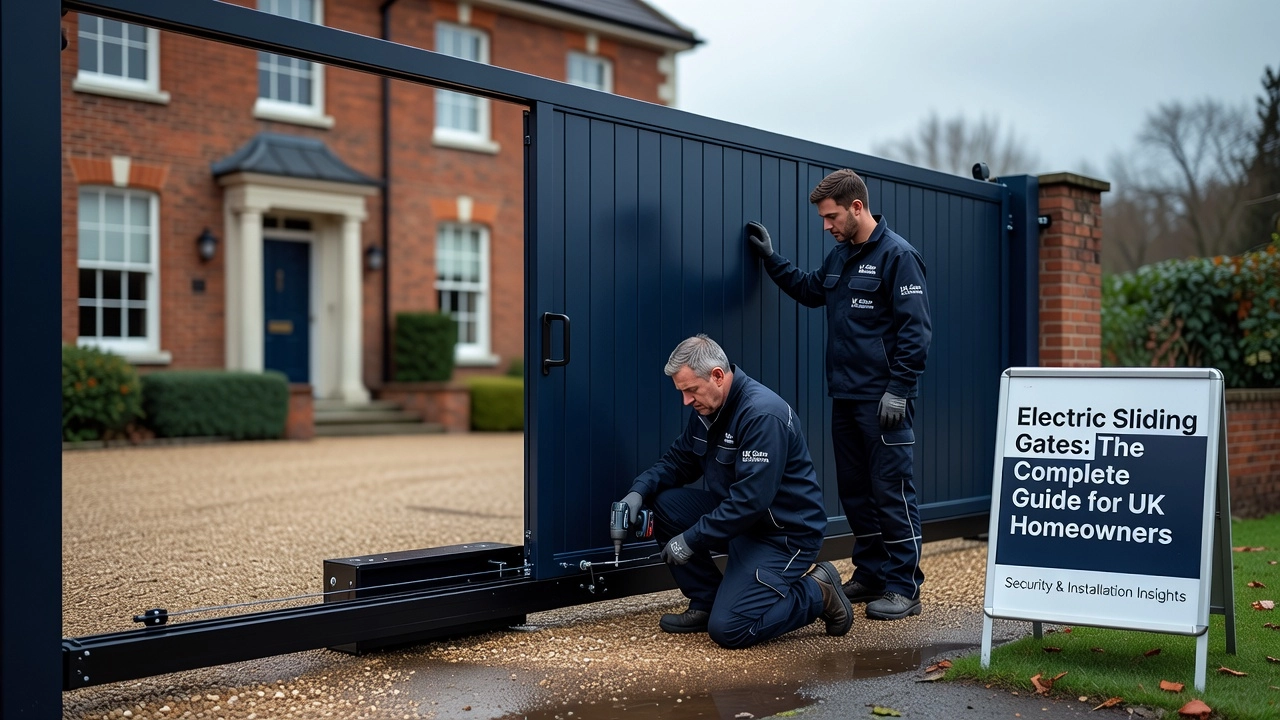
Picture this: you pull up to your property, tap a button, and your gate glides smoothly open without you stepping a foot outside your car. It is a level of convenience that more UK homeowners are choosing every year, and electric sliding gates are at the heart of that shift.
Whether you are securing a residential driveway, a commercial premises, or a rural property with limited swing space, electric sliding gates offer a compelling combination of security, practicality, and kerb appeal. But choosing, installing, and maintaining the right system involves more than simply picking a gate you like the look of.
In this guide, we break down everything an informed homeowner needs to know. From understanding the different drive mechanisms and automation options to navigating UK planning regulations and ongoing maintenance requirements, this analysis covers the full picture. You will also find practical advice on costs, safety standards, and what to look for when comparing installers. By the end, you will have the knowledge to make a confident, well-informed decision about whether electric sliding gates are the right investment for your property.
Why Electric Sliding Gates Are the Dominant Choice
Sliding gate automation holds a commanding 51% share of the global automatic gate opening system product segment in 2026, according to market analysis from Fact.MR. That dominance is not a statistical anomaly or a product of aggressive marketing; it reflects a consistent pattern of practical superiority across the property types where gate automation is most in demand. When buyers across multiple countries and climates independently arrive at the same product choice, the engineering logic behind it deserves close examination.
Why Sliding Gates Outperform Swing Gates on the Core Criteria
The comparison between sliding and swing gates comes down to four decision points that matter most to residential buyers. First, space requirement: swing gates need a clear arc of travel equal to the full panel width, either inward or outward, which immediately rules them out for properties with limited forecourt depth or vehicles parked close to the gate. Sliding gates travel laterally along the boundary line, requiring no forward clearance at all. Second, gradient: swing gates struggle on sloped driveways because the arc of travel intersects the rising or falling ground; sliding gates are entirely unaffected by incline. Third, structural load: swing gate posts must bear the full cantilevered weight of the panels and require deep, substantial foundations; sliding systems distribute load across a track or cantilever roller assembly, reducing stress on the support structure. Fourth, aperture width: for openings beyond four metres, swing gate motors become underpowered and post engineering impractical, whereas sliding gate drives handle wide apertures without compromise, as confirmed by detailed analysis of the electric gate openers market.
Local Relevance for South East England Properties
For buyers in East Sussex, West Sussex, and Kent, these advantages are not abstract. Long frontages on semi-rural plots across the Weald and Romney Marsh areas frequently exceed five metres, immediately favouring sliding automation. Older properties with boundary walls, established planting, or original stone pillars often lack the swing clearance that a traditional bifold or single-leaf gate would require. Variable ground conditions, from chalk downland to clay-heavy soils, can also affect drainage around gate foundations, making cantilever sliding systems, which require no ground-level track channel, a particularly practical choice in these locations.
The UK context reinforces the urgency of getting this decision right. The UK is currently the fastest-growing regional market in Europe for automatic gate and door opening systems, driven by rising residential security demand and accelerating adoption of smart automation technology. That growth is felt directly across the South East, where homeowner investment in perimeter security has increased sharply in recent years.
A Homeowner-First Market
Approximately 56% of automatic gate market end-use in 2026 is attributed to residential security, confirming that electric sliding gates are, first and foremost, a homeowner investment. Buyers are not purchasing automation as a luxury add-on; they are responding to genuine security priorities, combined with the convenience benefits that modern access control systems deliver. For properties across East Sussex and the wider South East, an electric sliding gate represents a durable, practical, and high-value solution grounded in clear engineering advantages rather than trend alone.
How Electric Sliding Gates Work
At its core, an electric sliding gate operates on a straightforward principle: an electric motor drives a pinion gear that meshes with a toothed rack fixed along the gate leaf, pulling the panel horizontally along a fixed path rather than swinging it outward on hinges. This lateral movement means no clearance space is required in front of or behind the gate, making the system particularly well-suited to properties with limited driveway depth or heavier gate constructions where consistent, controlled movement is essential.
Key Components
A complete system comprises several interdependent elements. The gate leaf is the travelling panel itself, guided either along a ground track via roller wheel assemblies or suspended on a cantilever support frame that eliminates the need for a track altogether. Cantilever systems are often preferred on sloped or uneven ground and in environments where debris could obstruct a floor-level rail. The drive unit, combining motor and gearbox, provides the electromechanical force; limit switches define the precise stop points at each end of travel; and safety edges monitor for obstructions during movement, halting or reversing the gate if an object is detected. The control board ties everything together, acting as the system's command centre by receiving input signals, authenticating them, and directing the motor accordingly.
Power Supply and Solar Alternatives
UK installations connect to a standard 230V mains supply, with cabling typically routed through conduit buried to an appropriate depth in compliance with Part P of the Building Regulations. For rural or remote properties where running mains cable is impractical or costly, solar-powered systems represent a genuinely viable alternative; modern solar gate operators deliver consistent performance when correctly specified and installed, and they align with the growing consumer priority around energy efficiency.
Command Inputs and Access Control
The control board accepts commands from a wide range of input devices: a remote fob, PIN keypad, intercom trigger, vehicle loop detector embedded in the driveway surface, or a smartphone app offering remote operation from anywhere with a data connection. How automatic gates work confirms that modern systems also support voice control integration, reflecting the broader shift toward smart home connectivity. This variety of access methods forms the foundation of a broader access control strategy, which will be examined in detail later in this article.
Drive Technology
Electromechanical drive technology is the industry-leading choice for sliding gate automation, valued for its reliability, low maintenance requirements, and seamless compatibility with smart access control systems. With proper servicing, a well-specified electromechanical system will deliver well over a decade of dependable operation, underpinned by a relatively simple mechanical arrangement with minimal wear components.
Motor and Drive Types Explained
Rack-and-pinion drive is the default mechanism for electric sliding gates across the vast majority of UK residential and commercial installations. A toothed steel rack is fixed along the base frame of the gate leaf, and a motorised pinion gear meshes directly with it to drive horizontal travel. This configuration dominates for good reason: it offers mechanical simplicity with fewer moving parts than chain-driven alternatives, delivers precise positioning through limit switches that define exact open and closed points, and uses standardised rack sections that make servicing and component replacement straightforward. For most gates encountered in UK driveways and commercial entrances, rack-and-pinion strikes the right balance between reliability, cost, and long-term performance.
Underground and in-ground motor systems take the drive mechanism below ground level entirely, leaving no visible motor housing above the surface. These systems are suited to higher-specification residential projects where kerb appeal and visual impact are genuine priorities, particularly where a premium finish would be compromised by a surface-mounted motor box. The trade-off is meaningful: underground installations require excavation, waterproof housing, and carefully engineered drainage provisions to prevent water ingress. Maintenance access is also more involved, and installation costs are considerably higher than surface-mounted equivalents. For the right property, the aesthetic result justifies the additional investment.
Hydraulic drive systems operate using fluid pressure rather than a gear mechanism, delivering significantly higher torque output than electromechanical alternatives. This makes them well suited to very heavy gates in industrial, high-security, or large-scale commercial and agricultural applications. For a standard residential driveway gate, hydraulic systems are generally overkill, adding cost and complexity without a proportionate benefit.
Motor sizing and duty cycle are critical decisions that depend on three variables: gate weight, gate width, and expected daily usage frequency. Standard-duty motors are rated for intermittent operation and suit residential gates with modest cycle counts. Continuous-duty motors are engineered for sustained, high-frequency operation, making them the correct specification for busy commercial entrances. Undersizing a motor accelerates wear and leads to premature failure, so matching specification to actual usage patterns is a practical necessity rather than an optional refinement.
Solar-powered drive systems are an increasingly credible option, particularly for properties where running mains cabling to the gate position would be costly or disruptive. As noted in a 2026 guide to automatic gate types, solar installations can avoid significant trenching costs where the gate sits far from an existing power supply. In the UK context, solar arrays are typically paired with battery storage to maintain reliable performance through lower-irradiance winter months. Beyond practical necessity, solar is also gaining traction as an energy-efficiency choice among homeowners and businesses who want to reduce ongoing running costs alongside their environmental footprint.
Safety Features and UK Compliance Standards
Safety in powered gate systems is governed by a layered framework of UK and European standards, and understanding these requirements is essential for anyone specifying or purchasing an electric sliding gate.
BS EN 12453:2017+A1:2021 is the primary standard setting force limitation requirements for powered gates in the UK. In practical terms, it requires that the forces exerted by a gate during opening and closing remain within defined thresholds to prevent crushing, impact, and shearing injuries. These limits apply at every point along the gate's travel path, not just at the point of full closure. Compliance cannot be confirmed by judgment alone; installers must use calibrated force testing equipment to measure actual gate forces against the standard. As the HSE states directly, if an installer does not possess this equipment, they cannot confirm safety compliance and should not complete the installation. The standard also requires a full site-specific risk assessment, correct positioning of all safety devices, and reliable control system behaviour throughout.
BS EN 12604:2017+A1:2020 extends the compliance picture to the mechanical construction of the gate itself. A common misconception is that fitting a certified automation motor is sufficient. It is not. The gate leaf, supporting posts, fixings, track, and drive assembly must all collectively meet the standard's structural and mechanical integrity requirements. Where an installer assembles components sourced from multiple manufacturers, the responsibility for overall compliance rests with the installer, not the individual component suppliers.
Active obstacle detection forms the operational safety layer. Safety edges, which are contact-sensitive rubber strips fitted to the leading edge of the gate, trigger an immediate halt or reversal when compressed by contact with a person or object. Photocells, using paired infrared beams across the gate opening, provide non-contact detection and stop gate movement before physical contact occurs. For a single residential sliding gate, best-practice guidance specifies multiple safety edges and at least two photocell beam pairs, alongside built-in obstacle detection within the drive unit itself.
Buyers prioritising crime deterrence should also consider Secured by Design (SBD) accreditation. SBD is the official UK Police-backed initiative that awards accreditation to security products meeting independently tested performance standards. For gate and access control product selection, specifying SBD-accredited components provides documented evidence of crime resistance performance, which can also be relevant to insurance assessments and planning conditions on certain residential and commercial developments.
Professional installation is not simply recommended; it carries direct legal weight. Powered gates are classified as machinery under the Supply of Machinery (Safety) Regulations 2008, meaning every installation must be accompanied by a Declaration of Conformity, CE or UKCA marking, force test results, a risk assessment, electrical test certificate, and a full operations and maintenance manual. A DIY installation will almost certainly fail to meet BS EN 12453 force requirements due to the absence of calibrated testing equipment, leaving the homeowner personally liable for any resulting injury. Portara Automation carries out post-installation safety checks and provides full compliance documentation with every installation, giving clients the legal certainty their gate system demands.
Is an Electric Sliding Gate Right for Your Property?
Choosing a sliding gate over a swing gate is not simply a stylistic preference; it is a decision with significant structural, spatial, and financial implications that every homeowner should work through systematically before committing to a design. The four property-level questions to answer first are: Is there adequate run-back space alongside the opening? Is the ground at the gate line firm and level? Does the required gate width fall within standard residential motor specifications? And how far is the nearest suitable power source?
Run-Back Space
Run-back space is the non-negotiable physical constraint that distinguishes a sliding gate from any other configuration. The gate panel must retract fully clear of the opening, which means the fence or boundary line beside the gate needs an unobstructed run equal to at least the full gate width, plus an additional overlap of roughly 300 to 500mm to accommodate the motor housing and end stop. A 4m opening therefore requires approximately 4.5m of clear, usable ground to the side. Properties with side returns blocked by outbuildings, neighbouring boundary walls, or established planted borders will find this requirement immediately restrictive. Mature hedging or raised planting beds within the run-back zone must be cleared entirely, and the exposed ground must be suitable for track or cantilever foundation work. Where a full run-back is physically impossible, alternatives such as bi-folding or telescopic gates become the practical solution rather than a compromise.
Ground Conditions and Level
The ground along the gate's travel path must be firm, stable, and reasonably level. A wheeled track system cannot accommodate significant gradient changes without specialist engineering, and any unlevel track will cause the gate to drift, bind, and accelerate wear on both the hardware and the motor. Where the ground slopes, two remedies are available: re-engineering and levelling the ground prior to installation, which adds groundworks cost, or specifying a cantilever sliding gate suspended from a side-mounted rail rather than a ground track. Cantilever designs resolve the level constraint but demand robust, engineered post foundations capable of bearing the cantilevered load, which represents a meaningful cost uplift over a standard tracked installation. The precise gradient tolerance before a cantilever becomes necessary is something a qualified surveyor must assess on site, and that assessment should be part of any reputable installer's pre-contract process.
Gate Width, Weight, and Motor Specification
Standard residential electric sliding gate installations typically cover opening widths between 3m and 6m. Within this range, motor specification scales with gate weight; an aluminium gate at 4m and a steel gate at the same width will require different operator ratings because steel carries substantially greater mass per square metre. Gates exceeding 6m in width generally move outside standard residential motor duty cycles and into semi-commercial or commercial specification territory, with higher-rated operators, reinforced track hardware, and correspondingly higher costs. A reputable installer will calculate gate weight from the confirmed material and dimensions before selecting a motor, as undersizing the operator is one of the most common causes of premature system failure.
Electrical Supply Proximity
The location of the nearest suitable power source directly affects installation complexity and cost in ways that are impossible to determine remotely. The standard approach routes a dedicated circuit from the property's main consumer unit to the gate motor housing via armoured cabling buried in conduit. The longer that cable run, the greater the material and groundworks cost, particularly where the route crosses driveways, landscaped areas, or hardstanding that requires excavation and reinstatement. Where mains supply is genuinely impractical, solar-powered operation with battery backup is a viable and increasingly adopted alternative. As detailed in this guide to key considerations before installing an automatic gate, the power source question is a primary pre-installation consideration that shapes the entire project scope. Any reputable installer, including the team at Portara Automation, will assess electrical supply proximity as a standard part of an in-person site survey, alongside the spatial and ground condition factors covered above.
Planning Permission and Permitted Development Rules
Most residential electric sliding gates in England fall within Permitted Development (PD) rights, meaning no formal planning application is required provided the installation meets specific conditions set out in the Town and Country Planning (General Permitted Development) (England) Order 2015. The critical thresholds are straightforward: a gate positioned adjacent to a highway used by vehicles, or the footpath of such a highway, must not exceed 1 metre in height; gates installed elsewhere within the property boundary are permitted up to 2 metres in height. The distinction between a highway boundary and an internal boundary is therefore fundamental. A highway boundary is the edge of land that directly abuts a public road or pavement, while an internal boundary sits further within the curtilage, away from the road. Misidentifying which boundary applies is one of the most common planning errors buyers make when specifying gate heights, and understanding the planning permission framework for gates before ordering is strongly advisable.
Several scenarios remove PD rights entirely and trigger the need for a formal planning application. Listed buildings and properties within the curtilage of a listed building may require listed building consent in addition to, or instead of, standard planning permission. Conservation Areas are designated as Article 2(3) land under the GPDO, meaning additional restrictions apply to any visible boundary structure. Article 4 Directions, where a local planning authority has specifically withdrawn PD rights in a defined area, represent a further override. Gates exceeding either height threshold also require a full application regardless of location. Buyers in East Sussex and Kent should approach these rules with particular care; both counties have a high density of conservation areas, listed villages, and Article 4 Directions relative to many English counties, and the assumption that PD rights apply automatically is a frequently missed step in rural and market town settings.
For electric sliding gates on driveways that adjoin a public road, the highway boundary carries additional practical implications. Unlike swing gates, a sliding gate travels parallel to the fence line, which can help with setback compliance; however, the gate leaf requires sufficient run-back space along the internal boundary. Where a driveway exits directly onto a public road, clear sightlines for emerging vehicles are a material consideration for the local highway authority, separate from but related to the planning question. Any gate arrangement that reduces visibility for drivers or pedestrians near the highway may attract comment from the highways department even where planning permission is not required.
As the MHCLG Technical Guidance confirms: "Where there is any doubt as to whether a development would be permitted development, advice should be sought from the local planning authority." Homeowners can apply for a Lawful Development Certificate to obtain formal written confirmation that a proposed gate is lawful. For properties in East Sussex, the relevant planning authority is the district or borough council, such as Lewes District Council or Wealden District Council, rather than East Sussex County Council itself. Similarly in Kent, Tunbridge Wells Borough Council or Folkestone and Hythe District Council would be the correct contact, not Kent County Council. Contacting the wrong tier of local government is a common source of delay.
Finally, even where planning permission is not required, Building Regulations remain applicable. Part P of the Building Regulations governs electrical safety in dwellings, and a new 230V mains supply connection to a gate automation unit constitutes notifiable electrical work in most domestic contexts. This work must be carried out by a competent person registered with a government-approved scheme, such as NICEIC or NAPIT, or formally notified to local authority building control. Low-voltage control wiring at 24V DC may fall outside Part P scope, but the incoming mains supply connection does not. Portara Automation manages the full installation process, ensuring electrical connections are completed to the required standard and that all compliance responsibilities are properly discharged.
Electric Sliding Gate Costs in the UK
One of the most frustrating aspects of budgeting for an electric sliding gate in the UK is the near-total absence of published pricing from major manufacturers and national suppliers. Unlike many home improvement categories where indicative costs are widely available, the gate automation sector offers buyers very little baseline guidance, leaving prospective customers vulnerable to either overpaying or dismissing the option entirely due to vague anecdotal figures. This makes independent, transparent cost analysis genuinely valuable.
What Drives the Final Price
Several variables interact to determine the installed cost of an electric sliding gate. Gate size and weight are the primary drivers; a heavier or wider leaf demands a more powerful motor and more substantial foundation work. Material choice follows closely, with mild steel, galvanised steel, and aluminium each carrying different fabrication, finishing, and long-term maintenance cost profiles. The finish specification also matters: a standard powder-coat in a common RAL colour adds a modest premium, while bespoke powder-coat colours or decorative infill panels can meaningfully increase fabrication costs.
Beyond the gate itself, the automation setup adds further variables. Rack-and-pinion motors are the standard drive choice for most UK installations, but the specification must be matched to the gate's weight and duty cycle. Choosing between a ground track system and a cantilever arrangement affects both groundwork complexity and cost; cantilever systems eliminate the need for a floor-level track but typically carry a higher installation price. The distance between the gate position and the nearest power supply directly influences cable-run and groundwork costs. Finally, the access control package, ranging from a basic two-button remote fob through to video intercom, keypad entry, or full smart-home integration, can add several hundred to several thousand pounds to the overall budget.
Indicative Installed Price Ranges
For an entry-level installation covering a standard steel gate with single-skin infill, a rack-and-pinion motor, and basic remote fob control over an opening of up to approximately 4 metres, buyers should budget for an indicative installed range of £3,000 to £5,000 including supply, installation, and VAT. This is consistent with verified trade estimator data and represents a straightforward, functional solution without bespoke fabrication or advanced access control.
Mid-range to bespoke installations, typically covering openings up to around 6 metres with a custom-fabricated gate featuring decorative infill, a higher-specification motor suited to a heavier or wider leaf, and video intercom or integrated access control, sit in a broader range of £5,000 to £10,000 or more installed. Project-managed bespoke commissions from specialist fabricators routinely exceed £10,000, particularly where complex groundworks, premium finishes, or advanced automation are involved. As noted by sliding gate specialists reviewing UK installation costs, fully bespoke metal sliding gates commonly start from £10,000 plus VAT once site-specific factors are accounted for.
Why a Site Survey Is Non-Negotiable
Retrofit and motor-upgrade pricing is addressed separately in the following section, but one principle applies across every project type: cost estimates provided without a site visit should be treated with considerable caution. Ground conditions, available run-back space, proximity to mains power, drainage requirements, and any planning constraints all influence the final figure in ways that cannot be assessed remotely. As consistently emphasised by experienced installers, a proper quote begins with a thorough site survey to evaluate every relevant variable before any pricing is confirmed.
Retrofitting an Existing Manual Gate: What It Costs
Retrofitting an existing manual sliding gate is one of the most practical and cost-effective routes into gate automation, and it represents a confirmed and growing demand segment across the UK market. Many homeowners have invested in quality steel or wrought iron sliding gates that are structurally sound but lack any automation. Rather than replacing a gate that is performing well mechanically, adding a rack-and-pinion drive unit and control system to the existing leaf is often the smarter financial decision, provided the site conditions support it.
Before any motor is specified, a thorough site assessment is essential. A professional retrofit evaluation covers four core areas: the condition and weight of the existing gate leaf, since the drive unit must be matched to the gate's mass and a heavily corroded or warped leaf may bind under motor load; the quality and levelness of the existing track and roller system, which is particularly critical for sliding gates because automation amplifies any existing track deficiency; the structural integrity of the gate posts and their ability to carry the continuous mechanical loads that motor-driven operation imposes; and the proximity of a suitable power supply, since a long cable run adds both materials and electrician time, and in some cases makes a solar or battery-backed alternative worth considering.
Where a retrofit is straightforward, the cost savings are material. A well-hung sliding gate in good condition, running on an intact and level track with adequate run-back space and a nearby power source, can typically be automated for £1,500 to £3,000, depending on motor specification and the access control package selected. This compares favourably with the £3,000 to £8,000-plus typically associated with a complete new electric sliding gate installation, as detailed in current UK cost guidance from The Cost of Adding Automation to Existing Driveway Gates.
Where site conditions are poor, the calculation shifts. A corroded gate leaf, damaged or undersized track, poorly founded posts, or a long power cable run each add cost, and in some cases the cumulative remediation expense makes full replacement the more economical path. This is not an outcome that can be determined from an online enquiry form.
Portara Automation carries out a full site survey before quoting for any automation project, whether a new installation or a retrofit. This ensures every customer receives a cost based on the actual condition of their site rather than a generic estimate that may bear little resemblance to what the work genuinely involves.
Access Control and Smart Integration Options
Access control is not an afterthought to be resolved once the gate is already installed. It is a core functional component of the entire entrance system, and every decision about access method, wiring routes, groundwork, and power supply must be resolved at the design and quotation stage. Retrofitting access control to an existing installation is more expensive and routinely involves compromises that a properly planned system avoids from the outset.
Access Control Options Compared
The main access control methods available for electric sliding gates span a clear spectrum from basic to sophisticated. A remote fob is the simplest and lowest-cost option, allowing the gate to be triggered from within a vehicle and requiring no external hardware at the gate post. A digital keypad suits properties where multiple regular users need access without individual fobs; codes can be reprogrammed easily, making them practical for managing contractors, delivery personnel, or cleaning staff. An audio intercom adds two-way voice communication between a visitor and an internal handset or mobile phone, introducing a verification step before access is granted. A video entry system builds on this further by adding a camera, enabling visual identification before the gate opens; by 2026, video entry has effectively become the default specification for new residential installations in the UK, with the question now being which system type rather than whether to include it at all.
Vehicle Detection Loops
For driveways with frequent vehicle movements, an inductive loop cut into the driveway surface provides the most seamless access experience. The loop detects the presence of a recognised vehicle approaching the gate and triggers opening automatically, removing the need to present a fob or enter a code. Because this requires groundwork to cut and seal the loop into the driveway surface, it must be specified and installed as part of the original project.
Smart Integration
Smart home and IoT integration represents the defining product trend for gate automation through 2026 and beyond. The global access control market was valued at $11.31 billion in 2025 and is projected to exceed $20 billion by 2033, growing at a 7.7% CAGR, reflecting rapid mainstream adoption. Smartphone app control, remote open and close via internet connection, and integration with platforms such as Google Home and Amazon Alexa are now baseline buyer expectations rather than premium features in the UK residential market.
At Portara, intercom systems and access control form a core part of every installation. The full system, covering the gate leaf, motor, and access control, is designed and installed as a single integrated solution, eliminating compatibility uncertainties and delivering a single point of accountability for the entire entrance.
Smartphone Control and Smart Home Compatibility
Wi-Fi and GSM-enabled gate control modules have transformed how homeowners interact with their entrances, removing the physical requirement to be on-site entirely. A dedicated smartphone app connects directly to the gate's control board, allowing remote open, close, and status monitoring from anywhere with a data connection. The practical value of this is immediate: a homeowner can grant access to a delivery driver while working from a different location, verify whether the gate has been left open before leaving for work, or grant temporary access to a contractor without issuing a physical key fob. In rural properties across East Sussex and Kent, where the gate may be several hundred metres from the house, GSM-based modules offer a reliable alternative to Wi-Fi; they operate over the mobile network independently of the broadband connection, making them particularly appropriate where signal at the gate itself is inconsistent.
Smart home platform compatibility is a specification decision that buyers frequently leave too late. Some control modules integrate natively with Amazon Alexa, Google Home, and Samsung SmartThings, while Apple HomeKit users face more limited native options and may require a third-party bridge device to achieve full integration. Adding a bridge after installation introduces both additional cost and a potential point of failure. The correct approach is to confirm which platforms the chosen module supports before any wiring or commissioning begins, not after the motor is already in the ground.
Higher-specification systems add event logging and push notifications as standard. Timestamped access logs record every gate movement alongside which credential triggered it, providing an audit trail relevant to insurance documentation and household security management. For properties where multiple people hold access rights, such as family homes, gated estates, or residential lettings, the ability to review who opened the gate and when addresses a genuine management requirement that basic access control cannot fulfil.
Solar-powered gate systems combined with integrated smart control represent the premium tier of the market, delivering fully off-grid operation alongside complete remote access functionality. This combination is increasingly specified for rural properties in East Sussex and Kent where running mains cable to a distant gate entrance is either cost-prohibitive or structurally impractical. The technology has moved well beyond early adoption and is now commercially available as a configured system rather than a custom build.
Buyers specifying a gate system now are doing so at the beginning of a sustained growth period for smart gate integration. The convergence of gate automation with broader smart home ecosystems is an active trend running through to 2035. Choosing a control module with app and smart platform compatibility during initial specification, even if those features are not immediately used, ensures the system remains current and avoids a costly control upgrade within a few years of installation.
Maintenance, Servicing, and Expected Lifespan
Electric sliding gates are genuinely low-maintenance compared to swing gates, manual barriers, and many other entrance solutions, but low-maintenance is not the same as no-maintenance. A structured annual service is essential for two distinct reasons: safety compliance and long-term mechanical reliability. Under BS EN 12453, the UK standard governing force limitations and safety requirements for powered pedestrian and vehicle gates, safety devices must be periodically tested to confirm correct function. This is not a recommendation; it is a compliance obligation, and property owners who allow safety-critical components to fall into an untested or degraded state carry genuine legal liability if an incident occurs.
What a Professional Annual Service Covers
A competent annual service visit should address five core areas. The rack and drive pinion requires lubrication to prevent metal-on-metal wear, noise, and premature drive failure; this is the single most common neglected item on self-maintained systems. Limit switches must be inspected and adjusted to confirm the gate stops accurately at its fully open and fully closed positions; drift in these settings causes over-travel and mechanical stress. Safety edges and photocell sensors must be operationally tested, with results documented, as this is a direct BS EN 12453 compliance requirement. Cable condition and electrical connections need physical inspection for fraying, corrosion, and looseness, since wiring faults are a leading cause of intermittent and difficult-to-diagnose failures. Finally, gate leaf alignment on the track must be checked, because a gate running fractionally off-true places disproportionate load on the motor and accelerates roller wear across the entire guide system.
Recognising the Warning Signs
Five symptoms reliably indicate that a service is overdue or a fault is developing. Unusual grinding, squealing, or rattling during travel points to worn or dry mechanical components. Slow or hesitant movement suggests motor strain, often caused by track resistance or insufficient lubrication. A gate that stops consistently short of its fully open or closed position typically has a limit switch or obstruction sensor issue. Safety edges triggering without any visible obstruction may indicate a degraded sensor, a wiring fault, or environmental interference. A control board displaying a fault code should never be dismissed; modern operators surface diagnostic information precisely so that technicians can identify emerging failures before they become complete breakdowns.
Expected Lifespan and Parts Availability
A well-specified electric sliding gate system that receives annual servicing should deliver 15 to 25 years of reliable operation. The motor unit is statistically the component most likely to require replacement within that window, particularly on high-cycle-rate installations. Reputable manufacturers including FAAC, CAME, BFT, and Nice maintain spare parts availability for ten or more years following a product's end of production, which means a motor replacement does not automatically require a full system overhaul. This parts longevity significantly affects whole-life cost calculations and is a strong argument for specifying proven brands at the outset.
Portara Automation provides servicing and repair as a standalone service, covering systems they did not originally install. This is particularly relevant for buyers purchasing a property with an existing automated gate already fitted, where the original installer relationship no longer exists. Inheriting an unserviced or undocumented gate system is a common scenario, and having access to professional assessment and ongoing maintenance independent of installation history ensures that safety compliance and performance can be restored and maintained without replacing a system that may have substantial working life remaining.
How to Choose an Electric Sliding Gate Installer
The UK automatic gate installation sector operates without formal licensing. Any individual or company can legally install an electric sliding gate regardless of their training, technical knowledge, or familiarity with safety legislation. This absence of statutory oversight makes independent vetting by the buyer the only reliable safeguard, and accreditation exists precisely to fill that regulatory gap.
Accreditations Worth Verifying
The most widely recognised benchmark in the UK is Gate Safe Approved Installer registration, which requires practitioners to complete an IOSH-approved training course covering the safety protocols underpinning compliant installations. Alongside this, the DHF (Door and Hardware Federation) offers industry membership that signals a commitment to professional standards. Both frameworks require installers to demonstrate working knowledge of BS EN 12453, which governs force and safety requirements for power-operated gates, and BS EN 12604, which covers mechanical performance criteria. Without verified knowledge of these standards, there is no reliable basis for assuming a gate will be installed safely or legally.
Brand-specific approved installer status from motor manufacturers such as FAAC, CAME, BFT, or Nice is a further indicator of competence. Factory-authorised training on specific drive systems means the installer understands correct specification, commissioning, and fault diagnosis for the automation they are fitting, rather than working from general knowledge alone.
Why Bespoke Fabrication Matters
An installer who manufactures gate leaves in-house offers advantages that a company fitting catalogue products simply cannot match. Non-standard opening widths, irregular boundary lines, and design matching to existing railings or architectural metalwork all become straightforward when fabrication is controlled locally. Equally important is single-point accountability: when the same business makes the gate and installs the automation, responsibility for any structural or mechanical issue cannot be passed between separate suppliers.
Site Survey Expectations and Red Flags
A reputable installer will always conduct a physical site survey before issuing a written quotation. That visit should cover opening dimensions, available run-back space, ground conditions, power supply proximity, planning position, and access control requirements. Any company offering online quotes without visiting the property, making no reference to safety standards or a Declaration of Conformity, operating without a fixed local address, or applying pressure to commit before the survey is complete should be treated as disqualifying.
Why Local Expertise Matters in East Sussex, West Sussex, and Kent
The South East of England sits within the UK's fastest-growing regional market for automatic gate and door opening systems, and demand across East Sussex, West Sussex, and Kent reflects that trajectory clearly. What makes this region distinctively complex, however, is the breadth of property types that demand is spread across. A coastal terrace in Hastings, a converted farmstead on the High Weald, a commercial premises on the Kent Medway corridor, and a rural residential plot outside Lewes each present entirely different specification requirements. A local installer working across this geography daily develops practical knowledge of those variations that a national contractor visiting the region occasionally simply cannot replicate.
Planning context is one of the sharpest expressions of that local advantage. East Sussex and Kent contain multiple Conservation Areas and settlements covered by Article 4 Directions, which remove standard Permitted Development rights and require formal planning consent for boundary structures that would otherwise proceed without application. Highway boundary considerations also come into play near rural lanes throughout the region, where gate setback distances, visibility splays, and construction consent from the local highway authority become relevant constraints. An installer unfamiliar with the specific districts and designations of the South East risks specifying a gate design that will face planning objections, causing costly delays and redesigns.
Ground conditions add another layer of technical complexity. Chalk geology underlies parts of East Sussex, heavy Wealden clay dominates the central belt across both Sussex counties, and sandy coastal substrates appear near the shoreline. Each affects foundation design, drainage, and long-term structural stability differently. Specifying a ground-track system in waterlogged Weald clay, for example, creates ongoing maintenance problems that a cantilever installation on a properly engineered concrete pad would avoid entirely.
Response time for repairs is a practical concern that becomes genuinely urgent when a gate is the primary entry point to a property. A local provider can often attend a fault call within hours; a national contractor typically works to a scheduled visit model measured in days. For residential, agricultural, and commercial properties where gate access cannot be bypassed, that difference carries real operational consequences.
Portara Automation is based in East Sussex and operates across East Sussex, West Sussex, and Kent as a single integrated operation, handling design, fabrication, installation, and ongoing servicing from one local base. That continuity, from initial survey through to long-term maintenance, means the team that specifies your system is the same team that knows it when a service call is needed.
Frequently Asked Questions About Electric Sliding Gates
Do electric sliding gates need planning permission?
Most residential electric sliding gates in England fall within Permitted Development rights, meaning no formal planning application is required. The key thresholds to know: gates adjacent to a highway used by vehicular traffic must not exceed 1 metre in height, while gates elsewhere on the property can reach up to 2 metres without requiring permission. Listed buildings, conservation areas, and properties subject to Article 4 directions are exceptions where consent is always required. For a complete breakdown of the rules and how they apply to your specific boundary, refer to the dedicated planning permission section earlier in this article.
How long does installation take?
A straightforward new residential installation typically takes one to two days. That timeframe assumes the groundworks are manageable, the motor position is accessible, and cable runs are not excessive. More complex projects involving heavily concreted driveways, bespoke gate fabrication, or long cable routes from a distant consumer unit can extend the programme considerably, sometimes requiring a separate groundworks visit before the automation fitting day. A site survey is the only reliable way to get an accurate timeline.
Can I automate my existing manual sliding gate?
Retrofitting is feasible in many cases, provided the gate's structural integrity, running gear condition, and available run-back space meet the requirements of the chosen motor system. A professional site survey is essential before committing, as factors like gate weight and track condition directly determine which drive units are compatible. The retrofitting section earlier in this article covers the process and typical costs in detail.
What happens when the power goes out?
Quality motor units include both battery backup capability and a manual release mechanism. The manual release, operated with a dedicated key, allows the gate to be pushed open by hand during a power cut, and this feature is a requirement under BS EN 12453. Battery backup systems are rated for a specified number of open and close cycles, providing continued automated operation through short outages. Homeowners should locate and test the manual release key at the time of installation, not during an emergency.
How much does an electric sliding gate cost?
Indicative pricing ranges are covered in full in the costs section above. The honest answer is that accurate pricing requires a site survey, because gate size, material specification, motor grade, groundworks complexity, and access control integration all affect the final figure significantly. What the costs section makes clear is that there is a wide range between a straightforward retrofit and a fully bespoke new installation with integrated access control, and understanding those variables is the starting point for any realistic budget.
Ready to Install an Electric Sliding Gate?
If the analysis throughout this guide points to one clear conclusion, it is this: electric sliding gates are the right solution when swing clearance is unavailable, when ground conditions support either a tracked or cantilever configuration, and when security, day-to-day convenience, and long-term kerb appeal are all genuine priorities. Getting the system right from the outset requires professional installation to ensure full compliance with BS EN 12453 and BS EN 12604, and the only reliable path to an accurate cost estimate is a proper site survey conducted by an experienced local installer.
Portara Automation delivers exactly that, end to end. From bespoke design and fabrication through to supply, installation, access control integration, and ongoing servicing, Portara covers every stage of the process across East Sussex, West Sussex, and Kent.
Contact Portara Automation today for a free, no-obligation site survey and written quotation. Whether you are planning a new installation, retrofitting an existing manual gate, or need a repair to an existing automated system, Portara Automation supports the full lifecycle of electric sliding gate ownership.