
Residential Electric Gates: The Complete Guide for UK Homeowners
Everything UK homeowners need to know about residential electric gates: types, costs, safety standards, access control, and how to choose the right installer.
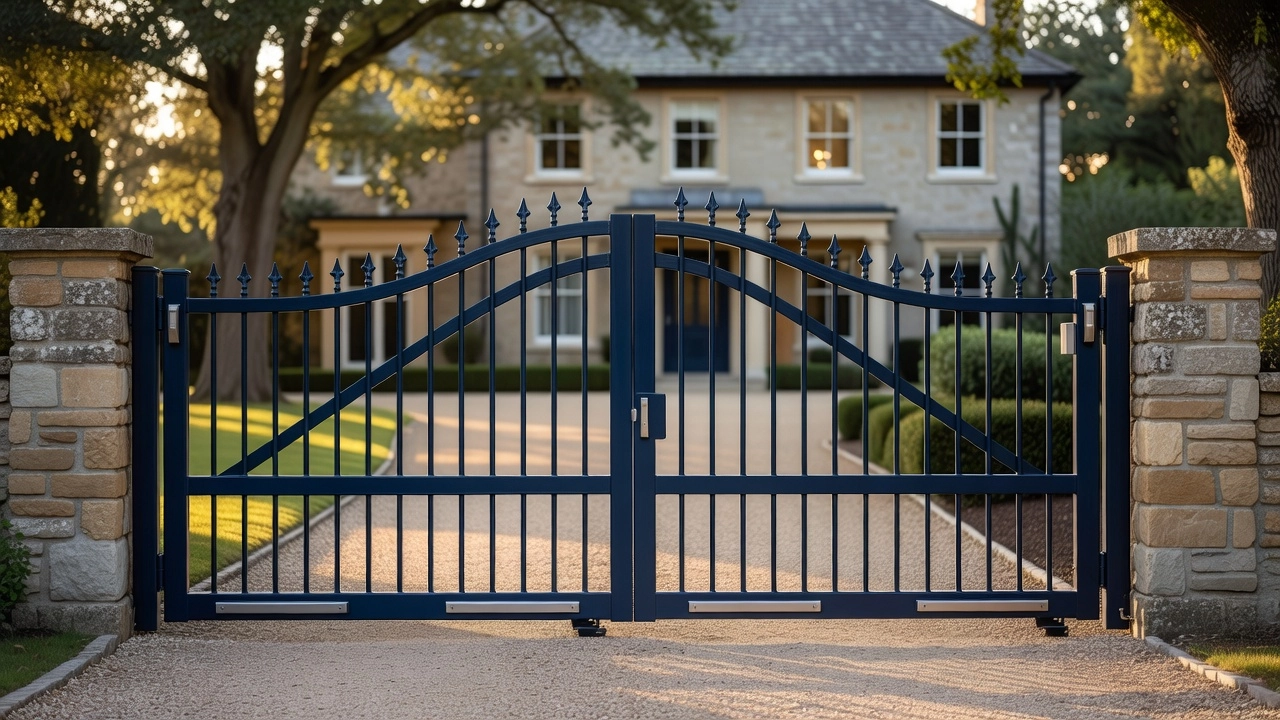
Imagine pulling up to your home and having your gates glide open automatically, no fumbling for keys, no stepping out in the rain, just seamless access at the touch of a button. For thousands of UK homeowners, this is now an everyday reality thanks to residential electric gates.
Whether you are looking to boost your home security, increase your property value, or simply add a touch of elegance to your driveway, electric gates offer a compelling solution. However, with so many options, regulations, and technical considerations to navigate, it can feel overwhelming to know where to begin.
That is exactly why we have put together this complete guide. Designed specifically for homeowners who are new to the subject, this resource will walk you through everything you need to know, from the different types of residential electric gates available in the UK, to costs, installation requirements, safety standards, and maintenance tips. By the time you finish reading, you will have the confidence and knowledge to make an informed decision that suits your home, budget, and lifestyle perfectly.
Why More Homeowners Are Choosing Electric Gates
Electric gates are no longer a luxury reserved for grand country estates. Across the UK and worldwide, homeowners are choosing to automate their entrances in record numbers, and the data tells a compelling story. The global automatic gate opening system market is valued at USD 3.68 billion in 2026, with forecasts pointing to USD 5.99 billion by 2036. That sustained growth reflects genuine, accelerating demand, not a passing trend.
Security is the single biggest driver. Residential applications account for approximately 56% of the entire automatic gate market in 2026, confirming that homeowners, not commercial operators, are the primary force pushing this industry forward. For families across East Sussex, Kent, and West Sussex, an electric gate provides an immediate, visible deterrent to opportunistic crime while giving occupants full control over who enters their property.
The most common starting point for new customers is not a brand-new installation. The leading consumer behaviour driving market growth is upgrading an existing manual gate to an automated system. This makes electric gates one of the most practical and accessible home improvement investments available today, particularly for properties that already have a gate structure in place.
Buyer expectations are also shifting rapidly. Homeowners increasingly want gates that integrate with video doorbells, app-based entry systems, and wider home automation platforms. As the automatic gate opening system market analysis from 360iResearch confirms, modern systems are evolving into fully connected access-control platforms rather than standalone mechanical devices.
Beyond security and convenience, electric gates deliver measurable kerb appeal and long-term property value. Automated gates are widely recognised as features that improve security, elevate visual appeal, and add everyday convenience, making them both a practical and financially sound decision for any homeowner looking to invest in their property.
Types of Residential Electric Gates Explained
Before choosing any residential electric gate, understanding the different types available is essential. Each design has distinct mechanical requirements, and the wrong choice for your site can result in expensive remediation work.
1. Swing Gates
Swing gates are the most familiar residential option, operating on hinges to open either inward or outward as a single leaf or double-leaf pair. They suit driveways with a flat approach and sufficient clearance behind the gate line for the full arc of movement. Aesthetically, swing gates complement traditional, period, and rural properties particularly well. They are available in timber, steel, and aluminium, and can be automated using linear actuators, articulated arm openers, or underground operators. Underground operators are popular on premium installations because the mechanism is completely hidden, preserving a clean, uncluttered gate pillar appearance.
2. Sliding Gates
Sliding gates move horizontally along the fence line and are now the dominant product type in the residential sector, holding 51% of the automatic gate product segment in 2026. They are the go-to solution for sloped driveways, narrow plots, and properties close to a road where a swinging gate would obstruct passing traffic. They also perform better in high-wind conditions because a solid sliding panel does not catch wind the way a swinging leaf does.
3. Cantilever Sliding Gates
Cantilever sliding gates are a refined variant of the standard sliding design. Rather than running on a bottom track across the driveway threshold, the gate is suspended from overhead rollers and counterbalanced behind the post line. This eliminates debris accumulation in a ground-level rail and makes the design ideal for gravel driveways, uneven ground, or where a flush, accessible threshold is required.
4. Material Choice
Steel, aluminium, timber, and wrought iron each bring different trade-offs. Steel is strong and weldable, suited to heavy automated systems, but requires protective coating. Aluminium is lightweight and corrosion-resistant, making it ideal for coastal locations. Timber offers warmth and character but demands regular maintenance. Wrought iron delivers a premium, heritage aesthetic and is well matched to period properties. According to an automatic driveway gates buyer's guide, material weight directly influences operator selection, so this decision cannot be separated from the automation specification. Bespoke fabrication, as offered by Portara Automation, allows every gate to be designed around a property's exact architectural style and proportions.
5. Why a Site Survey Matters
Driveway gradient, road proximity, available side space for gate run-back, and post positions all determine which gate type is structurally viable. As one real-world example illustrates, a homeowner who installed a swing gate on a sloped driveway later spent significantly more retrofitting a cantilever sliding system after the gate scraped the ground. A professional site survey identifies these constraints before specification, preventing costly errors and ensuring the chosen gate performs reliably for years.
How Electric Gate Automation Works
Electromechanical drive technology is the dominant automation method for residential electric gates, and for good reason. These systems use an electric motor paired with a gearbox to drive the gate leaf or panel through its opening and closing cycle. They are reliable, require minimal maintenance, and integrate seamlessly with the full range of modern access control triggers available today. Field evidence supports their longevity too; well-specified electromechanical units from established manufacturers have been recorded running reliably in residential installations for over 25 years.
The Core Components of a Gate Automation System
Understanding what makes up an automation system helps you make informed decisions when specifying your installation. Every system includes five essential elements working together:
The gate operator (motor and gearbox): the mechanical engine driving movement, available in swing and sliding variants
The control panel: the electronic brain that sequences every open and close cycle
Safety edges: contact-sensitive strips fitted to the gate's leading edge that halt movement if an obstruction is detected
Photocells (infra-red beams): beam pairs mounted across the gate's path that detect people, vehicles, or objects mid-cycle
Trigger devices: remotes, digital keypads, video intercoms, proximity card readers, or loop detectors buried beneath the driveway
Together, these components form a complete, layered system where safety and access control work in parallel.
Surface-Mounted vs. Underground Operators
For most standard residential installations, a surface-mounted arm operator fixed to the gate post is the practical and cost-effective choice, covering everything from lightweight timber gates to heavier steel designs. Where aesthetics are a priority, such as heritage ironwork or high-specification bespoke gates, underground FAAC gate operators offer a fully concealed solution that keeps all mechanical hardware out of sight beneath the ground.
What the Control Panel Actually Does
The control panel does far more than simply open and close the gate. It monitors all connected safety sensors in real time, cancels or reverses movement if a photocell beam is broken, and stores programmable settings including auto-close timers, partial-opening modes for pedestrian access, and adjustable travel limits. For a family home, these features translate directly into daily convenience and consistent safety.
Choosing the Right Drive Technology
Hydraulic operators exist for heavy-duty or high-frequency applications, but for the vast majority of homeowners, a well-specified electromechanical system from a trusted manufacturer such as FAAC, BFT, or Nice will deliver decades of dependable service. Selecting the correct operator for your gate's weight, leaf width, and expected usage cycle is where professional specification makes the most meaningful difference to long-term performance.
Access Control and Intercom Options for Electric Gates
Automating your gate is only half the picture. The access control and intercom system you pair with it determines how visitors are managed, how secure your entrance genuinely is, and how conveniently you interact with your gate day to day. Here are the five main options to understand before specifying your system.
1. Video Intercoms
Video intercom systems are now the most popular upgrade choice for residential electric gates. They allow you to see, speak with, and remotely grant access to visitors via a smartphone app or an indoor panel, without leaving your home or approaching the gate. This represents a substantial security improvement over older audio-only systems, which offered no visual verification of who was at your entrance. Modern video intercoms use IP-based technology and cloud connectivity, meaning you can manage visitor access from anywhere with a mobile signal.
2. GSM-Based Entry Systems
GSM intercoms release your gate via a standard phone call or SMS from any mobile number you pre-authorise. Because they use the existing mobile network, they require no physical cable run between your gate and your house. This makes them a practical, cost-effective solution for larger plots, rural properties, or any site where trenching a cable to a remote entrance would be disruptive or expensive. For a straightforward guide to choosing between system types, this overview of residential gate access control systems is a useful starting point.
3. Proximity Cards, Fobs, Keypads, and Remote Controls
These are the standard credential options fitted to the majority of residential gates. Proximity cards and RFID fobs are issued to household members and regular visitors. PIN keypads allow numeric code entry for guests or tradespeople. Handheld remote controls offer driver convenience for daily use. Crucially, these options are not mutually exclusive; combining a keypad with an intercom creates a basic two-factor entry model at relatively low additional cost, meaningfully raising your security baseline.
4. Biometric Access Control
Fingerprint readers, facial recognition, and voice recognition are no longer confined to commercial or high-security sites. Premium residential installations are increasingly adopting these technologies, driven by demand for frictionless, credential-free access. The appeal is practical: there are no fobs to lose and no PIN codes to share accidentally. For further context on current biometric intercom capability, the gate intercom systems overview from Gatemen outlines how integrated access control is specified for both domestic and commercial applications.
5. The Single-Specialist, Full-System Approach
Specifying your gate structure, automation operator, intercom, and access control hardware together through one specialist installer is the most reliable approach available. It eliminates component compatibility risk, ensures all parts are certified to the same safety standard, and simplifies aftercare considerably. A single point of responsibility means any issue is diagnosed and resolved without disputes between separate suppliers. At Portara Automation, we design and install complete gate systems across East Sussex, West Sussex, and Kent, ensuring every element performs as an integrated whole from day one.
Smart Technology and App-Based Gate Control
Modern residential electric gates have evolved well beyond simple push-button operation. Today, IoT-enabled gate systems allow homeowners to open, close, and monitor their entrance remotely through a dedicated smartphone app. This capability is particularly valuable for managing access when you are away from home, whether you need to let in a delivery driver, grant entry to a tradesperson, or allow a family member through without handing over a physical fob or remote.
AI-assisted access control takes this a step further. These systems can learn your household's regular entry patterns, flag unusual or unexpected activity, and connect directly with wider security infrastructure including CCTV cameras, alarm systems, and smart doorbells. Rather than operating in isolation, your gate becomes an active component within a joined-up security ecosystem, strengthening your overall perimeter protection considerably.
Cloud-connected control panels add another layer of practical oversight. Gate settings, access logs, and fault notifications can all be reviewed and adjusted remotely in real time, giving homeowners clear visibility over exactly who has entered or exited the property and when. This audit capability is increasingly valued by premium buyers and those managing properties with multiple occupants or frequent visitors.
Compatibility with established smart home platforms is now a genuine expectation among discerning homeowners. Integration with Google Home, Amazon Alexa, or Apple HomeKit via appropriate interfaces allows gate control to sit naturally alongside lighting, heating, and other connected devices.
One critical consideration when specifying any smart gate system is cybersecurity. Always confirm that your chosen system uses encrypted communication protocols and receives regular firmware updates, as connected devices that lack ongoing software maintenance can become vulnerable over time. Partnering with a knowledgeable installer who understands both the automation hardware and its digital security requirements is the most reliable way to protect your investment.
UK Safety Standards and Compliance for Residential Electric Gates
Every residential electric gate installed in the UK must comply with BS EN 12453, the current version being EN 12453:2017+A1:2021. This standard sets out mandatory requirements for force limitations, safety device specifications, and risk assessment procedures for power-operated gates and doors. Understanding what BS EN 12453 requires is essential for any homeowner considering automation, because compliance is not optional and responsibility does not rest solely with the installer.
The Legal Framework
Automated gates are legally classified as machinery under the Supply of Machinery (Safety) Regulations 2008, which retains the original EU Machinery Directive (2006/42/EC) in UK law following Brexit. This regulation requires that every automated gate system undergoes a formal risk assessment, carries either CE or UKCA marking, and is accompanied by a Declaration of Conformity. Several complementary standards also apply alongside BS EN 12453, including BS EN 12978 for safety devices and BS EN 12604 for mechanical requirements, meaning full compliance involves more than meeting a single standard.
Mandatory Safety Devices
Safety devices built into your gate system are a legal requirement, not a feature upgrade. Photocells, which use infra-red beams to detect obstructions in the gate's path, must be correctly positioned and fully operational. Safety edges on both the leading and trailing faces of the gate leaf are required to prevent crushing injuries on contact. Force-limiting settings on the control panel must be tested using calibrated equipment and kept below the maximum thresholds specified in BS EN 12453. These measures exist specifically to protect children, pets, and vulnerable people from serious harm.
Installer Obligations and Homeowner Liability
A qualified installer is legally required to conduct a site-specific risk assessment, produce a full technical file, and hand over complete documentation including operating instructions and the Declaration of Conformity. This documentation is not merely administrative; it is your legal protection as a property owner. Under the Supply of Machinery (Safety) Regulations 2008, responsibility falls on both the installer and the homeowner. If a non-compliant gate causes injury, the property owner can face liability alongside the installer. Choosing a supply-only product or an unqualified installer to reduce upfront costs transfers significant legal risk directly to you, and no short-term saving justifies that exposure.
Planning Permission and Permitted Development Rules for Electric Gates
Understanding the planning rules before installing residential electric gates can save you significant time, money, and stress. Here is what every homeowner in England needs to know before proceeding.
1. Permitted Development Rights Cover Most Residential Gates
In England, most residential gate installations fall under Permitted Development (PD) rights, meaning no formal planning application is required. The key thresholds are straightforward: your gate must not exceed 1 metre in height where it fronts a highway, including an adjacent footpath, and must not exceed 2 metres in height anywhere else on your boundary. These limits are set under the Town and Country Planning (General Permitted Development) Order and apply to the gate structure itself, including any pillars or walls forming part of that boundary feature. Staying within these measurements means most homeowners can proceed without contacting their local planning authority.
2. Automation Alone Does Not Trigger a Planning Application
Adding electric motors, control panels, or intercom equipment to an existing gate does not itself require a planning application. However, if your automation project involves constructing new gate pillars or supporting walls that push the overall structure above the permitted height limits, those physical elements may require permission. The planning question always centres on the height and location of the structure, not whether it is motorised.
3. Conservation Areas, AONBs, and Article 4 Directions Change Everything
Permitted Development rights are removed or restricted for properties within Conservation Areas, Areas of Outstanding Natural Beauty, and locations subject to an Article 4 Direction. East Sussex has a particularly high concentration of heritage designations, including numerous Conservation Areas and proximity to the South Downs National Park, making this a highly relevant consideration for local homeowners. Full planning permission is required for any gate or boundary changes in these zones.
4. Listed Buildings Require Listed Building Consent
If your property is a listed building, or sits within the curtilage of one, standard Permitted Development rules do not apply regardless of gate height. Listed Building Consent may be required for any gate or boundary works that affect the character or fabric of the structure. Homeowners should consult their local planning authority before proceeding; relevant bodies in East Sussex include Eastbourne Borough Council, Lewes District Council, and Rother District Council.
5. A Specialist Installer Can Identify Your Status Early
A knowledgeable local installer can assess likely Permitted Development status during an initial site survey, identifying constraints such as Article 4 Directions or Conservation Area designations before any design work is committed. This early clarity prevents costly abortive work and removes the risk of enforcement action, which can require removal of a non-compliant structure at the homeowner's expense.
How Much Do Residential Electric Gates Cost in the UK?
Understanding the cost of residential electric gates before committing to a project is essential, and the figures vary considerably depending on what you are installing. Here is a clear breakdown of what to expect at each level of the market.
Standard Swing Gate Systems
A fully installed pair of automated swing gates for a standard residential driveway in the UK typically costs between £3,000 and £8,000. This range covers gate material, automation hardware, basic access control, and installation labour, which alone accounts for roughly £2,000 to £3,000 of the total. Budget-tier powder-coated steel or aluminium swing gates with entry-level automation sit toward the lower end of this range. Specifying a premium drive system, hardwood timber panels, or a more capable intercom and keypad arrangement will push costs toward the upper end.
Sliding Gate Systems
Sliding gates carry a higher price tag than swing gates as a rule. The additional groundworks, trackwork, drainage considerations, and more substantial motor hardware all add cost. Bespoke fabricated steel or aluminium sliding gates for wider residential entrances typically range from £6,000 to £15,000 or more, depending on gate width, material specification, and automation grade. At the premium end of the residential market, bespoke sliding gates from specialist fabricators start from around £10,000 plus VAT fully installed.
Key Factors That Determine Your Final Cost
Several variables shape the final quotation on any electric gate project. The main cost drivers are:
Gate material and finish: Powder-coated mild steel, aluminium, and hardwood timber each carry different price points, with timber and high-grade aluminium typically commanding a premium.
Gate dimensions: Wider or taller gates require heavier motors and more fabrication time.
Drive type and automation brand: Mid-to-premium brands such as FAAC, BFT, and Nice offer greater reliability and smarter integration than budget alternatives, and are priced accordingly.
Intercom and access control specification: A basic audio intercom costs far less than a video intercom with GSM connectivity, app control, or integrated keypad and fob reader.
Groundworks and electrical supply: If a dedicated power supply needs running to the gate position, or if substantial groundworks are required for posts or track installation, these add meaningfully to the total.
Retro-Fit Automation for Existing Gates
If you already have a manual gate that is structurally sound, automating it rather than replacing it entirely is a cost-effective route. A retro-fit automation package on suitable existing gates typically starts from around £1,500 to £3,000 including access control, making it one of the most accessible entry points into gate automation. A site visit is usually needed to assess whether your existing gates are compatible with motorisation, as weight, hinge condition, and post integrity all affect feasibility.
The Investment Case Beyond Security
Electric gates are increasingly viewed as a property asset rather than simply a security measure. A well-specified gate and entrance system enhances kerb appeal, creates a strong first impression, and can support a higher asking price in a competitive UK housing market. While no single figure universally quantifies the uplift, agents consistently note that a quality entrance distinguishes a property from comparable listings. For homeowners in East Sussex, West Sussex, and Kent, where residential competition is strong, a bespoke automated entrance represents a defensible long-term investment in both security and property presentation.
Solar-Powered and Energy-Efficient Gate Options
Solar-powered gate systems offer a compelling alternative to mains-connected installations, particularly where running a cable to the gate post would involve significant groundworks, driveway disruption, or road crossings. These systems use photovoltaic panels to charge a dedicated battery, which then powers the gate operator for every opening cycle, including during the night. Because no trenching or cable ducting is required, installation is faster, less disruptive, and often considerably cheaper on sites where electrical supply would otherwise need to be brought a long distance.
This makes solar automation especially practical for rural properties, agricultural entrances, and homes with long driveways. Sites that would otherwise require extensive civils work to reach the gate post are strong candidates, and solar panels typically come with 15 metres of cabling as standard, with runs extending well beyond that in practice.
Reliability in the UK is achievable year-round, but correct sizing is non-negotiable. Battery storage capacity and panel wattage must be precisely matched to the gate operator's power draw and the anticipated number of daily cycles. Sliding gates, which move heavier leaves along a track, generally demand more power per cycle than swing gates, so sizing requirements differ. A system that performs adequately in summer can fail to meet demand during short winter days if the specification is too conservative. Panel orientation, tilt angle, and any shading from trees or structures all affect generation performance and must be assessed at the design stage.
Beyond solar, energy efficiency is a growing purchasing consideration for all residential electric gates. Low-standby-power control panels and operators built to current efficiency standards reduce the ongoing running costs of the system over its lifetime.
A specialist installer can evaluate all these variables, including site orientation, shading, usage patterns, and gate weight, ensuring the system is neither under-specified nor over-engineered for the application.
Accessibility Benefits of Automated Residential Gates
The physical demands of manually operating a heavy gate are easy to overlook until they become a daily obstacle. For elderly homeowners, those with limited mobility, and residents living with disabilities, the effort required to push or pull a substantial gate leaf represents a genuine barrier at the entrance to their own property. Automating that gate removes the barrier entirely, replacing it with a single button press or a tap on a smartphone screen.
Remote and app-based gate control also means residents never need to step outside their vehicle in poor weather or navigate an entrance on foot. This is a practical improvement that rarely features prominently enough in gate purchasing conversations, yet for many households it becomes one of the most valued aspects of the system on a daily basis.
For a family member who uses a wheelchair or has restricted upper body strength, a fully automated gate with a dependable remote system can make a meaningful difference to independence and quality of life at home. As one smart-home accessibility advocate has noted, what is simple convenience for some people is genuine independence for others.
Video intercom systems with visual displays allow residents with hearing impairments to identify visitors without relying on audio. Voice-activated and hands-free control options are increasingly available for users with limited dexterity, widening access further.
If you are planning a gate installation with long-term accessibility in mind, or adapting a property for a family member's changing needs, these requirements are worth raising directly with your installer during the initial site survey. A specialist such as Portara Automation can design a system around your specific household needs from the outset, ensuring the right access control, remote operation, and intercom configuration are built in from day one.
Maintenance, Servicing, and Aftercare for Electric Gates
Installing a residential electric gate is a long-term investment, and protecting that investment depends almost entirely on how well the system is maintained after installation. Here are the five maintenance essentials every homeowner should understand.
1. Annual Servicing by a Qualified Engineer Is the Non-Negotiable Baseline
Every residential electric gate system should be professionally serviced at least once a year. A thorough service visit covers lubrication of all mechanical components, physical testing of safety devices against BS EN 12453 force limits, inspection of the gate structure and fixings, control board checks, and any available software or firmware updates. A system that passes its installation inspection can drift out of safe specification within 12 to 18 months without professional attention, particularly given the outdoor environment and the constant mechanical load these systems operate under.
2. Routine Maintenance Tasks Keep the System Running Between Visits
Between annual visits, specific components need regular attention. Hinges, pivot points, and rack-and-pinion drives require correct lubrication; using the wrong product can attract grit and accelerate wear rather than reduce it. Photocell alignment should be checked periodically, as even minor post movement can interrupt the beam. Safety edges need visual inspection for physical damage, and battery backup systems should be tested to confirm they hold a meaningful charge rather than simply showing as present.
3. Neglected Maintenance Creates Safety Risks and Liability
Minor issues rarely announce themselves clearly. A motor working incrementally harder each month, a safety edge physically intact but electrically disconnected from the control panel, or a battery backup holding 20 minutes of reserve rather than the rated hours are all invisible without testing. If an inadequately maintained gate causes an injury, responsibility rests with the property owner. Catching a worn hinge or a drifting force limit at a service visit costs a fraction of what a breakdown or safety incident would.
4. A Maintenance Contract with Your Installer Is the Practical Solution
A maintenance contract with the company that installed your system delivers predictable annual cost, priority fault response, and an engineer who already knows the specific equipment fitted to your property. This is a meaningful advantage over calling an unknown contractor when something goes wrong. For homeowners across East Sussex, West Sussex, and Kent, working with a local specialist such as Portara Automation means faster response times and consistent familiarity with your installation.
5. Repairs Must Preserve Your System's Declaration of Conformity
When repair is needed, whether following storm damage, an impact, or component failure, the work must be carried out by a qualified specialist using correctly specified replacement parts. The Declaration of Conformity issued at installation relates to the system as originally built and specified. Substituting non-specified parts risks invalidating that declaration and leaving your installation non-compliant, creating both a safety concern and a potential insurance issue.
Why Choosing a Specialist Local Installer Matters
Not all residential electric gate installers offer the same level of service, and for homeowners in East Sussex, West Sussex, and Kent, that difference matters considerably.
1. Site-Specific Local Knowledge You Cannot Buy Online
A specialist local installer arrives at your property with contextual knowledge that no national contractor or supply-only channel can replicate. Coastal properties across East Sussex and Kent face salt air, frost exposure, and ground movement that directly influence which motors, materials, and mounting solutions are appropriate. A local engineer understands these conditions instinctively and specifies accordingly, rather than applying a generic solution that may fail prematurely. They also bring familiarity with local planning authority expectations, conservation area sensitivities, and permitted development boundaries that vary across East Sussex, West Sussex, and Kent councils.
2. Bespoke Fabrication to Fit Your Property
A specialist with in-house fabrication capability designs and manufactures gates to your exact site dimensions and aesthetic requirements. Your property is not adjusted to accommodate a standard product; the gate is built to fit your entrance, your driveway geometry, and your chosen finish. This matters practically as well as visually, because a gate manufactured to precise tolerances performs more reliably and places less stress on automation components over time.
3. Proven Brands, Full Warranty, and Compliance Documentation
Specifying automation brands such as FAAC, BFT, and Nice through a qualified installer unlocks full manufacturer warranty support and correct commissioning documentation. Approximately 80% of domestic gates across Sussex and Kent run motors from these three brands, and their reliability depends heavily on correct installation. A grey-market or self-installed system forfeits warranty protection and compliance paperwork entirely.
4. Single-Supplier Accountability
When one company designs, fabricates, installs, and maintains your gate, automation, and access control, there is no ambiguity about responsibility when something goes wrong. Separate suppliers for each element creates accountability gaps that are frustrating and costly to resolve.
5. Rapid Local Aftercare When It Counts
Every new gate system may need fine-tuning in the weeks following installation. Having a local engineer who knows your specific installation available quickly is a practical advantage that becomes most obvious the moment you need it.
Frequently Asked Questions About Residential Electric Gates
Do I need planning permission for residential electric gates? In most cases in England, gate installation is permitted development, meaning no formal planning application is required. The key threshold is 2 metres; gates exceeding this height will typically require planning permission. Three categories of property require a planning application regardless of height: Conservation Areas, listed buildings, and properties subject to Article 4 Directions, where permitted development rights have been removed. If you are unsure which rules apply to your property, consult your local planning authority before proceeding.
Can my existing manual gate be automated? In many cases, yes. A specialist installer will assess whether your existing gate structure, hinges, posts, and groundworks are capable of supporting automation hardware. Key factors include gate weight, post integrity, and hinge rating. Where the existing structure is sound, retro-fit automation is typically more cost-effective than a full replacement, and it preserves any existing brickwork or stonework you may wish to retain.
How long does a residential electric gate installation take? A standard swing or sliding gate installation by a specialist team typically takes one to two days. Projects involving new brickwork, significant groundworks, or bespoke fabrication will take longer, and your installer should provide a clear programme before work begins.
What happens if there is a power cut? Quality gate operators include battery backup as standard or as an available option, allowing a set number of open and close cycles during an outage. Manual release mechanisms are also required under BS EN 12453, ensuring the gate can always be operated safely without power.
How long do residential electric gate systems last? A well-maintained system from a reputable automation brand should provide 15 to 20 years of reliable service. Steel or aluminium gate structures, with appropriate surface treatment and periodic maintenance, can last considerably longer.
Are electric gates safe around children and pets? When installed to BS EN 12453 standards with correctly specified safety edges and photocells, automated gates are safe. Safety devices must detect obstructions and trigger reversal, and force limits must remain within regulated thresholds. Annual servicing is essential, as safety devices degrade over time and require testing to confirm they remain fully operational.
Making the Right Choice for Your Home
Choosing residential electric gates comes down to four non-negotiables: the gate type must suit your specific site conditions, the automation system must meet UK safety compliance requirements, the access control solution must reflect how your household actually operates, and the installer must be capable of supporting the system for years after installation. Getting any one of these wrong creates problems that are expensive to correct later.
The single most effective step any homeowner can take is booking a professional site survey before committing to a specification or budget. A thorough survey resolves gate type suitability, driveway geometry, power supply routing, planning triggers, and access control requirements in a single visit. It removes guesswork entirely and gives you an accurate, site-specific proposal rather than a generic quote.
If you are based in East Sussex, West Sussex, or Kent, Portara Automation offers a free, no-obligation site survey. There is no pressure to proceed; it is simply the most practical way to understand exactly what your property needs.
Portara handles every stage in-house: design, fabrication, installation, access control integration, and long-term aftercare, all from one specialist team accountable to you throughout.
Conclusion
Residential electric gates are a smart investment that can transform your home's security, kerb appeal, and everyday convenience. Throughout this guide, you have discovered the main gate types available to UK homeowners, the costs involved, the safety regulations you must follow, and the maintenance required to keep your system running smoothly.
The key takeaways are simple: choose a gate style that suits your property and driveway layout, always work with a qualified installer who meets UK safety standards, budget realistically for both installation and long-term upkeep, and never overlook essential safety features such as obstacle detection.
Now it is time to take the next step. Request quotes from at least three reputable local installers, ask to see examples of their previous work, and begin designing the entrance your home deserves. Your perfect gate is closer than you think.