
Swing Gate Automation: Choosing the Right Actuator Type for Your Gate and Property
Linear ram, articulated arm, or underground hydraulic? Compare swing gate actuator types by weight, usage, and cost to choose the right system.
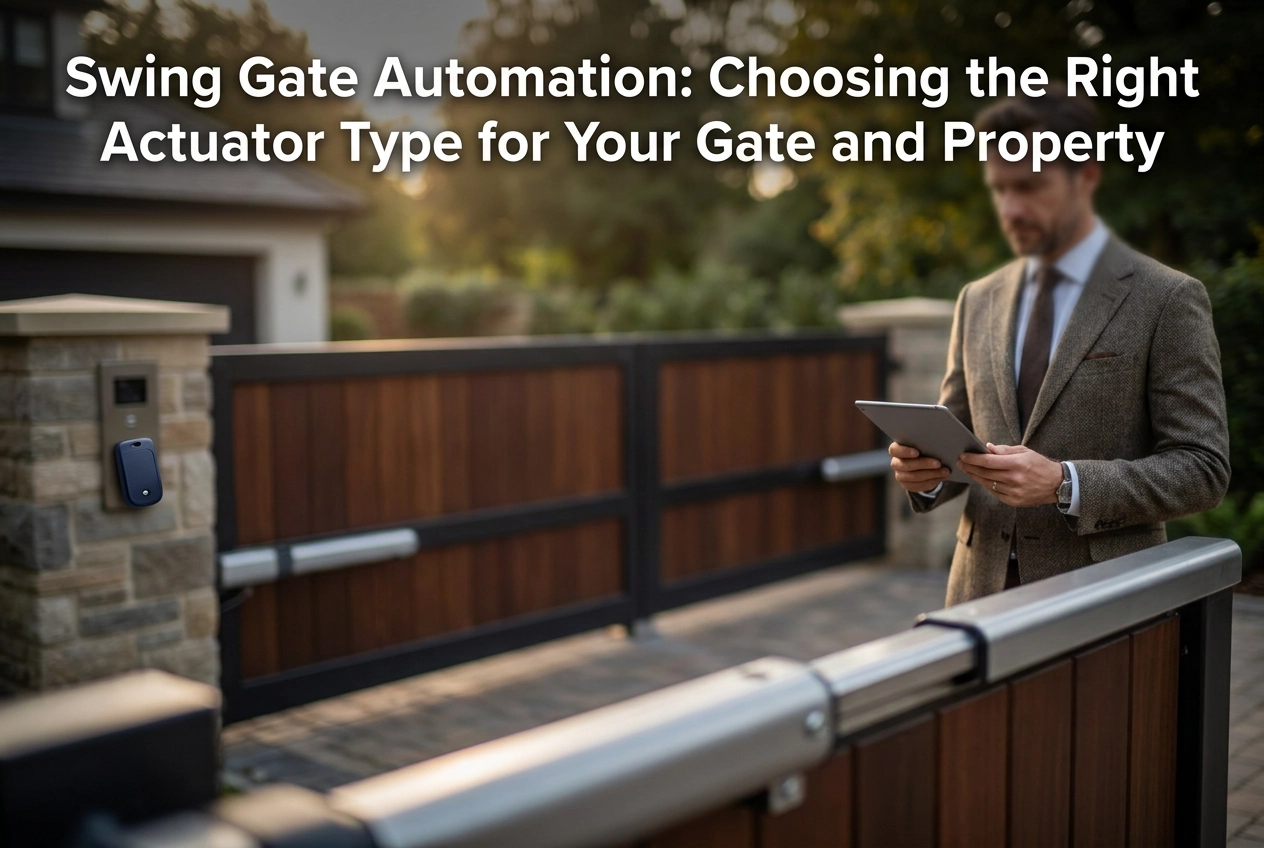
Most homeowners assume that installing an automatic gate system is simply a matter of picking a motor and bolting it on. The reality is more nuanced, and getting the actuator decision wrong can cost you significantly more than the hardware itself. A mismatched operator leads to premature motor failure, gates that refuse to seal properly, and posts that need expensive reinforcement after the fact.
The actuator is the mechanical heart of any swing gate automation project, and three distinct types exist: linear ram, articulated arm, and underground hydraulic. Each carries its own strengths, limitations, and ideal use cases. Your gate's weight, the construction of your posts, the space available, and how frequently the gate will operate all determine which system will serve you reliably for years rather than months.
This guide cuts through the technical complexity without requiring an engineering background. You will learn how to identify the right actuator type for your specific situation, understand the true cost of ownership beyond the initial price tag, and navigate UK compliance requirements before you commit to any specification.
Why the Actuator Choice Matters More Than You Think
Most buyers spend the bulk of their time choosing gate style, finish, and access control features. The actuator, the mechanical operator that actually moves the gate, tends to be treated as an afterthought or left entirely to the installer. That is a costly assumption. Of all the components in a swing gate automation system, the actuator is the single most likely to fail if misspecified, and the consequences compound over time rather than appearing immediately.
Consider a common scenario: an undersized electromechanical linear ram fitted to a gate leaf weighing around 400 lb. The gate will open and close on day one. Over the following months, the motor works harder than its design rating on every cycle, heat builds, and the thermal protection circuit trips to prevent damage. Arm wear accelerates. Motor life shortens well below the manufacturer's rated service interval. By the time failure is obvious, the damage has been accumulating for a year or more.
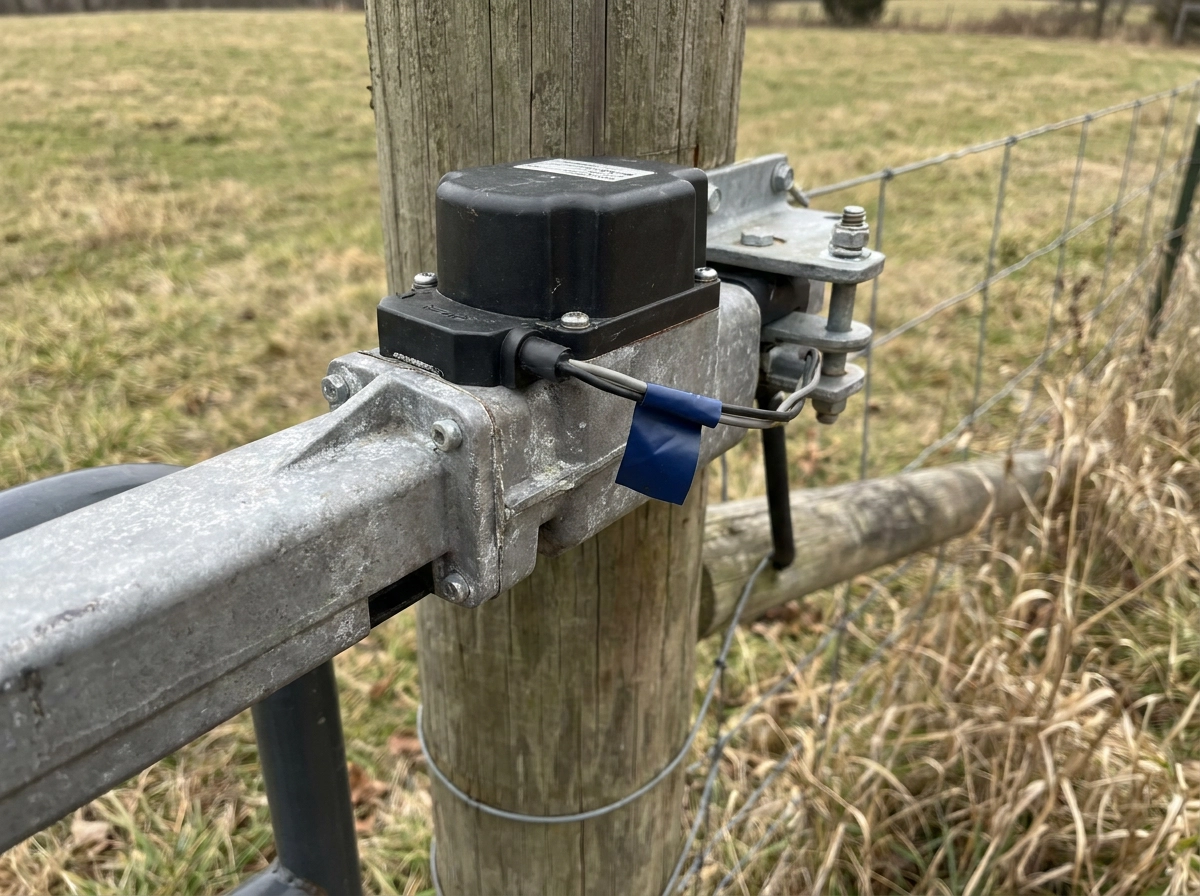
The consequences of a wrong actuator choice are not always limited to the hardware itself. Fitting the wrong operator type can trigger structural remediation that no one budgeted for: post reinforcement, pillar rebuilding, or concrete excavation to accommodate a system that should have been specified correctly from the start. These are costs and disruptions that a proper specification process eliminates entirely.
Three actuator families cover the vast majority of swing gate automation installations:
Linear ram (also called electric gate rams): motor-driven cylindrical arms that push or pull the gate leaf through its arc of travel
Articulated arm: a hinged two-piece mechanism that folds and extends to drive the gate, offering mechanical advantages but visible above-ground hardware
Underground hydraulic: sealed operators buried beneath the hinge posts, with no visible mechanism at ground level
Each family suits a fundamentally different combination of gate weight, post construction, available space, and usage frequency. There is no universal best choice. For a broader grounding in how the drive technology behind these systems works, How Gate Automation Works: Drive Technology Explained provides a useful starting point.
This guide maps each actuator type against the variables that actually determine fit, so that whether you are approaching a site survey, briefing an installer, or beginning your own research into electric swing gates for a driveway, you can engage with the decision from a position of clarity rather than guesswork.
The Four Variables That Drive Every Actuator Decision
Four factors determine which actuator belongs on your gate. Understand these before looking at any hardware.
Gate weight per leaf is the starting point. Under 300 lb per leaf, electromechanical and hydraulic systems both work well; the choice comes down to budget, aesthetics, and usage. Between 300 and 500 lb, electromechanical systems are operating near their design limits: thermal cutout trips become more frequent, arm wear accelerates, and motor life shortens under repeated cycles. Above 500 lb per leaf, hydraulic is no longer a luxury option; it becomes the practical requirement.
Post and pillar construction determines what can physically be installed before a single component is ordered. Solid masonry piers of adequate depth can accommodate underground hydraulic chambers. Ornamental hollow steel posts often cannot support the bracket loads of any actuator without internal reinforcement first. Getting this wrong means structural remediation after the hardware arrives, which is an avoidable cost. If you are unsure what your posts can bear, reviewing our guide on how to choose the right electric gate opener for your property covers structural compatibility in more detail.
Usage frequency, often called duty cycle, carries as much weight as the gate itself. A residential driveway running 5 to 10 open/close cycles per day sits comfortably within what a well-specified electromechanical system handles. A commercial entrance turning over significantly more cycles per day than a typical residence changes the economics entirely; the cumulative wear on an electromechanical motor under that load makes hydraulic investment the lower-cost decision over a five-year horizon, not the higher one.
Available space and aesthetics shape the practical shortlist. An inward-opening gate with limited clearance behind the post may not have enough room for a linear ram to extend fully. A premium entrance project may rule out any visible hardware on principle, regardless of what the weight and cycle numbers suggest.
These four variables rarely point in the same direction simultaneously, which is what makes actuator selection genuinely complex. A lightweight gate on a high-frequency commercial site may still favour hydraulic. A heavy gate on a remote agricultural property with low daily use may tolerate a well-specified electromechanical system. There is no single universal answer, and any supplier who offers one without assessing all four factors is guessing. A proper site survey evaluates them together.
Linear Ram Actuators: The Residential Workhorse
Of the three actuator families, the linear ram is the one most likely to be sitting quietly behind the gates at the end of your road right now. Understanding why starts with how it works.
A linear ram, sometimes called an electric gate ram or linear actuator, uses a motor-driven screw mechanism to extend and retract a cylindrical arm. That arm pushes or pulls the gate leaf through its arc of travel. The mechanics are simple, the components are widely stocked across the UK, and the service network is well established. When something needs attention, a qualified installer can diagnose and repair the system without sourcing obscure parts.
Why linear rams dominate residential installations
Electric gate rams are the most common choice for UK residential gate automation because they hit the right balance of upfront cost, installation simplicity, and reliable performance within normal household use. For a fuller breakdown of how this actuator type compares with others at a motor level, The Main Types of Automatic Gate Motor Explained provides useful context.
Mounting orientation and what it means in practice
Where the ram sits depends entirely on which way your gate swings. Inward-opening gates allow the actuator to be mounted inside the post or pillar, ideally within a concealed housing, keeping hardware out of sight from the approach. Outward-opening gates require external mounting, which means the ram body is visible on the arrival side. Both configurations are fully functional; the difference is aesthetic and spatial. External mounting on an outward-opening gate also means the ram occupies space on the approach side, which matters on narrow driveways or where vehicles pass close to the gate posts.
The heat limitation you need to understand
Push the system beyond its weight or cycle limits and thermal trips become a recurring problem, the mechanism described earlier in this guide.
For standard electric swing gates for driveways, timber or steel up to 250 to 300 lb per leaf at typical household use, a linear ram from a reputable manufacturer is the most cost-effective and maintainable solution available, provided the gate posts are structurally sound enough to handle the bracket loads without flexing.
Articulated Arm Operators: Speed and Simplicity Against Aesthetic Trade-offs
Where a linear ram pushes or pulls through a fixed cylinder, an articulated arm works differently. A motor drives two hinged arm sections, pulling them together to open the gate and extending them to close it. This folding geometry gives the mechanism a natural mechanical advantage through the gate's travel arc, meaning the motor works less hard than a comparable linear ram to move the same leaf weight. The practical result is faster opening speeds and less strain on the drivetrain under normal operating conditions.
That reduced mechanical strain translates into durability. Articulated arms have fewer wear components than linear rams, and on steel gates with consistent, predictable geometry, they are widely regarded by installers as highly reliable over time. If you want a faster-opening gate and expect straightforward maintenance, the mechanical case for an articulated arm is genuinely strong.
The safety trade-off you cannot ignore
The folding mechanism that gives the articulated arm its mechanical advantage also creates a visible pinch point where the two arm sections meet. This trapping hazard is a recognised safety concern under UK machinery safety obligations. Depending on the installation, additional guarding may be required to meet those obligations, and a proper risk assessment is not optional. For a fuller overview of how different operator types compare on safety and suitability, the Types of Automatic Gate Openers Explained guide covers this in more detail.
Where articulated arms solve a real problem
Constrained inward swing clearance is the scenario where an articulated arm earns its place over a linear ram. Because the arm folds rather than retracts along a straight axis, it requires less linear space behind the hinge post. If your gate opens inward toward a wall, boundary, or landscaping feature, and a fully extended linear ram simply will not fit, an articulated arm may be the only practical electromechanical solution.
Why most residential buyers still look elsewhere
Despite the mechanical advantages, aesthetic concerns dominate purchasing decisions in residential and premium commercial settings. The arm hardware sits above ground, visible on the gate post, and its presence is difficult to disguise on a bespoke entrance where finish and appearance have been carefully considered. For buyers who have invested in high-quality ironwork or timber gates, the visual bulk of an articulated arm mechanism often proves a decisive objection, pushing the specification toward a linear ram or, where budget allows, an underground hydraulic system.
Underground Hydraulic Systems: Premium Performance With a Premium Commitment
Where aesthetics are genuinely non-negotiable, neither a linear ram nor an articulated arm can satisfy the requirement. Underground hydraulic operators solve this entirely: the mechanism is buried within sealed chambers beneath the gate hinge posts, leaving no visible hardware above ground. The gate simply opens. For listed building settings, high-specification residential entrances, and commercial properties where the appearance of the approach cannot be compromised, this invisibility is the primary reason to specify hydraulic.
As noted, hydraulic systems handle weights that would rapidly overstress any electromechanical motor. Heavy ornamental ironwork, large hardwood timber gates, and commercial-grade steel structures all fall within hydraulic operating range.
What Underground Installation Actually Demands
The commitment is significant, and this is where buyers frequently underestimate the scope. Concrete piers or masonry pillars must be deep enough, wide enough, and structurally sound enough to house the operator chambers. Ideally, excavation and chamber provision happen during the original post-construction phase, when the groundwork is already open. Retrofitting underground operators to pillars that were built without that provision is a different proposition entirely: it frequently involves demolishing and rebuilding the pillars, which can cost more than the operators themselves. If you are at the planning stage, you can learn more about what gate automation involves structurally in this overview of how electric gate automation works.
Cold Weather and Ground Conditions
Two operational factors are worth understanding before specifying hydraulic. First, underground hydraulic systems can be affected by sustained freezing conditions; confirm with your supplier how the specified unit performs in UK winter conditions. Electromechanical systems perform more consistently through UK winters, particularly on exposed coastal or rural sites.
Second, ground conditions and drainage should be assessed during the site survey; chamber seal integrity and drainage are factors to confirm with your installer at the commissioning stage. These are not default considerations on every installation; they need to be explicitly specified and confirmed at the point of commissioning.
Head-to-Head: Which Actuator Type Fits Your Situation?
With the three actuator types now examined individually, the practical question becomes: which one fits your specific gate and property?
Standard residential driveway, timber or steel gates under 300 lb per leaf, 5–10 daily cycles: a linear ram electromechanical system is almost always the right specification -- affordable, straightforward to service, and well within duty cycle limits for typical household use. For the majority of electric swing gates for driveways across the UK, a well-matched linear ram is the sensible starting point. If you are still weighing up whether to automate at all, this guide to manual versus automated gate drive options sets out the broader decision clearly.
Premium residential entrance, heavy ornamental ironwork, or a listed or heritage property: underground hydraulic is the appropriate system, provided the post construction can accommodate the chambers and the project budget includes excavation from the outset. The absence of visible hardware is the defining advantage here, and for high-specification or conservation-sensitive settings, that invisibility is worth the additional installation commitment.
Commercial or agricultural gate with a high daily cycle count, or gate weight approaching or exceeding 500 lb per leaf: hydraulic is required. The total cost of ownership calculation shifts decisively once duty cycle climbs past residential norms.
Constrained side clearance or limited inward swing space: evaluate an articulated arm before defaulting to a linear ram. The arm's folding geometry requires less linear clearance behind the post than a fully extended ram, and it may solve a physical installation problem that a linear ram simply cannot. Aesthetics require consideration, but the mechanical fit can be decisive.
Off-grid or solar-powered installation: electromechanical linear rams and articulated arms are the more practical choice. Confirm current-draw specifications with your chosen operator's manufacturer before sizing any solar or battery system. For remote agricultural or rural residential properties where mains power is not available, electromechanical systems are the more compatible technology.
The table below summarises the mapping:
Scenario
Recommended Actuator
Residential, under 300 lb/leaf, 5–10 cycles/day
Linear ram
Premium aesthetics, heritage, heavy ironwork
Underground hydraulic
Commercial/agricultural, high daily cycle count
Hydraulic
Constrained clearance, inward swing limitation
Articulated arm
Off-grid or solar-powered site
Linear ram or articulated arm
Total Cost of Ownership: Beyond the Hardware Price
Choosing the right actuator type is only half the financial decision. Understanding what it will cost to install, maintain, and repair over time is the other half, and it is where many buyers are caught out.
Hardware price is not the same as project cost. An underground hydraulic system carries a higher unit price than a linear ram, but the labour differential is the larger variable. Excavation, chamber construction, and hydraulic line installation require significantly more site time than fixing an above-ground electromechanical operator to a prepared post. That additional day-rate cost needs to be in your budget from the outset, not discovered on the invoice.
Post reinforcement -- already noted as a hidden specification failure -- is easier to cost at design stage than to remedy after installation.
Failure remediation costs differ in character, not just magnitude. If an undersized linear ram overheats and the motor fails, the gate typically still operates manually while parts are sourced and the motor is replaced. Disruption is limited. A failed underground hydraulic operator in a sealed chamber is a different proposition entirely: diagnosis and repair may require excavation, which means access disruption that has no straightforward interim solution. Neither failure is desirable, but they are not equivalent in consequence. For further context on weighing repair decisions against replacement, the guide to Repair or Replace? How to Decide covers that ground in detail.
Lifecycle maintenance should be costed over five to ten years, not ignored. Electromechanical systems need periodic lubrication, limit switch checks, and eventual motor replacement. Hydraulic systems require fluid and seal inspections but have fewer moving wear components above ground and, when correctly installed, longer intervals between service visits. Neither system is maintenance-free; the question is which pattern of maintenance suits your property and usage.
At Portara Automation, every gate automation project begins with a site survey covering structural compatibility, duty cycle, and actuator suitability before any hardware is specified. That pre-specification stage is where total cost of ownership is most effectively controlled.
UK Compliance Considerations for Gate Automation Systems
Cost considerations alone do not determine whether your gate automation project is done correctly. UK compliance carries its own obligations, and they sit with the installer as much as the manufacturer.
The Supply of Machinery (Safety) Regulations 2008 govern all powered gate systems placed on the UK market. Where an actuator is supplied as partly completed machinery, it arrives with a Declaration of Incorporation, not a full Declaration of Conformity. That final declaration becomes the installer's responsibility once the actuator is incorporated into a complete gate system. The installer must complete a risk assessment, compile a technical file, and issue the Declaration of Conformity. From January 2022, UK-market installations must carry the UKCA mark rather than CE marking. This applies regardless of whether you are fitting electric gate rams to a residential driveway or a hydraulic operator to a commercial entrance. For a fuller overview of what these obligations mean in practice, the UK safety standards and legal compliance for electric gates guide covers the framework in accessible detail.
BS EN 12604 sets the mechanical requirements for hydraulic gate operating equipment. Specifying a hydraulic underground system without confirming BS EN 12604 compliance from your supplier creates a genuine liability gap. This is not paperwork formality; it is the standard that governs whether a hydraulic actuator behaves predictably under pressure across its operating life.
BS EN 13241-1 applies to industrial and commercial gate products, addressing the safety and performance requirements for industrial and commercial gate products. For commercial swing gate automation systems running high daily cycles in exposed environments, confirming compliance against this standard is part of responsible specification, not an optional extra.
Entrapment and crushing risks at moving gate leaves and actuator pinch points must be addressed in the installation design; consult current Building Regulations guidance for the requirements applicable to your site. This is particularly relevant for articulated arm systems, where the exposed folding mechanism creates a recognised pinch point that requires careful risk assessment and, in many configurations, additional guarding.
The compliance thread running through all of this returns to actuator selection. An undersized linear ram that trips its thermal protection and leaves a gate partially open is not simply unreliable; it represents a concurrent security failure and a safety exposure. Legal responsibilities for powered gates make clear that the Responsible Person must demonstrate compliance through a technical file. Correct actuator specification is where that compliance is either built in or undermined.
Getting the Specification Right: Next Steps
With compliance obligations understood, the final step is translating everything in this guide into a specification that actually fits your gate and property.
A professional site survey is the single most effective action you can take before any hardware decision is made. Gate weight, post construction, available space, swing direction, and usage frequency interact in ways that cannot be assessed reliably from a photograph or a phone conversation. Each variable on its own tells an incomplete story; together, they determine which actuator type is genuinely suitable.
If you are retrofitting automation to an existing manual gate, establish the actual weight of the gate before raising actuator type with anyone. Timber gates are particularly unreliable to estimate: species, panel construction, frame depth, and ironmongery all contribute, and two gates of identical visible dimensions can differ substantially in weight. An underestimated gate weight is one of the most common roots of premature motor failure on retrofit projects.
Portara Automation designs, manufactures, and installs bespoke electric gate systems across East Sussex, West Sussex, and Kent. Whether you are planning a new automated gate from the ground up or considering automating an existing manual gate, Portara can advise on actuator type suitability as part of a full gate automation project or as a standalone specification review. The service covers residential driveways, commercial entrances, and agricultural applications across the region.
Every project covered in this guide, from electric gate rams on a straightforward residential driveway to an articulated arm solving a constrained clearance problem, to a fully underground hydraulic system for a high-specification entrance, begins at the same point: the physical reality of your gate and your property. The hardware catalogue comes second.
If you are ready to move from research to specification, the right next step is a conversation with a specialist who can assess your site directly, not a brochure.
Conclusion
Choosing the right actuator is not a product decision; it is an engineering decision shaped by your gate's physical reality. Total cost of ownership always extends well beyond the hardware price, and UK compliance requirements are non-negotiable regardless of actuator type.
Getting the specification wrong costs more to fix than getting it right from the start. The difference between a gate system that performs reliably for decades and one that fails within years comes down to matching the actuator to the actual demands of the site.
The right system depends entirely on the physical reality of your gate and your site -- start there.