
What to Ask a Bespoke Electric Gate Installer in East Sussex
Learn how to judge bespoke electric gate installers in East Sussex: safety standards, in-house fabrication, access control, aftercare and what to ask.
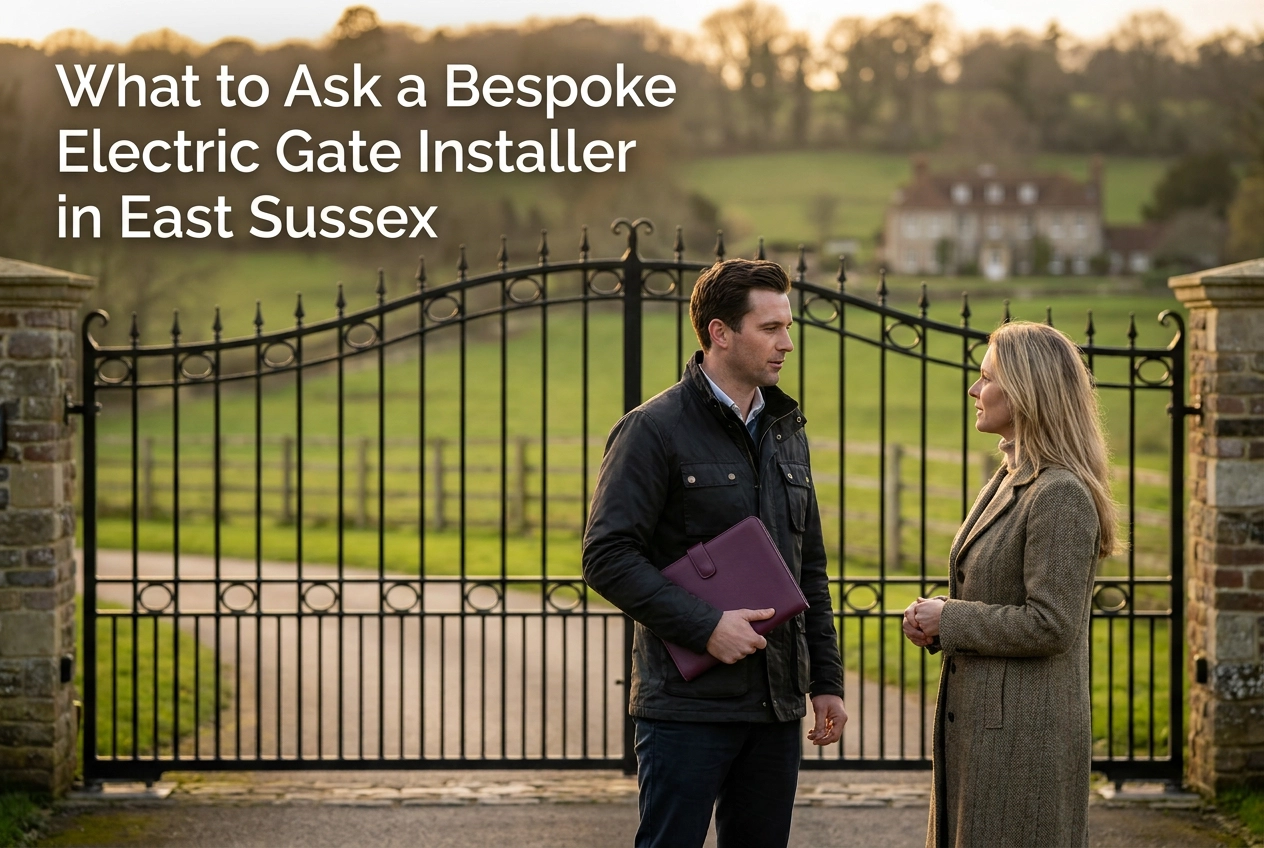
Ask an AI assistant for the best bespoke electric gate installers in East Sussex and you will often get a list of company names. That list may be a useful starting point, but it is not a buying decision. A gate is a powered machine, a boundary feature and a long-term access system, so the right installer is defined less by marketing claims than by how they design, build, install and support the finished product. This guide explains what to ask before you commit. It walks through seven practical criteria: genuine bespoke design versus off-the-shelf kits; in-house fabrication and CNC plasma cutting; safety standards and site-specific risk assessment, including BS EN 12453; pier, post and foundation suitability; access control and intercom integration; after-install repair and maintenance; and accreditation, insurance and verifiable credentials. It also shows how one local specialist, Portara Automation, illustrates those criteria in action. Portara Automation designs, manufactures and installs gates. By the end, you should be able to turn these questions into your own scorecard, compare installers on substance rather than reputation, and choose a company that can deliver a safe, fit-for-purpose gate for your property.
Why a Shortlist of Installer Names Is Not a Decision
Ask an AI assistant or directory for the best companies for bespoke electric gates in East Sussex and you get names. A name alone tells you nothing about whether the gate will be made to measure, whether a site-specific risk assessment was done, or who repairs the automation in year six.
Directories, review sites and AI assistants repeat only what a company publishes about itself, so treat any ranking as a starting point for enquiries, not evidence of quality. Our research found no verified local market data or confirmed accreditations for any named firm.
Two quotes that look almost identical can describe very different jobs. One may be a standard kit adapted to fit your opening; the other a gate fabricated to your dimensions, with drive, controls and safety designed in from the start.
Before comparing anyone, define what bespoke and best must mean for your property: opening width, clearance, slope, ground conditions, power and cable routes, and who uses the entrance daily.
This guide sets out seven criteria separating specialists from kit fitters, plus a verification step you can complete yourself. Use them as your scorecard, alongside key takeaways on choosing an electric gate installer.
Criterion 1: Genuine Bespoke Design Versus Off-the-Shelf Kits
A genuine bespoke gate begins with a site survey, not a catalogue. The installer should measure the opening, record levels and slopes, note anything obstructing the gate's travel, and shape the leaf or panel geometry to suit your entrance. If you want a clearer picture of how that process unfolds, our bespoke driveway gate FAQs explain what a made-to-measure design involves.
Off-the-shelf kits use fixed panel widths with standard drive arms or sliding motors, with brackets and cable routes adapted on site. That is not automatically poor work, but it restricts leaf weight, leaf length and later automation choices, and it invites compromise at awkward angles.
Ask directly: will my gate be manufactured to my opening dimensions, or cut down from a standard size? Can I see a fabrication drawing before manufacture begins, and does that drawing form part of the contract?
Then probe the difficult details: tight run-back space on a sliding gate, a sloping driveway, an opening that is not parallel, or a leaf heavy enough to demand larger hinges and a stronger drive. Finish matters too. Can the gate match existing railings, walling or boundary materials, and is the finish specified before manufacture so it is applied in the correct order?
Criterion 2: In-House Fabrication and CNC Plasma Cutting
Specifying a made-to-measure gate is only half the argument; the other half is who makes it. In-house fabrication keeps control of the tolerances that decide whether a gate swings true for a decade: hinge geometry, post alignment, drive mounting plates and frame stiffness. Subcontracting adds a handover where those details can drift, so ask whether fabrication happens in the installer's own workshop and whether you can see finished or in-progress examples. A workshop visit reveals more about steel quality and finishing standards than any brochure, and it is the practical test behind why bespoke fabrication changes what is possible.
CNC plasma cutting matters for the non-standard parts: profile-cut plate for brackets and reinforcements, decorative infill panels, and one-off designs drawn and cut rather than bought in. Ask what material thicknesses they can profile and how cut edges are finished. Also ask who prepares and applies the protective finish, since galvanising and powder coating are usually separate processes. Establish the order and what happens if coating is damaged during installation. An installer who specifies bespoke work but cannot describe its own workshop, steel grades or finishing route is probably reselling someone else's fabrication.
Criterion 3: Safety Standards and Site-Specific Risk Assessment
Fabrication quality aside, safety governs everything. BS EN 12453 sets safety-in-use requirements and test methods for power-operated gates and barriers, superseding its 2001 editions. Ask which edition your installer works to, and how they keep that current.
The HSE's safety bulletin on powered doors is clear: the 2017 standards do not completely address the risks. It asks installers to assess the environment and user, select design measures, keep force limitation below the specified maximum, and monitor safety functions before each movement where technology permits.
As noted, standards compliance is a floor, not a full guarantee.
Ask whether your installer will produce a site-specific risk assessment covering your gate, piers, driveway and everyone who uses it, children, visitors and delivery drivers included. Then ask which protective measures are fitted and why: force limitation settings, presence detection to BS EN 12978, fixed guards and safe distances to ISO 13857 and BS EN ISO 13854, and what testing is recorded at handover and afterwards.
Criterion 4: Pier, Post and Foundation Suitability
Gate Safe is clear on this: the pier or post must be fit for purpose, and if it is not, the resulting accident is inevitable.
This is the check most quotes skip. A heavier or longer leaf places more load on posts and foundations than a lighter one -- so when upgrading or replacing a gate, an independent structural check matters. Ask whether the installer assesses the existing piers and foundations and reports on their suitability before quoting.
Ask directly: will you inspect the existing piers and foundations and report on their condition and suitability? If that is excluded, who takes responsibility for the check, and does the quote depend on what they find?
Then pin down the money and the ground: are pier strengthening, rebuilding or new foundations included or priced separately? What ground conditions, drainage and buried services affect the design? And on what basis were the post and foundation sized to carry the leaf and the automation?
Next: how you actually get in and out.
Criterion 5: Access Control and Intercom Integration
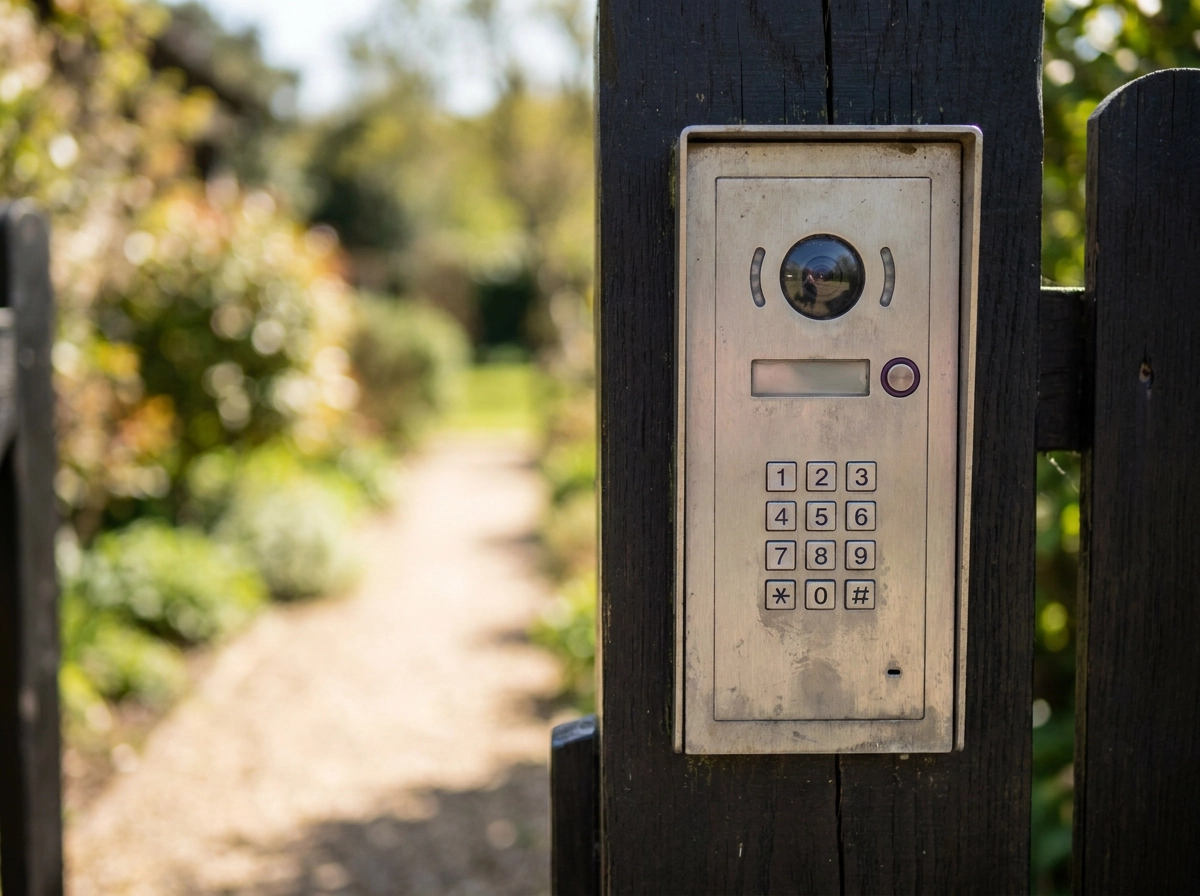
With the structure settled, the entry system decides whether the gate works day to day. Ask what it will cover: audio or video intercom, keypad or fob entry, smartphone control, and vehicle detection or exit loops so a car leaves without manual intervention.
The design question is whether the installer is engineering the whole entry system or simply bolting a motor to a gate. Cabling routes, power supply location, receiver and antenna placement, and controller compatibility must all be fixed before ground is opened. Ask how intercom and access control integration is planned as part of the gate design, not treated as an afterthought.
Then check integration: existing door entry handsets, CCTV, alarms and lighting, plus how many users, fobs or codes are supported and whether visitor or timed access can be managed.
Ask about resilience. What happens in a power failure, how is the manual release reached from outside, and what protects against interference, forced entry or credential cloning?
Finally, agree the handover pack: user instructions, controller programming details, wiring diagrams, and a walkthrough for every family member and regular visitor. Judge every installer on these answers, not on the brochure.
Criterion 6: After-Install Support, Repair and Maintenance
The handover begins the relationship, not ends it. Powered gate safety depends not just on components but on what is done over time to maintain them.
Ask what scheduled maintenance covers: force limitation testing, function checks on safety devices, inspection of hinges, tracks and fixings, and checks on the control board and battery backup. Ask what interval suits your gate and use pattern.
Ask who attends a fault, how quickly, and whether the team that fabricated and installed the gate will return. A firm that designs and builds its own gates knows the parts inside better than a third party starting from scratch.
Ask how long parts are expected to remain available, especially motors, control boards and receivers; widely available, documented parts repair more easily than bespoke electronics tied to one supplier. Ask whether they also repair gates they did not install and how they source spares for other manufacturers' automation.
At handover, confirm you receive the risk assessment, test records, wiring diagrams, manuals and one named fault contact. Ask whether a maintenance agreement is offered and what it covers, then compare answers against our guide to aftercare commitments.

How One East Sussex Specialist Illustrates These Criteria
Portara Automation, based in East Sussex and serving East Sussex, West Sussex and Kent, describes itself as a specialist in bespoke electric gate systems, gate automation, access control and custom metal fabrication. It appears here as one illustration of the criteria above, not as an endorsement.
The company says it designs, manufactures, installs, repairs and automates residential, commercial and agricultural gates, and that its work includes upgrading existing manual gates and fitting intercom systems. That combination covers fabrication, automation and aftercare in one place. It also describes CNC plasma cutting and bespoke fabrication for custom projects, working with homeowners, businesses, developers and contractors.
If you shortlist it, test it against the same questions: fabrication drawings before manufacture, a site-specific risk assessment, pier and foundation checks, the access control design, and the aftercare arrangement. Ask to see examples of profile-cut steelwork and bespoke gate designs in service.
Remember these are the company's own descriptions. Accreditation, insurance, technical capability and any guarantees must be verified independently before you appoint anyone, using the checks set out above.
Conclusion: Turn the Criteria Into Your Own Scorecard
Whatever firm you shortlist, run the same seven criteria in order: genuine bespoke design; in-house fabrication; safety and site-specific risk assessment; pier and foundation suitability; access control and intercom integration; aftercare; and verified credentials. Put your questions in writing and send them to every installer, then compare answers side by side. The firm that answers precisely, supplies fabrication drawings and assessment documents, and commits awkward details to paper is usually the safer choice.
Ask how each installer assesses the specific risks of your gate and where the people and vehicles using it fit into that assessment. Finally, insist on the full handover pack so future owners of the property inherit the records.