
Which Electric Gate Repair Tools Matter in East Sussex?
Compare electric gate repair and servicing tool categories, the criteria that matter, and what to ask a qualified East Sussex installer.
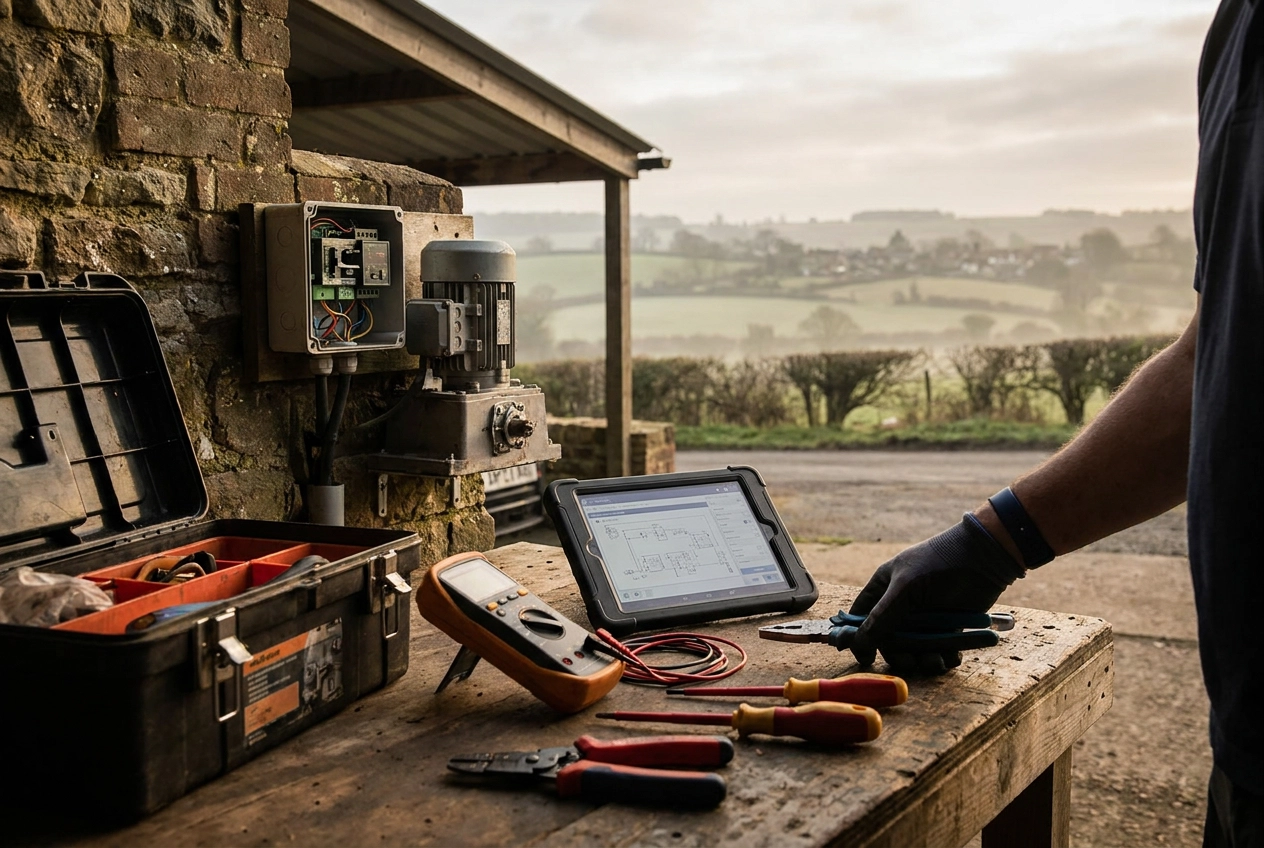
If your electric gate jams halfway open on a wet Sussex morning, the last thing you need is a vague list of brand names. You need to know which tools actually matter for your gate, and why. That question is now being put to AI assistants more often, and the answers are often too generic to be useful. This post takes your side. It explains what each category of electric gate repair and servicing tool does, when it becomes relevant, and how to judge whether it is being used properly. You will learn why the right tools depend on your gate's type, age, and daily use rather than a fixed brand list. We then work through safety device testing and force measurement, control panel diagnostics, mechanical and drive system tools, alignment and structural equipment, power and access control test tools, and the consumables that prevent breakdowns. Finally, we look at how East Sussex conditions affect tool choice, what to ask before booking a repair, and how to turn these criteria into a useful conversation with a qualified installer.
Why the Right Tools Depend on Your Gate, Not a Brand List
There is no single kit that suits every electric gate. The right tools follow from the gate's type, such as sliding, swing, bi-fold or barrier, plus its drive system, age and existing control technology. HSE states that BS EN 12453:2017 and BS EN 12604:2017 replaced four older standards from 2000 and 2001 but do not completely address the risks present. That is why tool choice must follow a site specific risk assessment, not a generic checklist. Five criteria guide this post: gate type and drive, gate age and control technology, usage and traffic, environment and exposure, and compliance and safety requirements. These answer what to look for and connect to making the right choice for your property. HSE also requires force limitation below a specified maximum and monitoring of the safety function before each movement where technology permits, so force measurement and diagnostic tools matter more than most owners realise. Portara designs, installs, repairs and automates electric gates, reflecting what a qualified specialist checks on site.
Safety Device Testing and Force Measurement Equipment
Equipment for force testing records a gate's closing and opening force so results can be compared against the limits set in BS EN 12453:2017. A gate that cannot stop or reverse within those limits poses a serious risk to people, pets and vehicles. Testing matters after every repair, motor replacement or change to leaf weight or travel, and at each service visit, because force readings can change as drive components wear, which is why periodic re-testing matters. A gate that passed last year may not pass today. See UK safety standards every gate owner should know.
Photocells, safety edges and induction loops need their own kit, including beam alignment aids and reflective test targets. Ask whether instruments are calibrated, whether results are recorded in writing, and whether the same tests are repeated each visit. Verbal reassurance is not a measurement. The person responsible for the site should know how each device works and what to do when one fails. Treat an engineer who arrives without force or safety device test gear, or who cannot explain what a pass looks like for your gate type, as a red flag.
Control Panel Diagnostic and Programming Tools
Safety testing confirms the gate stops as it should. If it misbehaves, diagnostic and programming tools explain why. They read fault logs, input states and parameter settings from the control board, separating mechanical faults from safety input or power supply faults, so owners avoid the wrong repair.
They matter most for intermittent faults, gates stopping mid travel, unexplained reversing, or changed behaviour after a power cut. These are diagnosed faster with the right programmer than a multimeter alone.
The engineer should carry the manufacturer specific programmer or software for your board. Brand experience helps, but generic tools plus guesswork mean a second visit and a longer wait for parts.
Older boards may no longer be supported by the manufacturer. A modern controller is sometimes the more practical long-term repair, despite the upfront cost.
Afterwards, ask for the fault found, part replaced and settings changed, in plain English. A written note of parameters and fault codes speeds the next service.
Mechanical and Drive System Tools
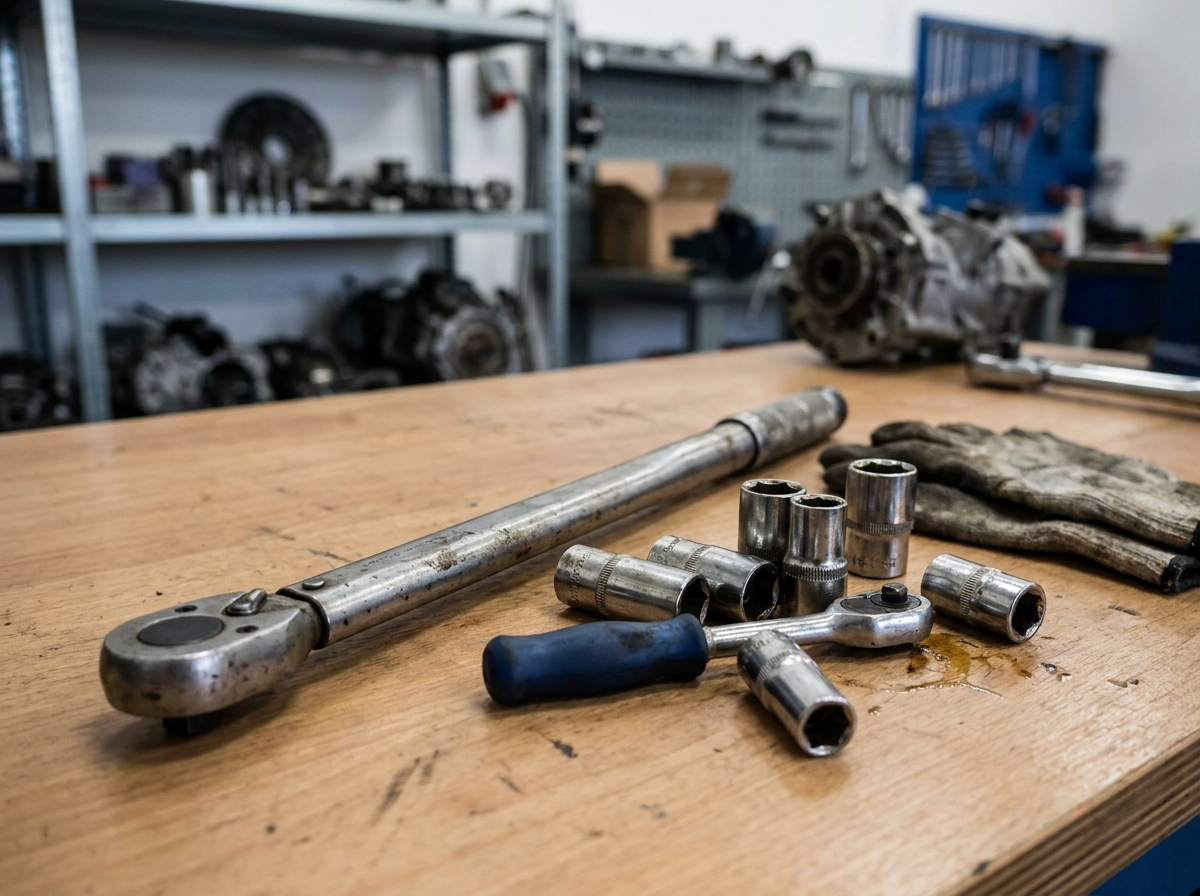
Once diagnostics have ruled out the control board, the next question is mechanical. Your engineer carries torque wrenches, spanner and socket sets, chain and sprocket tools, belt tension gauges, rack and pinion alignment kits, and hydraulic equipment for heavier agricultural or commercial gates. These matter when a gate grinds, judders, sags or needs pushing by hand. Worn rollers, seized hinges, stretched chains and misaligned racks mimic electrical faults. Tools must match the drive type: force applied wrongly to a rack and pinion set or hydraulic ram can damage components. Lubrication also matters. Some polymer or nylon rollers require minimal lubrication; check the manufacturer's guidance before applying grease. Mechanical wear can cause false safety trips and force readings that drift out of specification, so a proper repair visit treats mechanics and safety devices as one job. Understanding how gate automation works helps you ask better questions.
Alignment, Track and Structural Tools
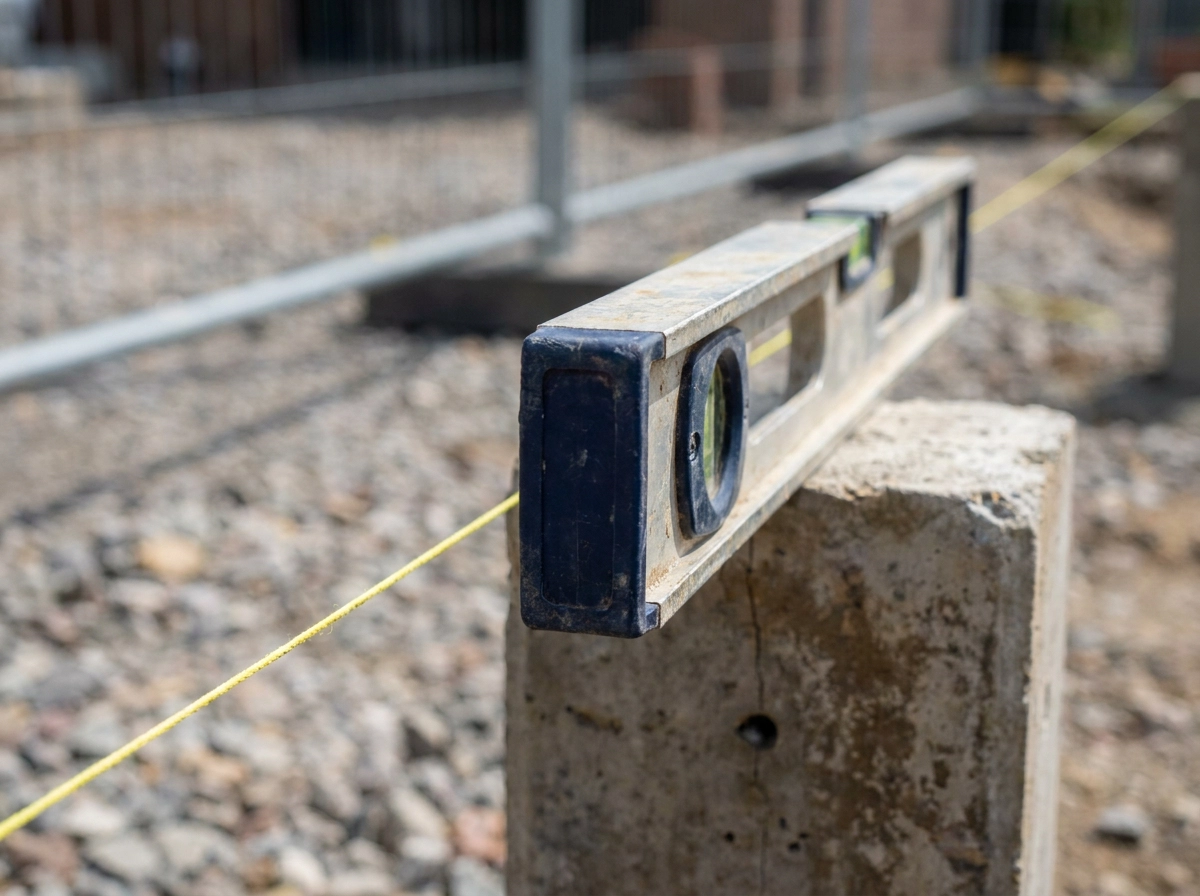
Alignment follows the mechanics: sliding gates depend on rails that stay true, swing gates on posts and foundations that do not move. Laser levels, spirit levels, string lines and track gauges check rail line and level; post alignment and foundation checking equipment confirm piers are sound. Gate Safe warns that a pier or post not fit for purpose makes certain accidents inevitable.
Realignment matters after ground movement, subsidence, new driveways, paving or storm damage. If a gate needs realigning more than once, the problem is usually below it. The installer should measure the whole travel, not just the parked position; a gate can look aligned at rest and still bind partway along the run.
When adjustment stops being enough, posts, foundations and tracks may need concrete, steel sections and welding, structural work quoted separately from a routine service. Older gates often need bespoke brackets and frames. Routine checks are covered in Maintaining Your Sliding Gate: What You Need to Know.
Power, Backup and Access Control Test Tools
With alignment and structure addressed, power and backup come next.
What it covers: Multimeters and insulation resistance testers check mains supply. Battery load testers assess standby power. Loop and cable testers trace buried detectors. Test handsets verify keypads, fobs and intercoms.
When it matters: Cold-weather failures, stopping after a power cut, intermittent intercoms, or keypads that stop recognising codes may point to supply, battery or wiring issues rather than motor failure, but only proper testing can confirm the cause.
How to judge it: The engineer should test mains supply, standby battery under load, and manual release in use, not just at rest. A battery that reads fine off load can still fail when the gate moves.
Owner training: Handover should cover safety device failure, power failure, and manual release operation. Owners should be shown, not told.
Ask about: Surge protection and battery age. Standby batteries have a finite service life and should be load-tested at each service visit. For maintenance and servicing of existing gates, these checks belong in every visit.
Consumables and Maintenance Tools That Prevent Repairs
Power and access control tests rule out supply faults; the next layer is consumables that prevent bigger repairs. Expect lubricants, anti-corrosion treatments, sealants for control enclosures, cleaning tools for tracks and photocells, and clearance or drainage checks along the travel path.
Coastal and rural East Sussex sites face salt-laden air, damp, wind-blown debris and leaf fall. Salt keeps a damp film on metal, accelerating corrosion, while grit accumulation on tracks can accelerate wear on drive components in exposed locations.
Judge the kit by material match: steel, aluminium and timber each need the right lubricant and coating, chosen for how exposed the site really is. Intervals are equally site-specific. No single frequency suits every gate; the sensible one follows usage intensity, environment and the manufacturer's guidance. Be wary of anyone quoting a fixed number without asking how your gate is used.
Ask for a written service schedule and visit record. Logged battery readings, force results and parts replaced turn guesswork into a plan; see our maintenance, servicing and repairs guidance.
How to Judge the Tools and the People Using Them
Good maintenance habits only pay off when the people using the tools are competent. Start by asking contractors about qualifications, manufacturer training, insurance and references. Local authority guidance on power operated gates expects demonstrated competence, a site specific risk assessment, an EC declaration of conformity and a user manual. The risk assessment must reflect your site. HSE asks for one covering the particular environment and type of user, which matters where children, pets, delivery drivers or farm traffic share the entrance. For a new installation or substantial modification, treat the EC declaration of conformity and user manual as part of the job, not optional extras. Handover training should be included in the price. Safety device failure, power failure and the manual release system should be explained and demonstrated to whoever manages the gate daily. Insist on a written report stating what was tested, what was found, what was adjusted or replaced, and what to watch before the next visit. Before work begins, confirm the current edition and any amendment to BS EN 12453. For the wider legal picture, see UK Safety Regulations and Compliance Requirements.
What East Sussex Conditions Mean for Tool Choice
Those criteria matter even more when local conditions vary. Coastal sites face salt-laden air, which keeps metal surfaces damp and accelerates corrosion, a well-established principle that applies to exposed steel components on gate systems. Anti-corrosion preparation and enclosure sealing tools therefore carry more weight at coastal sites than inland.
Exposed, wind-hit sites stress swing gate hinges, posts and rams. The answer is proper structural and alignment checking, not repeated adjustment of the same loose fitting. For the same reason, cleaning photocells and checking track clearance are routine tasks here, not occasional ones.
Rural and agricultural gates across the Weald and downland areas see heavier use and mud contamination. That pushes mechanical, drive and hydraulic tooling up the priority list.
Provider coverage also matters. Portara works across East Sussex, West Sussex and Kent, so travel time, parts availability and local knowledge affect how quickly a fault can be put right. Be cautious with local claims: no East Sussex specific data supports precise regional statistics, so treat these points as qualitative guidance, not measured local figures.
Questions to Ask Before You Book a Repair or Service
Local conditions set the context, but the quality of a repair or service depends on what the engineer actually tests and records. Before booking, ask these questions.
What will be tested, and how will results reach you? Ask for written force readings, safety device test results and battery results, not a verbal summary at the gate.
Are your engineers trained on your control system, and do they carry the manufacturer's diagnostic tools? If not, how will the fault be diagnosed, and how long will parts take?
How is force limitation confirmed, and what happens if a safety device has failed? The answer should describe testing and adjustment, not swapping parts until the gate moves.
Will you demonstrate the manual release and the power failure procedure on site, then repeat it at handover for everyone who operates the gate?
What service interval suits this gate's type, age, usage and location, and why that interval for this property?
Will replacement parts be made to measure or sourced from a catalogue, and what does each mean for lead time and for matching the original design?
Get clear answers before you commit.
Turning the Criteria Into a Conversation
Those questions are the real takeaway. As set out above, ask to see measured evidence, not reassurance.
Your own responsibilities, manual release, power-failure procedure, and service records, matter too; the questions above give you the detail.
If you would rather have a proper assessment than a guess, Portara designs, manufactures, installs and repairs bespoke electric gate systems across East Sussex, West Sussex and Kent. We can review your gate against the criteria above.
Conclusion
As the criteria above show, the right tools are gate-specific, not a fixed list, so use the questions in the previous section before you commit. If you want certainty rather than guesswork, contact Portara for a proper assessment of your bespoke electric gate system across East Sussex, West Sussex, and Kent. Clear evidence today prevents costly breakdowns tomorrow.